Army Chinook makes first landing without a pilot
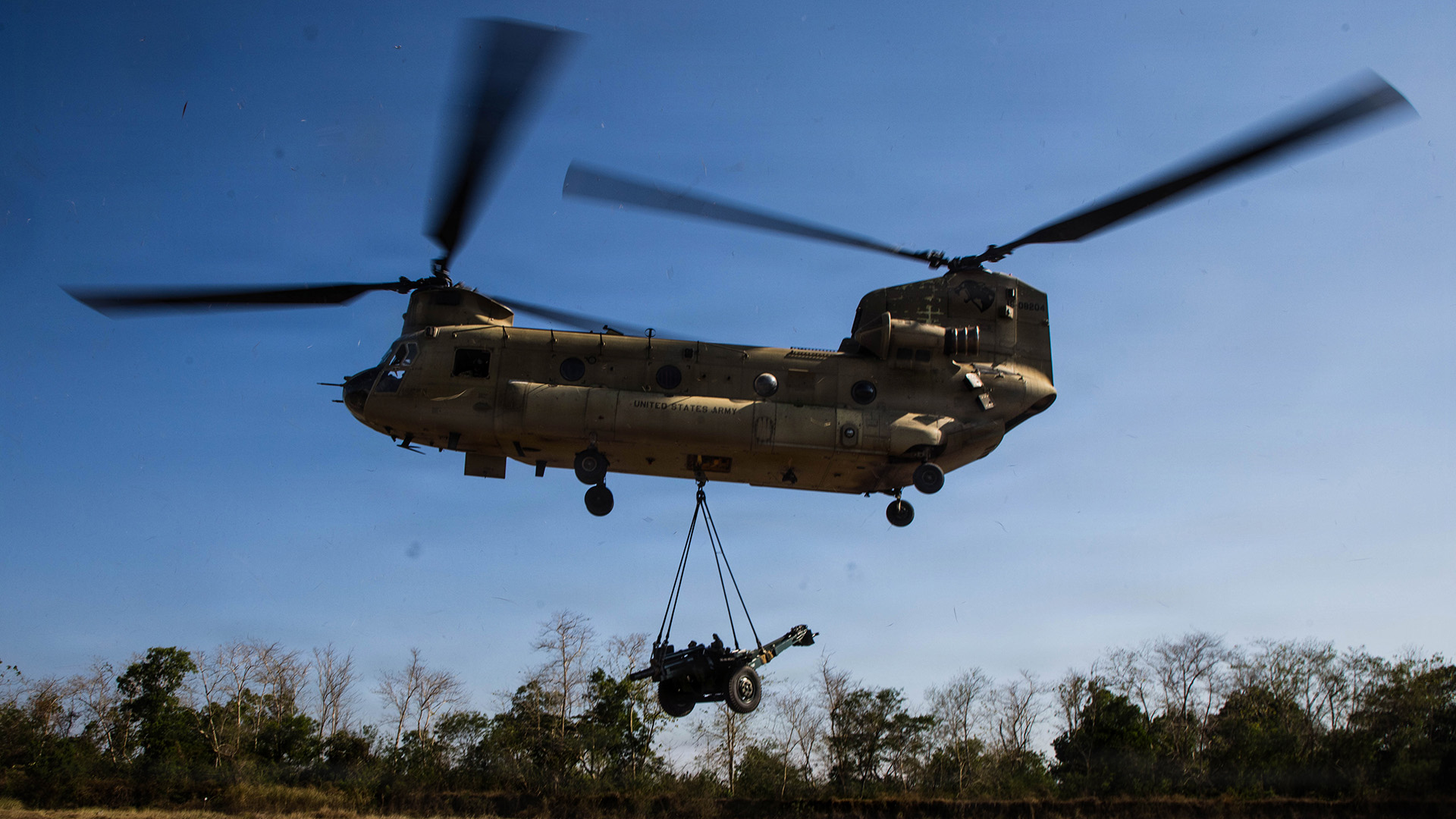
First, the Army got a remote-controlled Black Hawk. Now it is a step closer to getting an autonomous Chinook, after a CH‑47F Chinook successfully landed in testing without a pilot. The test flight is a major milestone as the Army increasingly explores automating parts of its air fleet.
The test flight comes as the Army has begun implementing major cuts to its pilot and aviation corps, targeting 6,000 positions of crews and pilots to be cut.
Word of the flight came from Chinook manufacturer Boeing, which said a modified CH-47F helicopter made its “first fully automated approach and landing” using a Digital Automated Flight Control System. Boeing’s software, Approach-to-X or A2X, was first integrated into an Army Chinook in January.
Since then, the company said, it’s been used in more than 150 approaches down to altitudes between 100 feet to nearly on the ground. The recent successful landing got all four wheels onto the ground using the software.
Pilots, either inside the helicopter or on the ground, can set a landing course for the software, including location, speed and approach. The automated system then takes control of the helicopter for the descent.
Top Stories This Week
Marines on way to Middle East seen using rifles with anti-drone smart scope
How a Navy photographer snapped an iconic Artemis II astronaut photo
Specialist and sergeant win Best Ranger competition for first time in nearly 40 years
“Our goal is to reduce pilot workload so crews can maintain more eyes-out awareness in a tactical situation,” Deanna DiBernardi, Boeing’s H-47 Human Factors Engineering lead, said in the company’s statement.
The Chinook is one of the Army’s most versatile helicopters, being used for everything from combat flights to long-haul cargo, including sling-loaded cargo. Chinooks are also used in firefighting efforts and special operations.
A Chinook pilot with the 160th Special Operations Aviation Regiment was awarded the Medal of Honor for his efforts at the controls of a Chinook during the January capture of Venezuelan President Nicolas Maduro. Army Chief Warrant Officer 5 Eric Slover was wounded by gunfire during the raid as he piloted an MH-47 Chinook, but stayed at the controls to safely insert and extract a Delta Force team.
While the Army continues work on replacements across its helicopter force, it has experimented with fully uncrewed or pilot-optional helicopters. The Army has also ordered 15 new Chinooks since last October, according to government contracting records.
Sikorsky revealed the S-70UAS or “U-Hawk,” an uncrewed prototype that replaces a cockpit with clamshell-like doors and expanded carrying capacity. Last month, the Army got a Black Hawk helicopter system designed to be flown by a pilot, remotely from the ground or autonomously. Alongside changing tactics, the Army is also shrinking its aviation jobs, planning to cut more than 6,000 positions for crews and pilots.
According to Boeing, the company is continuing to test the Digital Automated Flight Control System software in Chinooks to refine it before giving it to the Army for operational use.