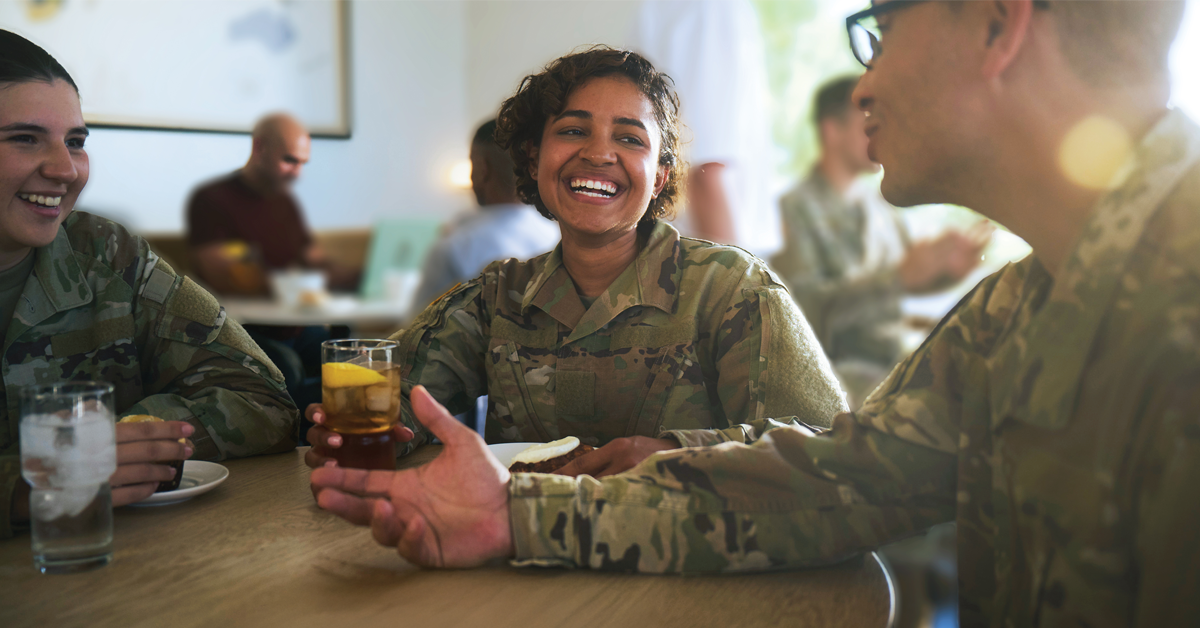
From footlockers to DoorDash: How the barracks room has (and hasn’t) changed
Every service member has stood in a barracks room at some point and thought, “This is it. This is where I live now.”
Maybe it was a single room the size of a generous closet, or a bay packed with 30 other people whose sleep schedules made absolutely no sense. Maybe the walls were that specific shade of institutional beige that exists nowhere else on earth.
Whatever the configuration, the barracks experience is a shared rite of passage that transcends branch, era, and MOS. It is also, depending on who you ask, either the worst living situation imaginable or, weirdly, disturbingly nostalgic.
The rooms themselves have changed. The culture, not so much.
The Old Setup: Squared Away or Else
Go back a few decades, and the barracks room was essentially a monk’s cell with better footwear. A rack, a footlocker, a wall locker, and the ever-present threat of an unannounced inspection. Entertainment meant a beat-up paperback, a deck of cards, or whatever was happening in the day room, which usually involved a single television tuned to whatever the senior NCO wanted to watch.
Phone calls home meant a hallway payphone and a calling card. Privacy was theoretical. The closest thing to food delivery was whoever made the run to the vending machines. Old-timers learned a few ingenious workarounds to survive the austere setup, including cooking hot dogs in a coffee pot and using boot polish for everything except boots.
There was a certain Spartan logic to it. The military was training people to operate in austere environments, so it started early. If you could keep your space inspection-ready at 0600 after getting in at 0200, you could probably handle a deployment.
The Modern Setup: Smart TVs and Same-Day Delivery
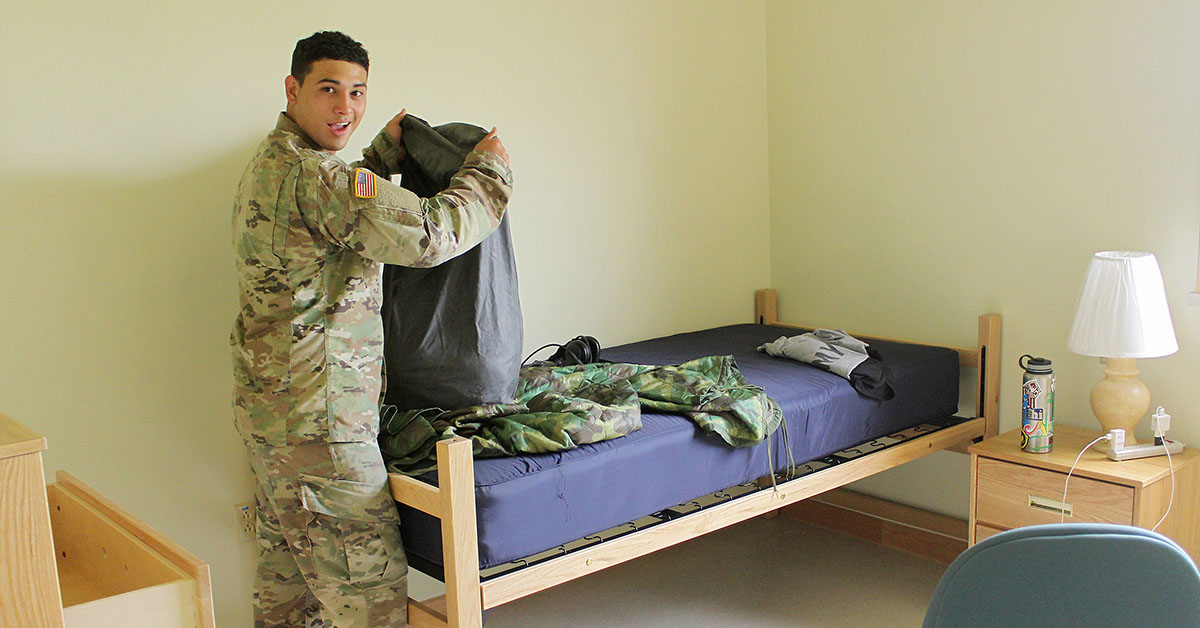
Today’s barracks room looks like a college dorm crossed with a Best Buy display floor. Flat-screen TVs mounted on walls that technically aren’t supposed to have anything mounted on them. Gaming setups that make a Twitch streamer jealous. Mini-fridges stocked with energy drinks and meal prep containers. Bluetooth speakers. Ring lights. Wi-Fi routers that absolutely violate the terms of the housing agreement.
Never underestimate the power of a bored private. If you can think of it, it is probably going down in the barracks right now, and it probably involves an appliance that is not technically allowed.
DoorDash and Uber Eats fundamentally changed the restaurant food ecosystem. A troop can now get pad thai delivered to the front gate at 2200 on a Tuesday. This is, objectively, an improvement over the previous system, which was “hope the vending machine has something edible.”
The Things that Never Change
Here is where the nostalgia kicks in, and where veterans across every era nod slowly in recognition.
The walls are still thin. You still know your neighbor’s entire sleep schedule, argument history, and musical taste, whether you want to or not. The heating is still either broken or set to the temperature of a small sun, with no middle ground. Someone on the floor is always cooking something that smells like a war crime at midnight.
The car in the parking lot with four flat tires and a cracked windshield has existed at every installation since roughly 1965. Nobody knows whose it is. Nobody will ever know.
The unofficial barracks economy persists. Someone always has a toolkit. Someone always knows how to fix the one thing that facilities management has been “getting to” for six months. The barter system never died; it just upgraded to Venmo.
And the camaraderie, which nobody ever called that out loud, remains intact. The people you shared a hallway with at 22 years old, half-asleep and trying to make formation, are still some of the most formative relationships of your life. You suffered together, did dumb things together, and covered for each other when the duty NCO came around.
That part does not change, regardless of how many HDMI ports you have.
The Gap that Remains
The honest reality is that, for all the modern amenities, barracks quality still varies wildly. A troop at one installation might have a renovated suite-style room with updated fixtures. Another might be in a building where the mold has more square footage than the actual living space.
A 2023 Government Accountability Office report found that the Defense Department has insufficient oversight of barracks conditions and that seven of the 10 facilities investigators visited needed significant improvement despite scoring adequately on condition assessments. Investigators documented sewage overflow, mold, broken window locks, and, at one location, methane gas leaking from cracked sewage pipes into hallways. Fixing the Army’s barracks alone is estimated to cost at least $6.5 billion on top of current spending commitments, according to congressional testimony.
Some installations are trying to get ahead of the problem in ways nobody’s grandfather could have imagined. The Army opened the DoD’s first 3D-printed barracks at Fort Bliss in January 2025, using a five-ton Vulcan printer and a concrete-based material called Lavacrete to construct three buildings capable of housing up to 56 soldiers each. Whether that kind of innovation scales fast enough to outpace decades of deferred maintenance is a different question entirely.
The footlocker is mostly gone. The complaints are the same.
Maybe that is the real through-line of barracks life across every generation. The gear changes, the food delivery options expand, the gaming setups get more elaborate, but the core experience stays familiar. You are 19 or 20 years old, far from home, sharing walls with strangers who become something closer than friends, in a building that was never quite good enough and somehow became a place you will think about for the rest of your life.
The beige walls, it turns out, are load-bearing.
Don’t Miss the Best of We Are The Mighty
• Why the service academies deserve their own spot in March Madness • The best in military entertainment from 2025 (and what sucked) • Why the lessons from the attack on Pearl Harbor still matter today
China’s Atlas System: the future of AI swarm warfare
The ‘Gray Ghosts’ of the Cuban Missile Crisis
By Daniel Tobias Flint
An Air Force plane crashed in Death Valley during the Cold War (and is still there)
The Army’s latest helicopter has its official name: Cheyenne II
The Pinkertons were America’s most powerful private army, then Congress banned them
By Daniel Tobias Flint