The pros and cons of the Army’s new rifle and machine gun
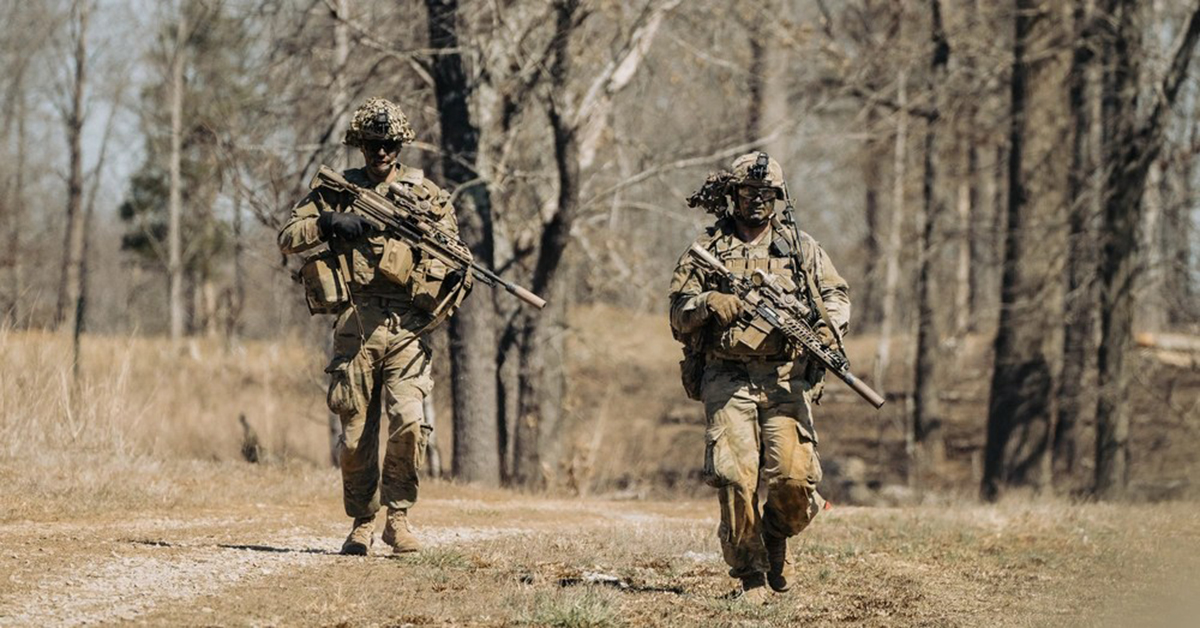
The director of operational test and evaluation is a senior adviser to the secretary of defense. As its name implies, the DOT&E office independently tests and evaluates warfighter systems to ensure that troops have the equipment needed to succeed in any environment.
DOT&E’s FY25 report provides an update on the Army’s Next Generation Squad Weapons (NGSW), ammunition, and fire control that praises and critiques the new equipment.
Published in March 2026, DOT&E’s report notes that operational testing on the NGSW was removed from its oversight in July 2025. However, the weapons, ammo, and scope remain under the office’s live fire oversight. Units were evaluated in combat operations, including movement to contact, entering and clearing a trench, and room clearing. The assessment highlighted the weapons’ suitability and the soldiers’ safety concerns.
Room for Improvement
To start, the report noted that individual soldiers consistently qualified with the M7 rifle and M250 machine gun. The M157 Fire Control optic also allowed shooters to engage targets at extended, variable distances. Additionally, the DOT&E reports that the 6.8mm Special Purpose ammo “generally provides increased lethality over the M855A1… against tested targets.”
However, issues were also found.
The DOT&E didn’t raise specific concerns. However, it stated that improvements to the system’s “reliability, safety, human-systems integration, and compatibility with cold weather operations are needed.” That’s a very broad call for change. Calling for improvements to reliability and safety is not something that the Defense Department should take lightly. Separately, the DOT&E raised specific issues that were observed.
“During the [operational assessment], soldiers reported negative physiological effects caused by the noxious off-gassing from their weapons, as well as concerns about the extreme heat from the weapons’ suppressors after firing.” The M7 and M250 are designed to be fired with a suppressor. Unlike traditional baffled suppressors, the NGSW suppressor uses a LO-TOX design that’s supposed to minimize toxic gas exposure and enhance shooter safety and comfort.
Issues with the M157 Scope
Additionally, the report noted, “Most M250s equipped with M157s did not retain zero during the [operational evaluation] or the airborne test.” While this observed issue was limited to the machine gun, losing zero is never a good thing for a weapon system. That’s especially true of one with a larger bullet that reduces the amount of ammo troops can carry.
Building on this, the DOT&E highlighted that ergonomic complaints about the M157 scope persisted. Despite the loss of zero during the airborne test, the report found the NGSW to be both compatible and safe for use during static line and military free-fall airborne operations. Apparently, the belt-fed guns just won’t be zeroed when they land.
At the end of the report, the DOT&E recommended that the issues observed be addressed in addition to those listed in a classified limited lethality annex. While the recommendations of the annex are… classified, the Army and its contractors should take the report into account moving forward with the NGSW.
Moreover, the XM8 carbine has been introduced and may see its own report from the DOT&E. Same time next year?
Don’t Miss the Best of We Are The Mighty
• The XM8 is back, but not in the way you might remember it • This classic carry pistol was used by gangsters, generals, SWAT, and spies • The most legit military watch is built for apocalyptic combat
The pros and cons of the Army’s new rifle and machine gun
George Washington’s secret spy code name was Agent 711
By Daniel Tobias Flint
Medal of Honor
The biggest challenge Charles Lindbergh faced in flying across the Atlantic
This one fix could make the M4 a near-perfect carbine
That time Neil Armstrong survived ejecting from his fighter jet in Korea