A roadside bomb made this Army vet a triple amputee. Adaptive surfing gave him a new life
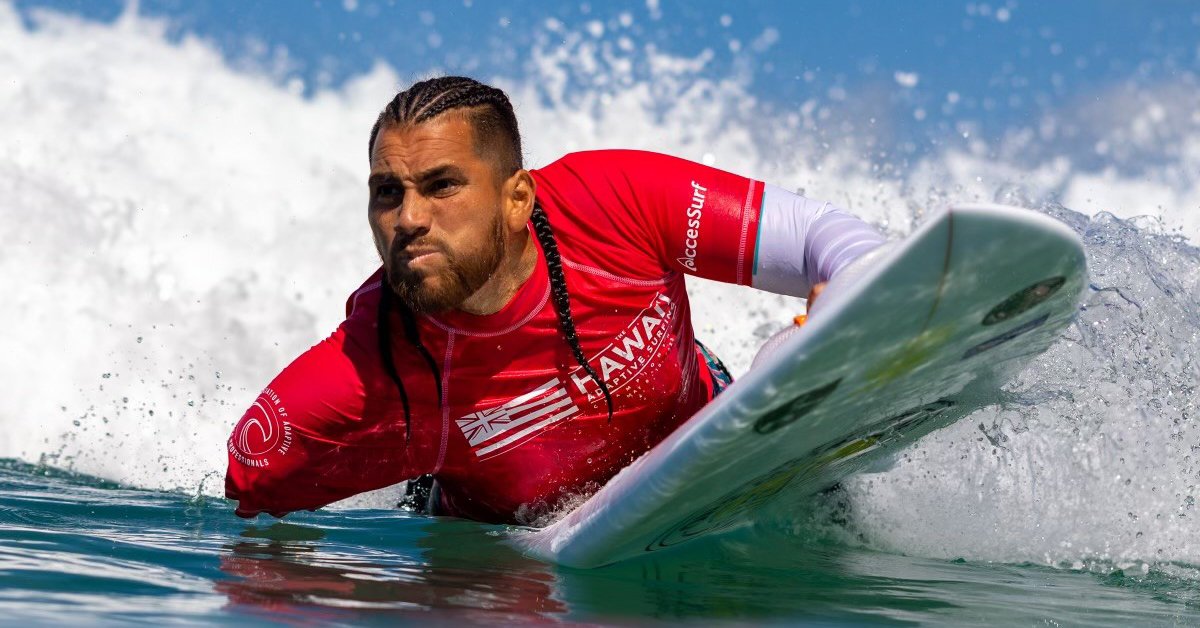
Jose Martinez wanted to die.
He felt that way in the moments after a roadside bomb exploded near him in Afghanistan on March 3, 2012. The blast damaged some of Martinez’s internal organs and deprived him of his mobility. The bomb took all of Martinez’s right leg, his left leg below the knee, and his right arm above the elbow.
Martinez still harbored those thoughts during his nearly two-year rehabilitation, which involved 19 surgeries. As he worked through the recovery process, Martinez struggled with envisioning an existence as a triple amputee.
“I didn’t want to be alive,” Martinez told We Are The Mighty in a recent interview. “I didn’t understand how I was going to live…. It’s very tiring when you come back, especially when you’re completely dismantled. And I was completely dismantled.”
Looking back on that dark period, Martinez attributed his suicidal thoughts to being on so much pain medication. Self-medicating with alcohol only made it worse. Once Martinez stopped turning to pills and drinking to numb his mood, his outlook improved.
Spending time in the water and competing as an adaptive surfer also helped.
An Angeleno Who Didn’t Surf
Martinez, 38, is a big Lakers and Dodgers fan—not surprising, considering he hails from Los Angeles. Despite his proximity to the Pacific Ocean as a youth, Martinez never took up surfing because his family couldn’t afford it.
So when a therapist suggested trying adaptive surfing, Martinez laughed. He just couldn’t see himself riding waves when he had so much else going on in his head. But the persistent therapist was in no rush for Martinez to say yes.
When he finally did, she was ready. They went into the pool, and Martinez tried to swim. It took him two hours to swim 50 meters. He had plenty to learn.
“I just couldn’t get the rhythm of my new body,” Martinez said. “It infuriated me because I told her that I could crawl faster than this. She said, ‘I’m sure, but you’re not swimming faster than this so we’ve got to figure this out.’”
Martinez, who enlisted in the Army in 2011 and credits the military with giving his life structure, wasn’t going anywhere. It took him two or three weeks, but soon swimming became a part of Martinez’s daily routine. Once Martinez swam enough laps to build his stamina, he transitioned to a surfboard.
Martinez confided that he has an addictive personality. Sometimes, that’s a bad thing. Sometimes, it’s not. Martinez became addicted to surfing and how his mood instantly brightened when he was on the water.
“The best way I can describe it is just being in the present moment,” Martinez said. “Nothing hurts. There’s no pain; there’s no stress; there’s no bills; there’s no missing legs. There’s none of that. It’s just you and the waves, and that’s the most free I can ever feel.”
“Every Day Gets a Little Better”
Six years after he returned from Afghanistan, Martinez began competing in adaptive surfing. He hasn’t stopped. For most of this decade, Martinez has been a member of the Team USA para surfing team.
He is a champion surfer, plus he excels at snowboarding. Martinez grew up playing soccer and basketball. Now, he is doing something completely out of his comfort zone, at least before his life-altering injuries.
Martinez will compete in the International Surfing Association’s World Para Surfing Championship from November 19-22. The worlds will be in Palm Desert, California, about a hundred miles southeast from Martinez’s home in the town of Apple Valley.
“Every day gets a little better,” he said.
As Martinez spoke those words late last week, he was in Costa Rica and had surfed for a few hours earlier that day. It’s a natural high, the likes of which Martinez never had experienced, and while he did the hard work, he didn’t get there alone.
Martinez credits the Semper Fi & America’s Fund, a nonprofit that assists ill and injured service members, veterans, and their families, with supporting his pursuit of adaptive sports. The military charitable organization provided financial resources related to traveling for surfing competitions, and it has done other things for which Martinez is grateful. The community of wounded veterans and adaptive athletes also buoyed him.
“I like to call life a poker game,” Martinez said. “Some people get good hands. Some people get great hands, and some people get dealt something that they have to work with. I was dealt something that at least I could work with, especially with my mental strength.”
Not Listening to the Doctors
Like almost anyone, Martinez likes proving people wrong.
He did it to the doctors who told Martinez that he died three times in the days following his horrific incident. They told him they didn’t think he would wake up, and after he regained consciousness, they expressed doubts that he would walk again. When he is not surfing or snowboarding, Martinez—who also lifts weights—gets around on two prosthetic legs.
They saw a man without three of his limbs and focused on his limitations. Martinez didn’t listen. Before his injuries, Martinez said he didn’t know what adaptive sports was. He didn’t know what he was missing.
“I live such a beautiful life that I can’t think past that,” Martinez said. “I wouldn’t want to imagine [my life without adaptive sports], to be honest with you. This is the best life I could ever live, and I’m grateful that I took a chance on myself.”
For those struggling with their mental health, the Suicide & Crisis Lifeline is available by dialing 988.
Don’t Miss the Best of We Are The Mighty • A former soldier with a TBI found his purpose in helping other veterans • The Red Star Banner gives families of veteran suicide a new name and national community • General Patton’s grandson help heal veterans through filmmaking
A roadside bomb made this Army vet a triple amputee. Adaptive surfing gave him a new life
The Red Star Banner gives families of veteran suicide a new name and national community
A former soldier with a TBI found his purpose in helping other veterans
‘The Deadly Gap:’ Veterans wait to get benefits until it’s too late
‘The weight he carried’: Memorial Day and the battle at home