How an airman, the ‘Schindler of the Korean War,’ rescued a thousand orphans
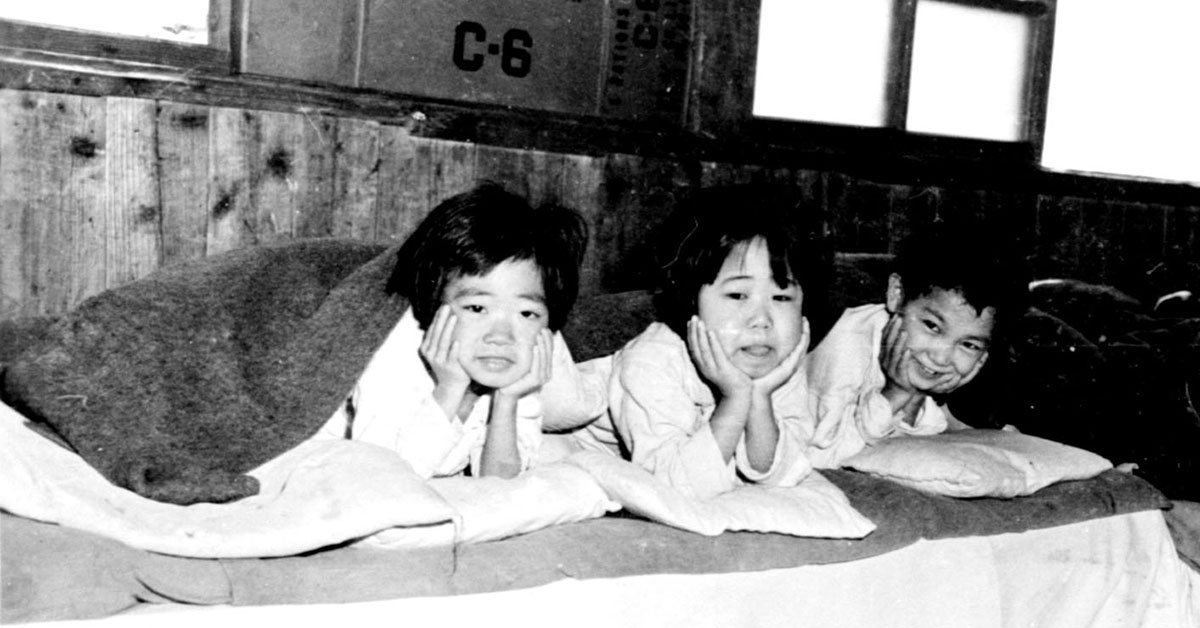
Pak Ki-Un was just a little boy when war broke out in Korea.
He should have been doing what most 8-year-olds do, running around with their friends, playing with toys, and watching cartoons. In essence, doing little-kid things. The Korean War interrupted Ki-Un’s childhood, though, in a way that affected the rest of his life.
It made him an orphan.
“If there had been no war, I would have gone to school in Seoul, my father would still be with us, and my family wouldn’t have lost anything,” Pak said in 2025. “I used to be a very outgoing person, but the war and the orphanage changed me into a very quiet person. Looking back now, the first thing that remains deepest in my heart is how precious food is. The second is how valuable family is.”
Lt. Col. Russell Blaisdell, chaplain of the Fifth Air Force during the war, was the son of an orphan and a minister in his native Minnesota. Blaisdell refused to abandon the innocent children who needed to be saved from a conflict that raged around them.
Thus began Operation Kiddy Car on December 20-21, 1950.
The Children Left Behind
The North Korean military started the war on June 25, 1950, with a shocking invasion of the South. Because of their aggressiveness, North Korean leader Kim Il Sung’s troops gained the upper hand early. By that winter, it appeared as if the South Korean capital of Seoul was about to fall.
As a result, thousands of the city’s citizens and its governmental leaders fled. So did almost all of Blaisdell’s unit before the enemy captured Seoul in January 1951. They left behind an orphanage that the U.S. military ran. Those children, as well as others in the war-torn city, needed protection.
Blaisdell remained behind to help.
“I knew these children wouldn’t make it if we left them there,” Blaisdell told the Las Vegas Sun newspaper in 2001. “A child in need is a child in need—Korean or American, Black or white—and I knew I had to get them out of there. I just didn’t know how.”
Along with his assistant chaplain, Staff Sgt. Merle “Mike” Strang, Blaisdell began rounding up as many orphans as possible. He initially thought of taking the frightened, malnourished kids to the port of Inchon, then putting them on a boat to get them away from the shooting.
Blaisdell and Strang hopped in the only truck that was available to them and transported children in a seemingly interminable number of trips to the port. Blaisdell really needed that boat, but it never arrived. The orphans remained at Inchon, at least for the time being.
Blaisdell, who had barely eaten or slept for several days, told the Sun that the realization nearly drained him of all hope.
“I Just Knew I Couldn’t Quit”
As a chaplain, Blaisdell did what came naturally. He prayed, and soon his faith was rewarded. On his final journey back to Seoul, he returned to his headquarters. The place was nearly deserted, except for Brig. Gen. T.C. Rogers.
Blaisdell informed Rogers of his predicament.
“I have a wing of C-54s available,” Rogers replied. “Can you get the children to the airport in Kimpo?”
The Douglas C-54 Skymaster was the military’s equivalent of the DC-4 commercial airliner. It had plenty of room on board, and best of all, there were 16 of them waiting in Kimpo if Blaisdell could make it work logistically.
A thousand orphans were now waiting for suitable transportation from Inchon to Kimpo about 20 miles away. Rogers’ offer instilled in Blaisdell a renewed sense of determination.
“I just knew I couldn’t quit,” Blaisdell said to the Sun.
When Blaisdell returned to Inchon, he noticed some Marines unloading a truck. In such a nerve-racking situation, Blaisdell wasn’t above pulling rank. The lieutenant colonel ordered each driver to help transport the orphans.
He now had four trucks at his disposal.
A Temporary Orphanage
Now with the proper resources, Blaisdell got the orphans to Kimpo and then on to Cheju Island off the peninsula’s southern tip. They were disheveled, fatigued, and desperately in need of stability in their lives, but at least they were safe. Once there, Lt. Col. Dean Hess was waiting with a temporary orphanage for them.
“Most people would only have thought of themselves,” Yang Yun-hak, then a 17-year-old orphan, later told the Korea Times. “The American soldiers’ love for Korean children was very impressive. They did everything to take care of us. [Blaisdell] was a savior. He was like a father to us.”
Because of the nature of war, no one has a precise figure of how many children lost a parent during the Korean War. In her book “To Save the Children of Korea,” author Arissa H. Oh estimated the figure at 100,000. That total is generally accepted, and while Blaisdell came nowhere close to saving that many children, what he achieved was heroic.
Operation Kiddy Car was a huge success, and it was not forgotten.
Kang Ik-joong, a Korean American visual artist, had an idea.
He wanted to commemorate the impact of Operation Kiddy Car, so he got together with the students at several elementary schools on Camp Humphreys in South Korea.
They created an exhibit of a thousand tiles, each one representing an orphan that Blaisdell, Strang, and Hess rescued from an uncertain future at best and possibly death at worst. Each tile was 9 square inches and depicted a possible career path.
Kang donated the exhibit to Humphreys Central Elementary School on November 16, 2021. The gift came two decades after Blaisdell flew to Seoul in 2001 to receive an honorary doctorate.
The city was much different than what the “Schindler of the Korean War” remembered.
“Korea was in utter chaos [in 1950],” Blaisdell recalled to the Sun. “The damage the communists did in Seoul was incomprehensible. The Korean people got out most any way they could. Some fled to the mountains, some went south, [and] some were killed.”
And for the orphans, some were saved. Blaisdell made sure of it.
Don’t Miss the Best of We Are The Mighty • How this Vietnam POW stayed strong during more than 6 years in captivity • How this Medal of Honor recipient finally came home from the Korean War • That time Neil Armstrong survived ejecting from his fighter jet in Korea
How an airman, the ‘Schindler of the Korean War,’ rescued a thousand orphans
5 battles the side with all the numbers still lost—against all odds
How this Medal of Honor recipient finally came home from the Korean War
Marine veteran Ted Williams delivered the best All-Star Game showing ever
How a Holocaust survivor saved 40 POWs in Korea