How Chad Hennings went from flying Air Force jets to winning Super Bowls
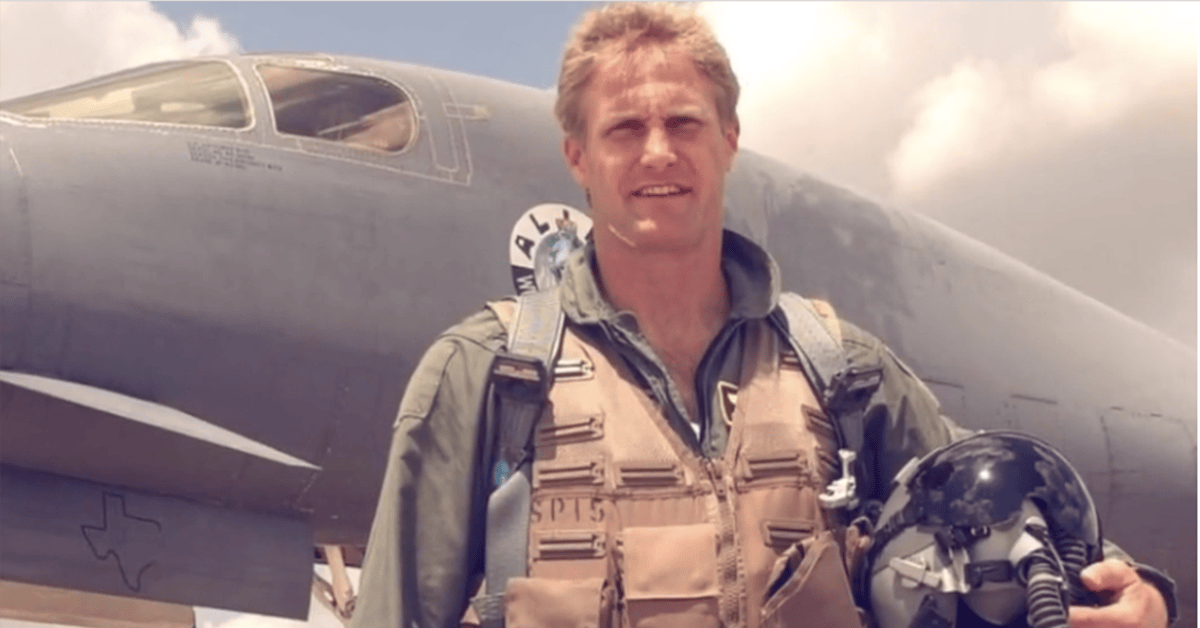
After Chad Hennings completed his playing career at the Air Force Academy in 1987, he received invitations to several postseason football functions. He noticed a familiar presence at most of these gatherings, Gil Brandt.
Inducted into the Pro Football Hall of Fame in 2019, Brandt was a longtime personnel executive with the Dallas Cowboys. Hennings told the “NFL Players Second Acts” podcast last year that Brandt would approach him and tell him the Cowboys were going to draft him.
With a military service commitment ahead of him, Hennings thanked Brandt but figured he possibly had played his final game. After graduating from the academy, Hennings faced at least five years in the Air Force. Because he wanted to fly jets, he actually intended to serve eight years in uniform.
Hennings planned to fulfill those terms.
“To try to maybe ‘lawyer up’ to get out of that commitment to go play in the league, it wasn’t going to happen,” Hennings said on the podcast. “I tried to succumb to the realization that playing in the NFL was never going to be an option for me. I went in with full anticipation of just doing a career in the military.”
In the end, Hennings only served four years. As the United States military downsized in the early 1990s, they offered waivers to service members. Hennings applied for and was granted one in 1992. He joined the Cowboys, and that season finished with Hennings and his teammates celebrating a 52-17 victory against the Buffalo Bills in Super Bowl XXVII in Pasadena, California.
Seeking a “Holistic Experience”
Hennings grew up as a Minnesota Vikings fan on a farm in Iowa. When he was not playing sports or following other interests, Hennings performed chores. That meant feeding cattle, bailing hay, and riding tractors.
Those activities didn’t attract college recruiters, however, the way that Hennings’ accomplishments on the football field did. He received other scholarship offers but chose the Air Force Academy because he sought a “holistic experience.”
His time in Colorado Springs, Colorado, didn’t disappoint. He went there as a tight end, but coaches converted him to a defensive lineman before his sophomore season in 1985. That year, he helped the Falcons finish 12-1 and set a school record for victories in a season. (The 1998 Air Force squad matched that mark, also finishing 12-1.)
The Falcons’ next two seasons were not as successful, even as Hennings’ national profile as a player increased. As a senior, he became only the second service academy player ever—and the first since Army’s Joe Steffy in 1947—to accept the Outland Trophy. That award is given annually to college football’s top interior lineman.
His impromptu run-ins with Brandt followed. Brandt told Hennings no lies as the Cowboys selected him in the 11th round of the 1988 NFL draft. Hennings was truthful with Dallas’ management team as well.
His next stop was the Air Force.
After graduating from the academy, Hennings began training to become a military pilot. After completing that, he headed to the United Kingdom, according to a 2016 Air Force News Service article. While stationed there, he deployed twice to Turkey during the Persian Gulf War and flew combat sorties as part of Operation Provide Comfort.
Coalition forces, consisting primarily of forces from the United States, UK, France, and the Netherlands, participated in Operation Provide Comfort. It aimed to provide humanitarian aid to Kurdish refugees while also involving military and security measures to protect those refugees.
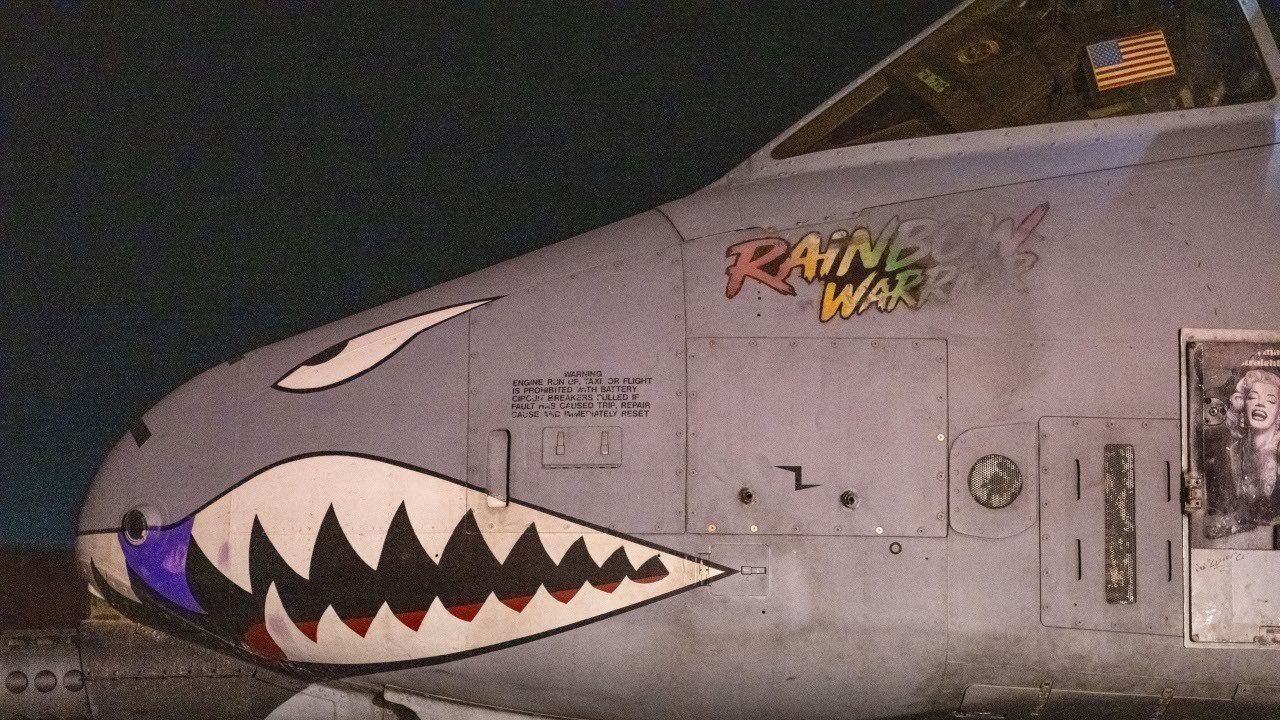
At the controls of an A-10 Thunderbolt II, Hennings flew 45 sorties in Turkey and Iraq for Operation Provide Comfort. Per the Air Force News Service, Hennings flew reconnaissance missions and escorted C-130 Hercules aircraft as they dropped food and relief supplies.
Once the Gulf War ended, the military began offering waivers. While still stationed in England, Hennings flew to Dallas for a workout. In the time since the Cowboys drafted him, Jerry Jones bought the team and replaced Tom Landry—the only coach that the franchise had since its inaugural season in 1960—with Jimmy Johnson.
Having traveled from England with little to no rest, Hennings went through his workout.
“Coach Johnson came up to me afterward and said, ‘Chad, we like what we see. When can you get out?’” Hennings recalled on the “NFL Players Second Acts” podcast. “I literally saluted him and said, ‘Coach, I’ll go find out.’ I went back and submitted my paperwork.
“Within three weeks, I was out-processed.”
“We Knew We Were the Best Team Out There”
Challenges were everywhere that the 6-foot-6 Hennings looked when he joined the Cowboys. He was undergoing his military transition in a spotlight. He had to become acquainted with a new playbook and teammates. Hennings hadn’t played a down of football in five years, and all of his efforts left him with no guarantee of securing a roster spot.
Hennings impressed the Cowboys’ coaching staff enough that he made the team. He hung around for nine seasons and earned three Super Bowl rings. Hennings registered two sacks when the Cowboys defeated the Pittsburgh Steelers 27-17 in Super Bowl XXX on January 28, 1996, in Tempe, Arizona.
It was Dallas’ third championship in four seasons.
“We knew we were the best team out there,” recalled Hennings, who finished his career with 27½ regular-season sacks. “I compare [it] to being a fighter pilot. It’s that confident arrogance, where you know you’re good [and] you know your abilities. You walk out there—you don’t flaunt it—but you walk with an extreme amount of confidence.”
Hennings saw other parallels between his time in the military and NFL. He offered one example to the “NFL Players Second Acts” podcast. Hennings recalled a story when he and his wingman were flying over the Mediterranean. Hennings experienced problems with the right engine on his A-10, causing him to shut it down.
They diverted to Crete.
““My wingman, one guy navigating, communicating with air traffic control. Another guy is helping me work through the [emergency] procedures,” Hennings said. “It’s just like the same thing on a team. When I’m down in my stance, playing for the Cowboys, I’m always looking over at [Hall of Famer] Charles Haley and saying, ‘What do you got, man?’
“You’re talking back and forth, the same type of communication, the same type of brotherhood.”
Hennings transitioned to the Air Force Reserve after his active-duty career.
He is arguably the most accomplished NFL player from a service academy since Navy veteran Roger Staubach quarterbacked the Cowboys in the 1960s and 1970s. While he never reached the status of Staubach as a player, Hennings became a fixture in Dallas for nearly a decade.
Hennings is 61 years old now, far removed from his playing days. He went on to, among other things, author books on commitment, purpose, and character. Those traits helped him both as a service member and a civilian.
And whenever Hennings looks back, he does so with few, if any, regrets.
“It all worked out great,” Hennings confessed to the Air Force News Service. “ I had an experience flying that I would never trade. If I had to do it all over again, I would do it exactly the same.”
Don’t Miss the Best of We Are The Mighty • Meet the only Heisman Trophy winner who died while serving during wartime • Jeff Monken’s Army football culture is built on more than winning • Why the Pentagon tried to convince Pat Tillman not to become an Army Ranger
Air Force earns bowl eligibility while Navy and Army fall on Halloween
Army downs Tulsa while Air Force and Navy fall in conference play
8 baseball players who served in the military and won a World Series
Tragedy at Navy game overshadows Army and Air Force victories
Why this retired Marine colonel and cancer survivor runs 50 marathons a year