Marines must complete new course on the ‘practical application’ of AI
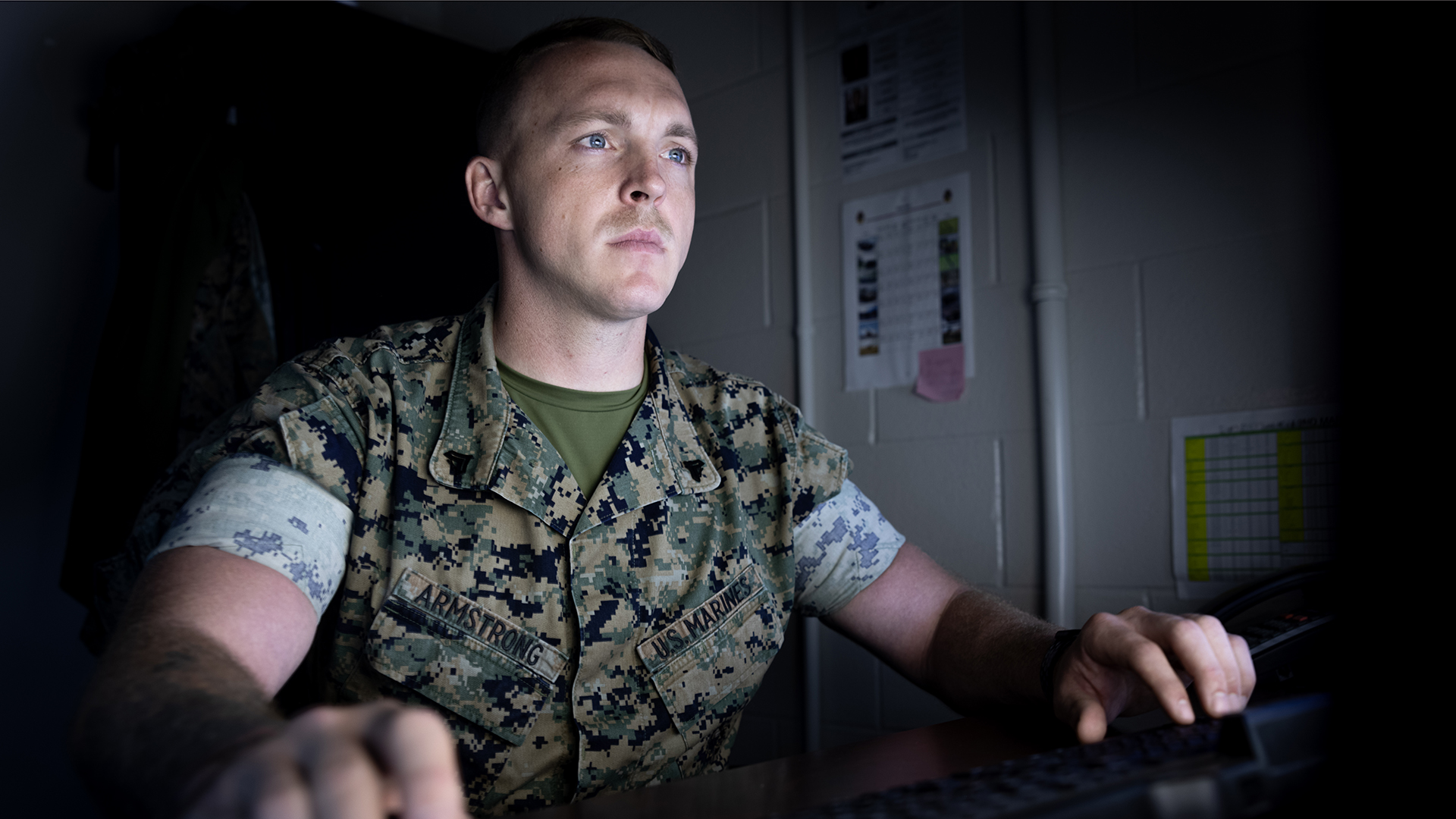
Just as all Marines are riflemen, they must now also be proficient in a new battlefield technology: Artificial intelligence, or AI.
All Marines have until Dec. 31 to complete a roughly 45-minute online course about the basics of AI, according to a recent Marine Administrative Message, or MARADMIN. Civilians working for the Marine Corps are also “highly encouraged” to take the course, the message says.
“Designed for Marines of all ranks and occupational specialties, the course emphasizes AI awareness and practical application rather than technical expertise,” said Maj. Hector Infante, a spokesman for Training and Education Command. “It serves as a foundational step in preparing Marines to operate, adapt, and lead in an increasingly AI-enabled Marine Corps.”
The new course teaches Marines about the use of AI in today’s operating environment and how AI can improve the decision-making process and overall mission effectiveness, Infante told Task & Purpose.
Top Stories This Week
Military will now prescreen recruits for 28 medical conditions
Air Force cargo hub stored weapons in unguarded building, IG finds
Last of the F-14 Tomcats could fly again under Maverick Act
By Jeff Schogol, Matt White
“It also features interview-style question-and-answer segments with Marine Corps subject matter experts and AI practitioners who provide mission-oriented perspectives on policy and operational use,” Infante said.
No specific information was immediately available about what those perspectives are or what questions are in the interview segments.
One intention for the new course is to ensure that Marines are “committed to the ethical and effective employment of AI in complex operational environments,” Infante said.
The course is a one-time requirement for all active-duty and Reserve Marines, the MARADMIN says. It comes as the Marine Corps continues to lean into new technologies, such as small drones, to keep pace with the changing nature of warfare.
The rapid advancement of technology poses both opportunities and risks for Marines, Infante said.
“Emerging and disruptive technologies can provide Marines a decisive advantage on the modern battlefield, but they also create opportunities for adversaries to exploit them faster or more effectively,” Infante said. “Among these technologies, AI stands out as the ‘first among equals,’ demanding immediate and focused attention.”
The new course is the latest sign of how the U.S. military as a whole is rushing to embrace AI. Chief Master Sgt. of the Air Force David Wolfe recently said that the service plans to teach airmen how to use AI for their jobs, according to Air & Space Forces Magazine.
The Defense Department also announced on May 1 that it had reached agreements with eight technology companies as part of efforts to become an “AI-first fighting force.”
While AI is widely seen as a crucial technology, it also has its limitations. In an experiment a few years ago, Marines were able to avoid being detected by an AI security camera by doing somersaults, walking behind a tree, and crouching under a cardboard box.
And despite the potential of AI and other technologies to be important battlefield tools, the Marine Corps will continue to rely on individual Marines to decide when to use lethal force, a senior Marine Corps officer recently said.
“Our philosophy has always been Marine centric,” Maj. Gen. John Jarrard, who led the 4th Marine Division at the time, said during this year’s Modern Day Marine exhibition in Washington, D C. “So as we add autonomous systems to the battlefield, one of the things that I think is important for us to remember from a training and education perspective is that each Marine has a well calibrated moral compass. We’re not going to outsource kill, no-kill decisions to an algorithm.”