Meet the dog who went from a family pet to a World War II hero
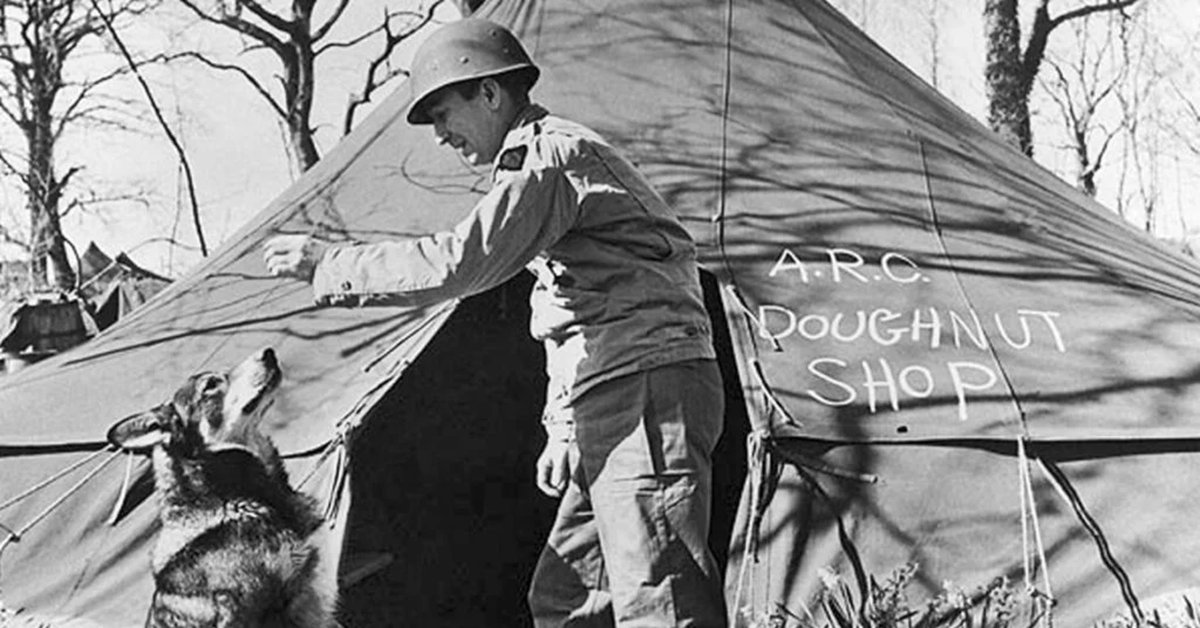
Of the 10,425 military dogs trained during World War II, Chips was extraordinary.
The German shepherd, Siberian husky, and collie mix was only about 2 years old when he joined the United States Army in 1942, but he grew up fast. Before his family donated him to the Dogs for Defense program, Chips never strayed far from home.
That soon changed—and fast.
Like most pooches, Chips possessed off-the-charts cuteness and two other traits inherent in our four-legged friends. He was fiercely loyal and protective, even in the most dangerous of circumstances. Nothing mattered more than protecting his people.
Assigned to the 3rd Infantry Division’s 3rd Military Police Platoon, Chips did not flinch when the Italians pounded his unit with relentless machine-gun fire early on July 10, 1943. He did not run away from the fight. Instead, he raced into a machine-gun nest at the outset of Operation Husky.
In the process, he became a legend.
Trained for Sentry Duty
Before becoming a faithful soldier, Chips belonged to a family in New York. The Wren family got him from neighbors, and they cherished him as a prized, albeit mischievous, addition. When the War Department requested that Americans do their part by donating their dogs for military training, the Wrens obliged.
Off Chips went to receive proper schooling at Fort Royal in Virginia. We don’t have any documentation about whether Chips was a prized pupil, but for the purpose of this narrative, let’s assume he was. In any event, the intrepid dog graduated and headed overseas.
Like nearly 90% of WWII military dogs, Chips was trained for sentry duty. Along with his handler, Pvt. John P. Rowell, he first saw action in North Africa. While his time there was relatively uneventful, he received more than a few stomach rubs after tipping off his handler to a pending ambush.
Once the division moved on to Sicily, Chips’ appetite for battle was more severely tested. The normally friendly dog was ready.
The Allied forces were primed for Operation Husky. The amphibious invasion of Sicily involved more than 3,000 ships, 150,000 ground troops, and 400 aircraft, according to the National World War II Museum.
As Rowell’s unit made it onto shore, a hail of gunfire soon greeted them. With shots ringing resoundingly in the air, Chips got away from Rowell and raced toward the direction of the enemy gunfire.
Sounds of a skirmish emanated from the Italians’ pillbox. Allied soldiers, including Rowell, heard one gunshot above all else and initially feared the worst, per a 2022 article from the Military Working Dog Heritage Museum.
Was Chips severely wounded or possibly dead?
Not exactly. Soon thereafter, a relieved Rowell “saw an Italian soldier come out with Chips on his throat. I called him off before he could kill the man,” the museum’s story recounted. Not only that, but three other enemy soldiers came out and surrendered—all because of Chips’ fearless action.
A Highly Decorated Dog
Chips did not escape the engagement unscathed. An enemy troop tried to shoot the hard-rushing dog and barely missed, leaving Chips with some scalp damage. He also sustained gunpowder burns, but overall, he was one fortunate canine.
So fortunate, in fact, that Chips returned to work that night. The dog further proved how invaluable he was during that shift, alerting Rowell of an impending raid of 10 Italian military men. Thanks to Chips’ elite skills of detection, the platoon captured all 10.
As a show of thanks for Chips’ courageous actions, he received the Distinguished Service Cross, Purple Heart, and Silver Star. They were rescinded, though, because the U.S. military prohibited those awards from being given to non-human service members. In their stead, his unit unofficially presented Chips with a theater ribbon with an arrowhead and eight Battle Stars.
During his various deployments, Chips served sentry at the 1943 Casablanca Conference involving U.S. President Franklin D. Roosevelt and British Prime Minister Winston Churchill. After his military service ended in 1945, he reportedly bit the unfamiliar hand of Supreme Commander Gen. Dwight D. Eisenhower.
Chips died in 1946, months after returning a hero to a family with open arms.
“Chips was something of a celebrity when he returned from the war, but we were just pleased to have our dog back,” John Wren, a young boy when his family first adopted Chips, said in 2018. “The letters that my father received from the soldiers that Chips served with prove just what a valuable asset he was to the U.S. Army.”
Don’t Miss the Best of We Are The Mighty
• 8 of the best dog breeds for veterans with PTS • The National Guard unit that stormed Omaha Beach on D-Day • ‘Masters of the Air’ got a definitive new edition from The Folio Society
World War II
Meet the dog who went from a family pet to a World War II hero
A tank commander recounts the Gulf War Battle of Medina Ridge in ‘Bandit’
DAV launches a free diabetes resource hub for veterans
A&E is back with the WWE for more ‘Legends’ and ‘Greatest Moments’
The Anduril Fury is the Air Force’s new autonomous wingman