One of the first Americans to survive a submarine attack led a daring POW escape
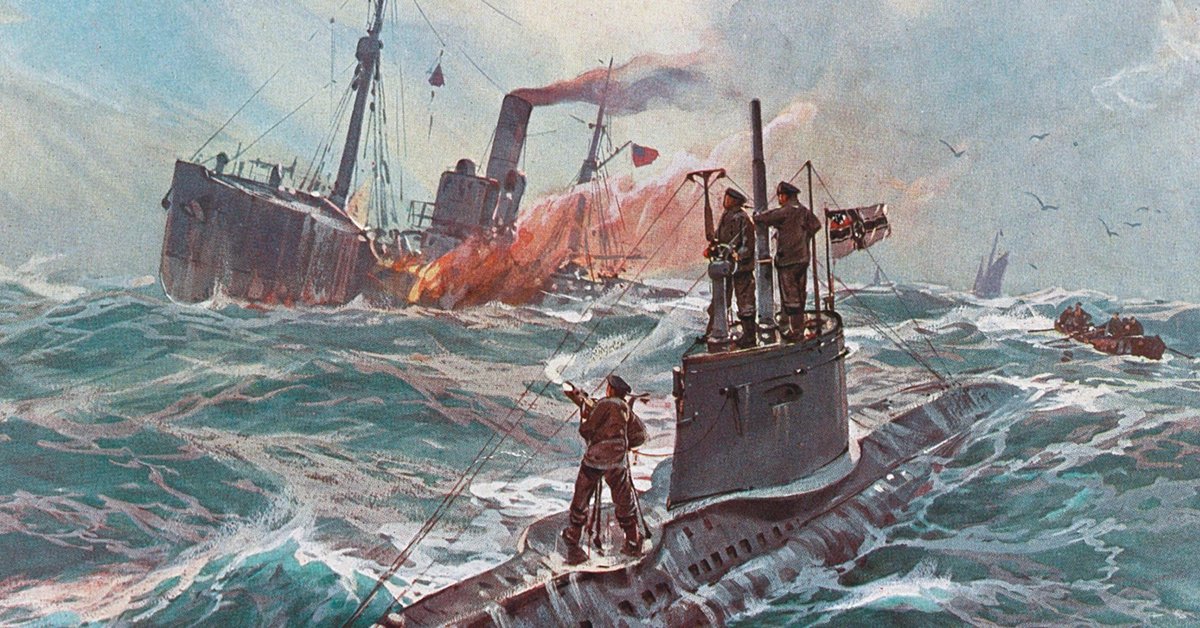
Navy Lt. Edouard Victor Izac served on surface vessels in World War I and, on May 30, 1918, while serving aboard the troop carrier USS President Lincoln. He became one of the first Americans to survive an attack by a German U-boat when U-90 sank the President Lincoln.
As a POW, he hid the fact that he could speak German and collected intelligence on his captors, attempted to escape more than 10 times before succeeding, and later reported his experiences to the Navy. He received the Medal of Honor for his exploits. What follows is an abridged version of his report to the Navy. It was edited for brevity and clarity.
Editor’s Note: Izac spelled his names “Isaacs” while in Navy service but kept his father’s traditional spelling in the rest of his life, including his eventual internment at Arlington National Cemetery. Editorial notes for context will be in italics and will refer to him as “Izac.”
USS President Lincoln Attacked and Sunk
At 9 o’clock on the morning of the 31st, I had gone off watch from my station in after-control and was just finishing breakfast when the ship was rocked by a double explosion. I immediately ran aft to my battle station, but before I reached it another explosion occured directly under No. 12 lifeboat. The submarine had fired three torpedoes at us at a distance at about 800 yards, the first two striking us forward near the bridge and the third one abaft the engine room. She was 100 yards directly ahead of the Ryndam when she fired at us, so she immediately submerged to a depth of 60 meters to avoid the Ryndam.
At ten minutes after nine I received a report from the after repair party that No. 5 and 6 holds were filled and the water approaching No. 2 deck. I reported this to the Captain over the ‘phone, and at 12 minutes after nine I received orders to abandon ship. At 9.15, having made sure that all hands aft had abandoned ship, I stepped from the quarterdeck upon a life raft floating alongside.
The sailors spent 30 minutes getting all the life rafts and life boats tied together as the ship went down. Izac then transferred to a lifeboat and, as the senior officer still alive, captured by the Germans.
I made my way to the conning tower, where the captain asked me if I were the Commanding Officer of the President Lincoln. I told him, “No” but that I thought the Captain had gone down with the ship. He informed me that he was Captain Remy of the U.90, and that he had orders to take the Senior naval officer prisoner whenever he sunk a Navy ship; that I should remain aboard and point out the Captain to him, or it would be necessary to take me instead.
Accordingly we cruised slowly amoung all the rafts and boats, and I sung out to different officers asking if they had seen the Captain. After two or three negative answers I turned to Captain Remy and told him that I was sure the Captain had gone down with the ship; whereupon he sent me below, where I was given warm clothing and was allowed to lie down in one of the bunks.
The next day, June 1, the Germans intercepted American radio traffic indicating the other ship survivors had been picked up. The German captain, Remy, attempted to elude the destroyers but they were pursued and attacked with depth charges before escaping successfully.
Over the next nine days, the German sub eluded destroyers and made its way north around the United Kingdom and toward Germany. Just after midnight on June 10, Remy saw his first chance at trying to escape as a small collection of U-boats rendezvoued with U.90 in twilight between Denmark and Sweden. The Germans allowed him a smoke on deck.
The First Escape Attempt As a POW
I had been on deck about 5 minutes when about a quarter of a mile away I saw another submarine come to the surface. Fifteen minutes later still another submarine emerged making three of us in all. The three submarines continued under way at low speed, moving backwards and forwards apparently using up time. Finding that I was finally at their rendezvous and that I was not far from a neutral country, I determined to try to make a getaway.
I had my life jacket which had never been taken from me, and I waited around on deck hoping it would get dark enough so that when I was in the water I would not be seen and picked up again. However, it was 12.30 and would apparently become no darker so I decided now was the time to jump.
While I was moving over towards the side of the platform abaft the conning tower, a German destroyer was sighted bearing down on us from the east at high speed. She was also making the rendezvous in order to escort us through the sound. Just as I was going over the side, Captain Remy, who was never more than two yards from me, caught me before I could jump. He ordered me below. Just before I passed through the hatch in the conning tower I took one last look around and saw that the destroyer was placing herself at the head of the column, the 3 submarines were following…
A POW and Spy
Izac collected an amazing amount of intelligence, like defences on the route they took, which ships he spotted, how they trained and what equipment was visible. He memorized many of the German officers he met, including one that was, like Izac, a U.S. Naval Academy graduate. He even detailed the German captain’s understanding of the war and what broadcasts were sent to the submarine.
He believed as all Germans are taught to believe by the governmental propaganda, that our entry into the war must have as its motive the rendering safe of the millions we loaned to France and England earlier in the war.
When I was captured the Germans were nearing Paris. On the submarine we received radio reports every day and it did look bad for the Allies. Remy and his officers were absolutely confident that the war would be over in a few months, and would end in a big German Victory…
The Germans treated Izac well on the submarine where he shared in their top-tier food. The commander even swapped out Izac’s $5 from his pocket into German currency. But he was transferred to the SMS Preussen, a battleship that tended to submarines, where his food was scarce, usually moldy bread or coffee made from acorns and barley.
He then transferred to prisons on land, including a “Listening Hotel,” where all the imprisoned officers knew the Germans were spying on their conversations. Three prison escape attempts there failed. During a train ride to a new prison, Izac attempted another.
His Most Daring Escape Attempt
I saw a time table and planned to jump from the train at the first opportunity, but preferably as far south as possible in order not to have so far to walk to reach the Swiss frontier. But never once had I the least opportunity of breaking from the guards. They sat on either side of me with their guns (which were loaded) pointed at me all times. Finally we were only a few miles from Villingen, the train had already reached and passed the crest of the mountains and was on the down grade making good speed. I knew it had to be now or not at all.
So watching my chance I caught one guard half dozing and the other with his head turned in the other direction, and jumping past them I dove for the window. It was very small probably 18 x 24 inches. On the outside of the car there was nothing to land on so I simply fell to the ground. Just as I disappeared, the guards who had been wondering what it all was about, jumped to their feet with a shout and pulled the bell cord. The train was making about 40 miles an hour and came to a stop about 300 yards farther on.
In the meantime I had landed on the second railway track. The ties were of steel and in falling I struck my head on one and was stunned for a few seconds. But the injury that did the damage was to my knees which struck another tie and were cut so badly that I could not bend them. I struggled to my feet and tried to shuffle off towards the hills and forest a few hundred yards away. But by this time the guards were out of the train and firing at me.
I kept on going as long as I could, and then turned around and found that the guards were only 75 yards away, so I held up my hands as a sign that I surrendered. One of the guards had just fired. The shot passed between my hat and shoulder, and had they continued firing they must surely have hit me. When I turned they were on me in a few seconds. The first guard turned his gun and grasped it by the muzzle, and struck me over the head as I half lay and half sat on the side of the hill.
Izac was beaten to the ground seven or eight times, until one of the guard’s rifle stock broke. The Germans took him to a camp and put him in solitary confinement for almost three weeks. He lost 30 pounds in confinement, dropping to 120, but promptly returned to planning escapes. Working with others, they came up with a plan for four teams to escape together.
His Final, Successful Escape
The plan of the first team was to cut the iron grating of the window in my barracks and launch a bridge through the opening out to the top of the outer barbed wire fence. We were to then crawl along the bridge and drop down outside the wire. The second team had wire cutters and were to cut through the outer wire. The third team were to go out of the main gate with the guard off duty when it rushed out in pursuit of the other teams. The fourth team were to build a small ladder and climb over the outer fence.
At 10:30 the barrack lights were turned out as usual. Shortly afterwards the signal was given and a team consisting of doctors threw the chains and short circuited all the lighting circuits in the camp. I have never been able to find out how the other teams fared, except to know that Willis of the third team and one of the fourth team got out of the camp. My team were more successful.
The night before one of the officers and I stole out to the tennis court and brought into my barracks the two long wooden battens used as markers. We hid them under the beds. They were about 2 1/2 inches wide, one inch thick, and were 18 ft. long. I had had my eye on them for a long time because they were the only things in the camp to reach from the window ledge to the outer barbed wire fence. They were very light and of course would not hold any weight, but I had a plan to remedy that.
Two Army officers who did not care to go were to launch the bridge through the window to the outer fence, leaving the three foot over-lap on the inboard side. When we crawled over the bridge they would then put their weight on the ends that overlapped and this would neutralize the great bending moment at the middle of the span.
I had stolen Red Cross food boxes and with the boards from these I made little slats which when screwed to the long battens (nailing would have attracted the guards) would make a very passible bridge. In the afternoon one of my team and I cut and filed the grating in my window.
It had to be done when the guards were at the end of their beats outside, but we finally finished by dark. After last muster at 7 P.M. we began on the bridge and finished it by 10 o’clock. I then blackened it with shoe blacking so it would not appear white in the darkness.
As the lights went out the bridge was thrown across and the smallest in the team of three crawled out. I was second and the heaviest man third. When the bridge struck the outer fence, the nearest guards ran to the spot singing out: “Halt-Halt.” As the first man reached the end of the bridge and dropped to the ground outside, I was beside him before he could straighten up and coaching him I dashed past the guards who were then within a few feet of us preparing to fire. As we passed them they fired, and the flash of the gun on my right almost scorched my hair. Then I heard the third man jump to the ground.
We continued to run directly away from the camp and the whole side opened fire. It was a starlight night, but so dark they could not see to fire so although the bullets were singing all around us, we were not hit. By our thus drawing the fire, the other teams had a fine opportunity to cut their way out.
A few minutes later the guard of about 40 men sleeping in the guard house rushed out of the main gate in answer to the firing, and Willie came out with them, was fired on, but finally kept his rendezvous with me about two miles away. Knowing that in a few minutes the battalion of at least 300 men together with hounds would be on our trail we headed across country and put several miles between us and the camp. We continued thus for six days and nights, walking mostly in the night time, never on roads and bridges, which are patrolled, but through the rivers, fields and mountains, and finally on the 7th night we came to the Rhine.
Izac Evades Recapture Just in Time for Peace
We had travelled about 120 miles, although the distance as the crow flies is perhaps only 40 miles. We had a little food in our pockets, but lived mostly on the raw vegetables in the fields. When we came to the Rhine we spent about four hours trying to get past the sentries, and finally had to crawl the last half mile on our hands and knees down the bed of a mountain creek.
About 2 A.M. Sunday, October 13, we were crouching in the water at the mouth of this creek where it flows into the Rhine. The hardest fight was still before us. In whispers we discussed the next move and then took off most of our clothes. As we steeped farther out, the current caught us and swept us away.
The stream at this point is 200 meters wide and has a current of 12 kilometers an hour. The water was like ice and when I had been carried to the center of the stream I couldn’t get out. After fighting for ten minutes, I made one last effort and managed to get past the worst of the center, and then just as the last of my strength had gone my feet touched the rocks.
I was then in Switzerland. After a rest I crawled up the bank and in a few minutes found a house where I was taken in and put to bed. The next morning I was turned over to the gendarmes. They had also located Willis in a house about three miles further down where he found himself after his swim.
The Swiss were elated when they heard we were Americans. They look us to Berne and turned us over to the American Legation on October 15th, where we were provided with passports.
Izac made it back to friendly lines with a trove of information in his head. For his intelligence gathering and multiple escape attempts while wounded and disabled, he later received the Medal of Honor. Fortunately for everyone, though it did reduce the need for Izac’s heroics, Germany suddenly asked for an armistice on the evening of November 11 and agreed on terms overnight, just weeks after Izac returned for friendly lines and two days before he submitted his completed intelligence report of the prior six months. Disabled by his injuries, he went on to serve as a member of the House of Representatives from California and survived to 1990. He is interred at Arlington National Cemetery.
Don’t Miss the Best of We Are The Mighty
• Enemy armies teamed up for the ‘Wolf Truce’ in the middle of World War I • How machine guns on World War I biplanes never hit the propeller • World War I officers could ‘pay-to-win’ with Sears machine guns
One of the first Americans to survive a submarine attack led a daring POW escape
4 creepy ghost stories from the Vietnam War
World War II
Fire destroys Adolf Hitler’s retreat known as the Eagle’s Nest
The story behind the Civil War sub that sank a Union ship, then disappeared
World War II
How this Marine veteran scrambled to survive after the USS Indianapolis sank