Prince Harry reveals what he was running from when he joined the military
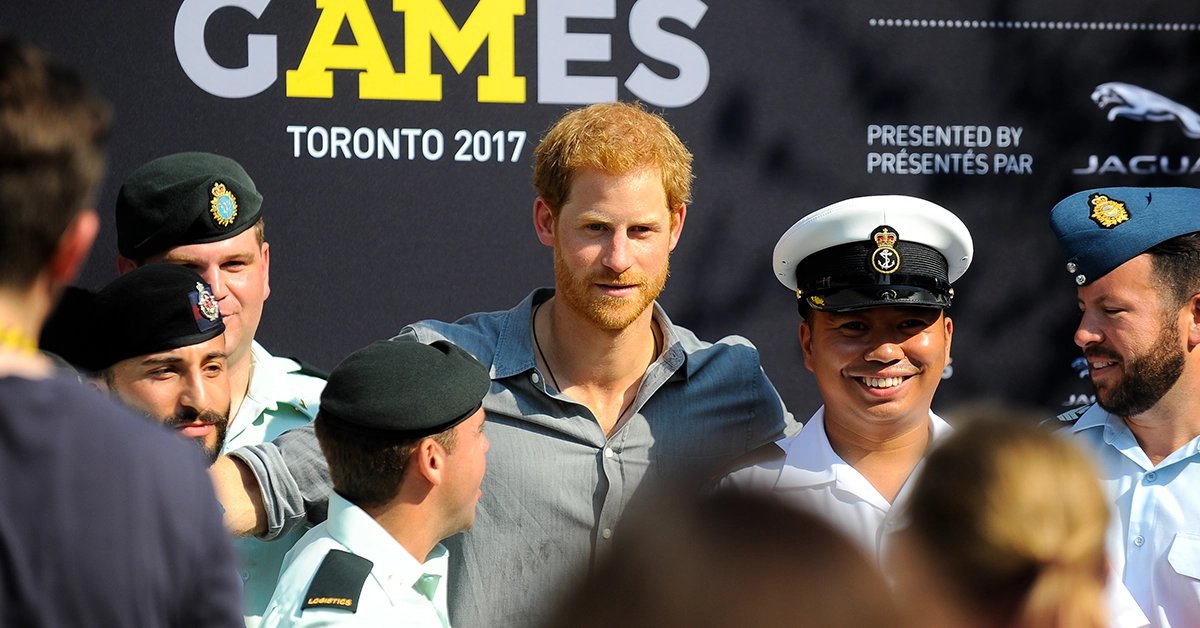
Prince Harry once viewed the military as an escape from his past. Now, he’s opening up about the grief and childhood trauma he carried with him into service, and how years later, he began to understand what he had been running from.
In a new interview with GQ published Oct. 20, the Duke of Sussex discussed the death of his mother, Princess Diana, his time in the British Army, and the ways unresolved trauma can follow someone into adulthood. Harry, who was 12 when Diana died in a 1997 car crash, said his military career offered an escape at a time when he was still processing that loss.
“It was an escape for me and I didn’t realize what it was doing for me then, or what I was using it to get away from,” he told the magazine.
Harry served for 10 years in the British Army, including two tours in Afghanistan, before leaving military service in 2015. His experiences helped shape his long-standing commitment to supporting wounded service members and veterans, including through the Invictus Games, the international sporting competition he founded for wounded, injured, and sick military personnel and veterans.
In the interview, Harry also reflected on a more complicated side of military life, suggesting that the experiences that help someone function in uniform do not necessarily resolve what they carry into service.
He described himself as a “highly adrenalized 20-something-year-old” when he joined the military and discussed how people who grow up in difficult family circumstances may find purpose and structure in military life. He also pointed to research suggesting that traumatic experiences during military service can bring earlier childhood trauma to the surface.
“The incident was the trigger, but what it has now opened up precedes service,” Harry said. “And it’s childhood trauma of which so many of us carry. Some of us are aware of it, a lot of us aren’t.”
His comments touch on a difficult reality for some veterans – the challenges that emerge after military service may be connected to more than one experience, and understanding those challenges can require looking beyond the battlefield.
Harry also questioned the military culture that can make emotional vulnerability difficult, particularly for men who have been taught to equate strength with keeping their feelings to themselves.
“I’ve said over and over again for years and years and years, being vulnerable is not weakness,” Harry said. “It is strength, especially the fact that in my life I will defend my family with full strength, but at the same time I can be the vulnerable individual, whether it’s as a husband or whether as a father. And again, it goes back to balance. You can’t just be this macho dude who has no sensitivity, is unable to be vulnerable and is basically just a douche.”
The interview coincides with Harry’s new MasterClass, “Redefining Grief: Building Resilience Through Loss,” developed alongside grief expert Dr. Mary-Frances O’Connor. The course explores how people experience loss and how they can learn to live with grief rather than simply trying to suppress it.
Don’t Miss the Best of We Are The Mighty
• The BBC broadcast Britain’s Falklands War invasion plan before the invasion • The history behind the Navy’s iconic ‘Dixie Cup’ hat • Delta Force finds its best counterterrorism operators with the ‘Long Walk’
Prince Harry reveals what he was running from when he joined the military
Only 150 British regulars fought in this battle—11 got Victoria Crosses
SAS operator Christian Craighead faces arrest in the UK for his book about Kenya terror attack
Movies and TV
The real story behind the peasants’ revolt in ‘The Uprising’
5 battles the side with all the numbers still lost—against all odds