The PCS dilemma we all anticipate and how to start rebuilding your village
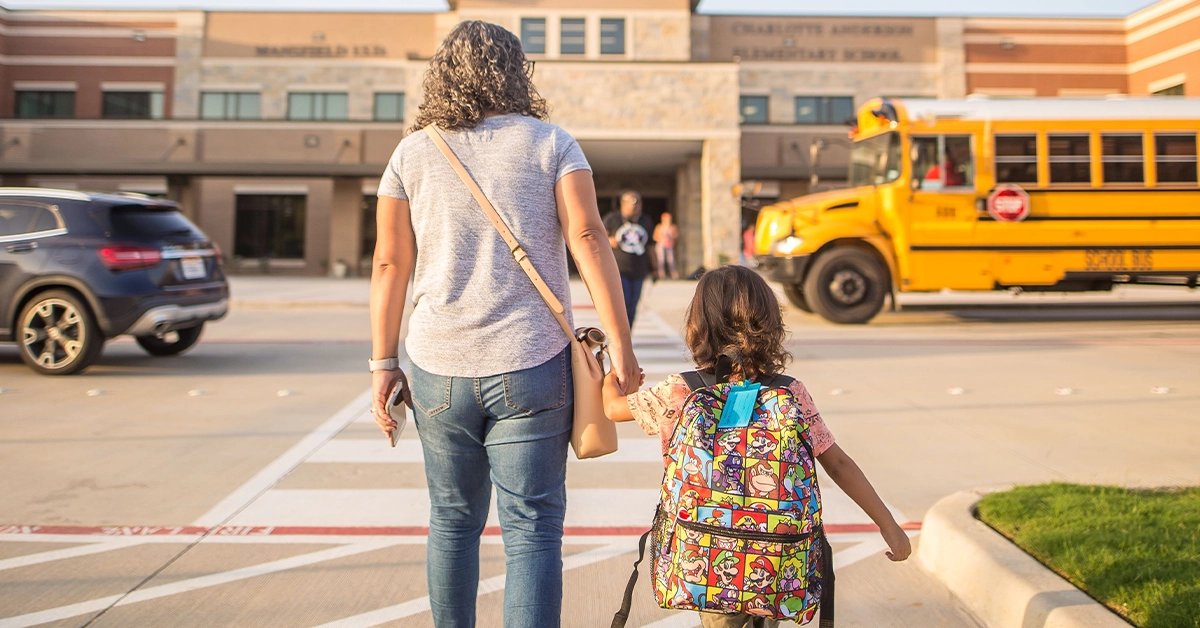
Great news. Your family survived the move with minimal damage or loss and the house is mostly unpacked. There’s only a dozen big ones left that will take some time to sort, but you got this. The grocery store is close, you’ve figured out which gate to use, located the nearest ice cream shop, and have only cried twice because you’re overwhelmed while trying to figure out your kids’ new school routines.
Then comes the tedious school registration: Name. Address. Phone number. Parent information. Three emergency contacts.
Dang! Three?
Time hasn’t allowed a visit to the new unit yet to meet your military family, but a sweet older couple who has lived in the neighborhood for over 30 years brought a box of fresh pastries from the local bakery last week, and the mail carrier whose first name is Jenn, you think, offered to dog sit probably would suffice until roots start to grow.
“Three emergency contacts?” you ask yourself out loud. “But we just got here!”
For military families, this seemingly simple question can highlight one of the hardest parts of a PCS and that’s rebuilding your village. Again.
The Emergency Contact Dilemma
For many families, emergency contacts are people who have been part of their lives for years. Grandparents. Aunts and uncles. Godparents. Close family friends. Trusted neighbors. Maybe even a babysitter or two throughout the years that you can’t imagine not being in your family’s lives.
But military families don’t always have the luxury of geographical proximity.
Grandparents may live three states away. Best friends from the last duty station may now live OCONUS, or your child’s favorite babysitter is now a freshman in college.
And as soon as you get settled with an address closest to the school that best fits the needs of your family, it is now your responsibility to identify people who can be there for your child if you can’t be.
That’s when the PCS reality starts to hit hard because families don’t just move houses. Entire support systems have to be rebuilt- over and over again with each new PCS. It can be exhausting, but the work most definitely pays off when your foundation is solid.
When Your Village Is Spread Across The Country And Other Parts Of The World
Military spouses have basically earned an unofficial degree in making long-distance relationships work. Pa and Mimi can FaceTime after school and listen to how the kids’ first day went. Your best friend from four duty stations ago will answer the phone at 2 a.m. because they also do their best work after midnight. Your sister can coordinate who in the family is attending an anniversary party for your parents 500 miles away, and your former neighbor still knows your middle child’s favorite snack.
Every single relationship absolutely matters, but there’s an important distinction between someone who is emotionally available and some one who can physically arrive at your child’s school when the nurse calls when your son needs to be picked up because he puked all over himself. That is when the emergency contact list gets complicated. Sometimes, even a bit depressing.
The question isn’t simply, “Who do I trust enough?” It’s more like, “Who do I trust, who knows my child, who understands our family, and who can realistically help if something happens, like… today?”
The People You Could List
So who do you end up listing on the form? Maybe it’s a new neighbor you’ve started getting to know or another military spouse that’s a friend of a friend from your spouse’s new unit. Or, it could be someone from sports, church, or a relative that lives within 100 miles.
Realistically, you might not have all of the answers when you first move. The good news is that you don’t have to build your entire village overnight, but you do need to start somewhere.
Don’t Confuse an Emergency Contact With a Trusted Person
Before you put someone’s name on the school form, understand what that designation actually means. Schools can use terms such as emergency contact, authorized pickup, or authorized person differently. Being listed as an emergency contact may not automatically mean someone can pick up your child.
The person you authorize for pickup may have different requirements than someone you identify as a contact. Before filling in those three coveted spaces, ask the school:
• What does an emergency contact designation allow this person to do? • Can an emergency contact pick up my child? • Does the person need identification? • Can I list someone who lives out of state? • Can I change my contacts during the school year? • Is there a separate authorized-pickup list? • What happens if neither parent can be reached?
It may feel like one more thing to figure out during an already emotionally and physically draining PCS, but understanding the protocol, procedures, and rules in the beginning is much easier than trying to figure them out during an actual emergency situation.
One of the best ways to approach building your village is to stop overthinking your emergency contacts as three names on a form that you can’t identify, yet, and start thinking about them as layers of support.
Layer One: The people who can get to your child quickly.
A trusted neighbor, close friend, another military spouse, or even a childcare provider. These relationships may be new, but they can become incredibly important.
Layer Two: Your Military Community.
Military families understand something other families don’t always have to think about and that reality is that oftentimes your spouse isn’t always available.
Deployments and TDYs happen, sometimes within a small window of time to plan ahead. Duty schedules can even change overnight. Military spouses often become one another’s emergency infrastructure.
The spouse who says, “Call me if you need anything,” may eventually become the person you call when your child is sick, your car won’t start, or the school calls at 2:15 p.m. for early dismissal, but you’re 45 minutes away. Don’t underestimate the power of building community.
Layer Three: Your Long-Distance Village.
Just because Grandma can’t physically pick up your child doesn’t mean she isn’t part of the family emergency plan. Long-distance family members can still be informed, supportive, and involved.
They may be the person you call when something serious happens or the ones that coordinate with other family members when emotional support is needed. Distance doesn’t make someone less important, but it does change their role.
Then There’s Deployment Level
Military families have an additional layer of complexity that doesn’t fit neatly into a school registration form. Questions like, “What happens when your primary parent is deployed?” or “What happens when the parent at home is traveling for work?”
Your emergency plan should be flexible enough to account for the reality of military life which means reviewing your family emergency plan when circumstances change, not just at the beginning of each school year when you have to register your kids. Every single new duty assignment, deployment, divorce, remarriage, relocation, or significant life change may mean it’s time to revisit the plan.
Don’t Pick Someone Just to Fill the Blank
This might be the most important rule: Don’t just put someone down because the form has an empty space. Before adding someone, make sure they:
• Know you’ve listed them • Are comfortable serving in that role • Know your child • Know how to reach you • Know where the school is located • Understand what they may be asked to do. • Can realistically respond if needed
Most importantly, your child should know who they are, or at least be able to identify them by name. A name on a form is not a relationship. The goal is to create a safe place for your family in an emergency situation and your children need to feel comfortable with said emergency contact if that time comes, Heaven forbid.
The Village Takes Time To Construct
There’s something particularly humbling about a PCS. You can walk into a new duty station with years of parenting experience, a successful career, a strong marriage, a newly independent life, and still feel like you’re starting over. Again.
A new teacher, boss, doctor, hair stylist (don’t even get me started at the pains of this one), and an entire community is yours to cultivate. This is the reality of military life and you’ve done this before, and more than likely will do it again. But you already know that your village doesn’t have to be created on the first day your kid goes to school.
It gets built at random places like the playground, at soccer practice, school pickup line, unit cookout, library, or church. There are opportunities all around us that can spark conversation that may bud into a connection with a relationship soon to follow.
So, About Those Three Emergency Contacts
Maybe you have them, but then again, maybe you don’t. One could be local and two might live hundreds of miles away, and that’s okay.
The important thing is to start building intentionally because PCSing isn’t just about starting over. It’s about finding your people and adding to your village, in a new location where the first step toward finding your people is a stressful question on a new school registration form: “Who can we call in an emergency?”
You may not have all three names today, but give it time because you know you will get there. You’re a military spouse and you can do anything because we are exceptionally gifted at building something meaningful out of unfamiliar places, people, and uncharted territory. Watch us work.
We move. We adapt. We connect. And we build community, Eventually those three empty spaces on the school form aren’t not so intimidating anymore. They’re just three more reminders that somewhere along the way, you built another village to support your family. That was all you!
Don’t Miss the Best of We Are The Mighty
• The difference between Special Forces and special operations • How a B-29 bomber crew accidentally created an Air Force holiday • A pilot survived a Mach 3 ejection from the edge of space by not ejecting at all
Mighty MilSpouse
Mighty MilSpouse
The PCS dilemma we all anticipate and how to start rebuilding your village
By Sara Jane Ginn
Military divorce is another unspoken cost of service
By Sara Jane Ginn
Their daughter was in hospice. His orders came anyway.
Mighty MilSpouse
The 5 biggest life skills you’ll learn as a military spouse
Mighty MilSpouse
My spouse is deployed aboard the USS Abraham Lincoln. This is what’s really happening