VA Research Wrap Up: New findings on suicide, spinal cord injury and stroke
VA’s Office of Research and Development recently published three News Briefs highlighting research findings on service members at-risk for suicide receiving VA care, spinal cord injury and stroke.
Most service members with a suicide attempt join VA for help
A VA Center of Excellence for Suicide Prevention study revealed 61% of Veterans with a documented suicide attempt in the two years before military separation received continuing health care from VA after separating, with 90% of those using VA’s mental health services.
The results highlight the impact of military transition programs for this high-risk group. The study also found that of the more than 1 million service members who separated from active duty between 2015 and 2020, those with a suicide attempt were nearly twice as likely to initiate VA health care and more likely to access VA health care sooner than other Veterans. While the study shows VA’s success in reaching Veterans with a high risk of suicide, the researchers noted there is still much work to be done.
Helping paralyzed Veterans with sit-and-stand transfers
Cleveland VA researchers demonstrated that stimulating the paralyzed muscles of Veterans with a spinal cord injury can make assisted transfers easier and help reduce the burden on caregivers.
Assisted transfers for those with a spinal cord injury are one of the leading causes of injury for caregivers. Researchers first used a 3-D simulation to estimate what muscles would need to be activated to assist in a standard sit-to-stand transfer maneuver. Then a physical therapist used functional neuromuscular stimulation to activate the paralyzed muscles of the Veteran’s hips and legs. While the Veteran was not able to completely support their own weight, the assistance of the activated muscles reduced the forces on the therapist’s joints by 24% to 35%. The study showed functional electrical stimulation can potentially make assisted transfers safer without the need for expensive mechanical lift systems.
Treatment could protect against post-stroke brain injury
VA Pittsburgh researchers identified a potential target to protect against brain injury immediately following a stroke.
Using a mouse model, researchers found immune cells called monocyte-derived macrophages rapidly invade the brain after a stroke, and a protein derived from these immune cells called Galectin-3 exacerbates the stroke injury. Applying a compound that inhibited Galectin-3 production reduced the spread of cell death, eased neuroinflammation and improved long-term neurological outcomes. The results suggest administering drugs targeting Galectin-3 immediately after stroke could be a promising treatment to prevent further brain injury.
For more Office of Research and Development updates, visit ORD online or go to https://www.research.va.gov/news_briefs/.
Related Health stories
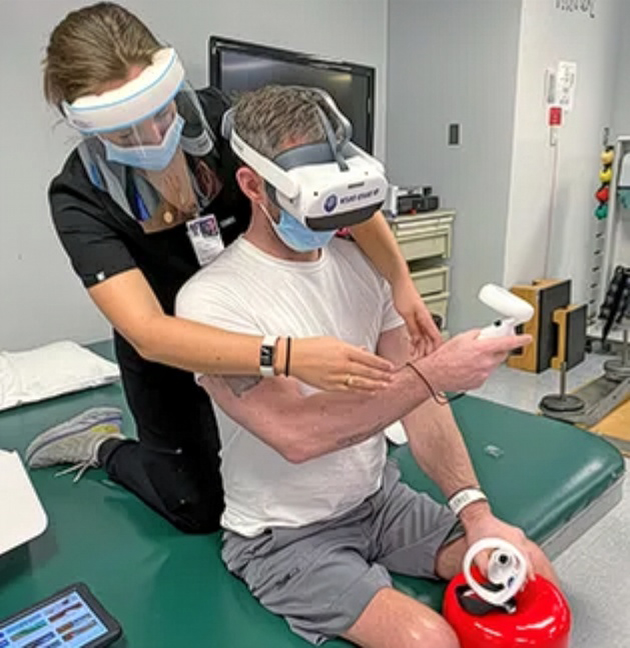
Virtual reality pain treatment expands for veterans
The Department of Veterans Affairs is expanding access to a U.S. Food and Drug Administration-authorized virtual reality (VR) therapy design

Live Whole Health #320: You deserve a break
Do you spend hours jumping between screens, messages and tasks during the day? Over time, this can make your mind tired and your body stiff.

First in VA to receive cutting-edge epilepsy treatment
A groundbreaking laser procedure offers a safer option for epilepsy treatment Back in 1980, when Robert Lindemann decided to enlist in the A