World War I troops said ‘f*ck’ so much, it was scarier when they didn’t
Sometimes it’s not what you say that means the most, it’s what you don’t say. Certain words carry a heavy weight when said by the right person at the right time. If it’s forceful and/or dirty enough, it could be burned into your memory. For some soldiers in World War I, one word in particular was used so often that leaving it out was enough to tell them they were in danger.
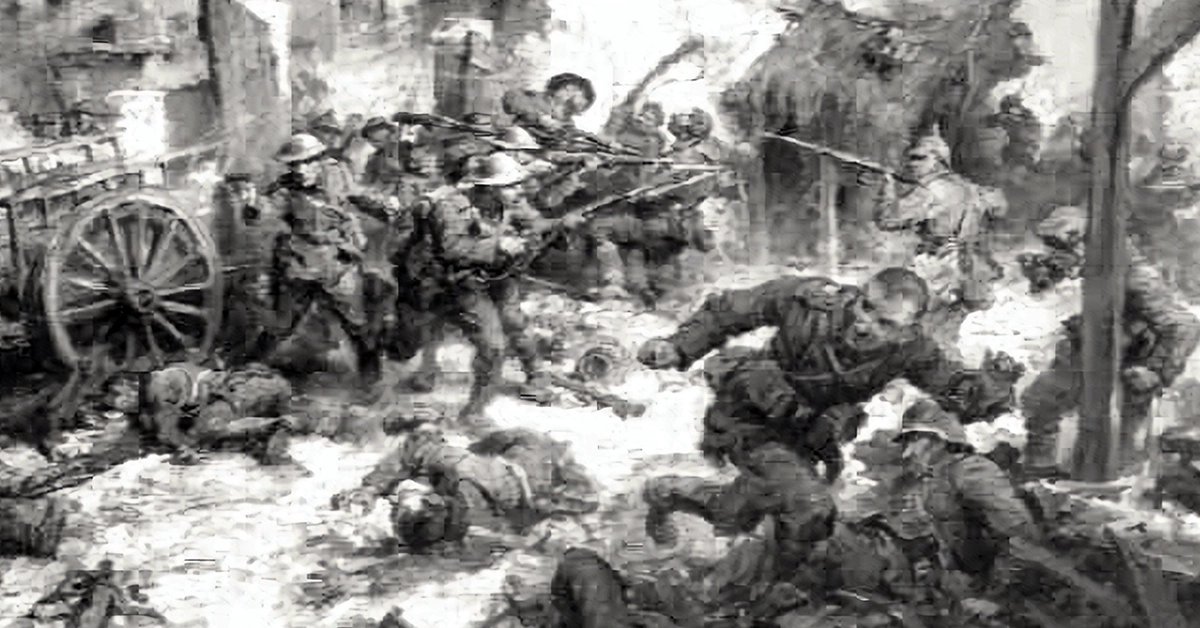
It turns out that the world wasn’t all that wholesome in the early part of the 20th century. Life for soldiers fighting in the trenches of the Great War was famously not great. American troops weren’t spared any of it just because they arrived late to the fight.
Trench life was dominated by rats, dead people, the enemy trying to make more dead people, and trench foot. Suffice to say, no one was really interested in watching their language, least of all the men who had to live in a constant river of mud and blood.
World War I wasn’t the beginning of the F-word, but it was when people started feeling comfortable enough with it to write it down.
Etymologists—the people who study the history of languages and trace word meanings—have long found it difficult to follow the lineage of the word “f*ck.” probably for the same reason that I’m writing an article about the word, but still can’t type the full word. The F-word is so taboo in the English language that few would ever write it down, even in historical documentation context.
Luckily for us, the Oxford English Dictionary eventually started following it, and its research reaches well beyond the First World War.
The OED followed the history but didn’t actually include it in its printed dictionary until 1972, as it was illegal to print in publications in Britain by the Obscene Publications Act of 1857 and in the U.S. by the Comstock Act of 1873. The laws may have kept it out of books, but stopped absolutely no one from using it in everyday speech, least of all the military troops in the trenches.
The definition of “f*ck” in 1918 was the same as its initial meaning, “to have sexual intercourse with,” and has been similarly pronounced since its first appearances in the 15th century. Indeed, OED found mention of the word as “fuccant” in a “scurrilous” Latin-Middle English hybrid poem, called “Flen Flyys,” about what local Carmelite friars did with the wives of the nearby town of Ely, and thus why they did not get into heaven.
Well, 500 years later, the F-word still meant the same thing. Saying the F-word was so routine that when your sergeant suddenly didn’t use it, even the most scared or shell-shocked troop knew something was wrong. The OED’s research includes this line from John Brophy’s “Songs and Slang of the British Soldier: 1914-1918.”
“It became so common that an effective way for the soldier to express this emotion was to omit this word. Thus if a sergeant said, ‘Get your f—ing rifles!’ it was understood as a matter of routine. But if he said ‘Get your rifles!’ there was an immediate implication of urgency and danger.”
Sometimes what you don’t say really is as important as what you do.
Don’t Miss the Best of We Are The Mighty
• Someone coined a term for the English spoken by military veterans • The funniest AI slop video drops GTA gangbanger into World Wars I and II • Ukraine is using a World War I ‘creeping barrage’ tactic to turn the tide of the war
World War I troops said ‘f*ck’ so much, it was scarier when they didn’t
The fascinating history of the military duffel bags we know and love
The tradition and history of the military Challenge Coin
The hilarious rules of the Air Force’s formal Dining-In
American troops drank 2 million energy drinks during Operation Epic Fury