5 battles the side with all the numbers still lost—against all odds
When defending any position, the second-to-last thing a military unit wants to know is that they’re outnumbered. The very last thing the defenders want to know is that they’re massively outnumbered.
Being outnumbered leads to a losing mindset, which can be a real morale killer, which can only hurt a unit’s ability to fight effectively. Being so outnumbered that defeat feels guaranteed can be a self-fulfilling prophecy—but it doesn’t have to be.
There are many examples in history of units winning against the odds. So if you find yourself out in the field, outnumbered 30-to-1, just try and think about these five victories.
1. The Battle of Agincourt
Few wars were as bitter, brutal, and infamous as the Hundred Years’ War between France and Britain. There’s a reason why the Rolling Stones sing about it. And there are a lot of reasons why it lasted (more than) 100 years.
One of the most famous battles of the war came at Agincourt, where a force of 6,000 English longbowmen completely routed a superior (in numbers, at least) force of 30,000 French heavy infantry and cavalry.
King Henry V personally led the defense of his force, which, according to medieval military doctrine and every historian ever, should have been trampled by France’s 10,000 mounted troops, arrowed to death by thousands of crossbowmen, and beaten down by the rest.
Instead of that, the English longbow decimated the French on their approach and, when they got bogged down in the mud, were hacked to death by the English counterattack.
2. The Battle of Longewala
When the Pakistanis attacked Indian air bases in December 1971, they probably expected to drive right into the heart of India and force the Indians to (finally) surrender. Instead, the war ended in just about two weeks, with a lopsided Indian victory. The Battle of Longewala is a clear microcosm of just how bad things went for Pakistan’s plan.
Pakistan was outnumbered from the get-go in the 1971 war, but there was one remote Indian outpost that should have been easy pickings. The day after its preemptive air attack, Pakistan sent a force of 1,000 troops behind 40 tanks toward the Indian outpost of Longewala, which was defended by just 150 Indians.
But the Indians were ready.
They set up fake minefields which funneled the Pakistani attackers into kill zones, and then used their detachment of just four aircraft to reduce the attacking force by a fifth. The Pakistanis were forced to retreat after losing 200 troops and 36 tanks.
The defeat at Longewala was a bellwether for the entire war: Pakistan would be force to capitulate in less than two weeks.
3. Battle of Rorke’s Drift
At the Battle of Isandlwana, just over 1,800 British and Colonial troops were attacked by around 20,000 Zulu Impi. The British took a brutal beating, with more than 1,500 killed. It was one of the worst beatings the British Empire ever suffered.
That same day, a contingent of Zulus broke off from the main force to attack the British garrison at Rorke’s Drift, the supply depot and field hospital for the invasion of Zululand. In reality, it was little more than a farmhouse manned by 150 British troops, tending to the wounded. When the Zulu approached, the Redcoats realized were outnumbered—by 4,000 Zulus.
When the attack finally came, the Zulus did not use their numerical superiority effectively. Instead, they attacked piecemeal. Though they still outnumbered the British and were able to engage the defenders close enough for hand-to-hand combat, they were still repeatedly repelled.
The British held the day and 11 Victoria Crosses were issued to the defenders, the largest number of Britain’s highest military honor ever awarded to a single unit for a single action.
4. The Capture of Belgrade
In April 1941, Nazi German SS officer Fritz Klingenberg was leading a reconnaissance team in advance of the German Army toward the city of Belgrade, then controlled by Yugoslavia.
Klingenberg and his sizable force of troops crossed a river outside the city, but their boat sank, leaving him with just six men. The men, despite orders to the contrary, continued their advance.
They engaged in a few firefights, but snuck their way to the middle of the city, where they raised the Nazi flag. When the mayor of Belgrade came to meet the officer and his troops, Klingenberg told them there would be an artillery barrage and aerial bombardment on the way if the city refused to surrender.
The mayor capitulated, surrendering the city to Klingenberg’s and his six troops.
5. The Battle of Kapyong
By the Spring of 1951, the Korean War had turned into a stalemate, with massive numbers of Chinese troops intervening for the North Koreans and pushing the United Nations forces back across the 38th parallel.
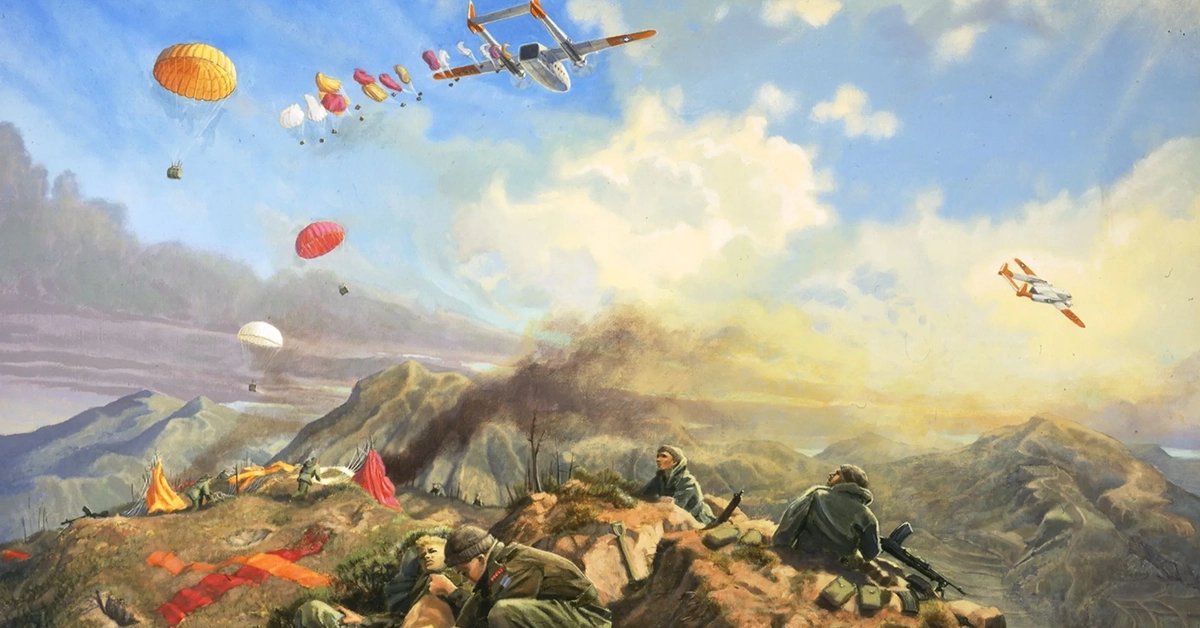
In April of that year, the Chinese launched a new offensive near Kapyong, outnumbering British and Commonwealth forces by a factor of more than 10-to-1. An estimated 700 Canadian, Australian, and New Zealand troops held off a massive Chinese force of around 10,000 to 20,000 Chinese troops for five days.
When the communists withdrew, they attacked a force of Canadians holding nearby Hill 677. The Canadian commander told his men there would be no surrender and no retreat, as they were completely surrounded. The Canadians called artillery fire on their own position as they fought hand-to-hand.
After losing 5,000 troops, the Chinese finally called off the attack. Only 49 of the defenders were killed in action.
Don’t Miss the Best of We Are The Mighty
• • •
5 battles the side with all the numbers still lost—against all odds
One of military history’s most lopsided beatdowns didn’t need to happen
Start the school year strong with a free campus checking account
Army investigators doggedly worked to solve a soldier’s murder 3 decades later
Their daughter was in hospice. His orders came anyway.
The BBC broadcast Britain’s Falklands War invasion plan before the invasion
Rigged shells, poison pens, the mob: inventive ways the CIA tried to kill Fidel Castro
World War II
Low river waters in Hungary’s capital reveal World War II dead
The tense discussions behind Ronald Reagan’s ‘Tear Down This Wall’ speech
4 Revolutionary War ghosts that refuse to die
Related Legacy stories
This American flag survived D-Day, then was returned to the US 75 years later
When Howard Vander Beek died in 2014 at the age of 97, he left behind a distinct reminder of his World War II service. Vander Beek, a lieute
Medal of Honor recipient and legendary Vietnam War helicopter pilot ‘Old Snake’ has died
Retired Army Col. Bruce Perry Crandall, the legendary helicopter pilot who was awarded the U.S. military’s highest decoration for valor for
Air Force crew honors WWII-era Flying Tigers with A-10 paint job
It started as a routine transfer. Following an asset transfer from Korea, maintainers at Moody Air Force Base, Georgia, accepted and process