Happy 251st Birthday, Marine Corps

On Nov. 10, 1775, the Continental Congress in Philadelphia resolved to raise two battalions to serve aboard the Continental fleet and conduct landing operations. The resolution would produce an institution still going strong more than two and a half centuries later.
This year marks the 251st birthday of the United States Marine Corps, one of the most recognizable and accomplished fighting forces in the world.
The Corps was born in Tun Tavern, a waterfront establishment on Philadelphia’s Water Street, where recruiters signed up the first Marines. The historical record of that specific detail is thinner than the legend, but the tavern has become part of the Corps’ origin story, and the connection to Philadelphia is a point of pride. Cpt. Samuel Nicholas was commissioned as the first commandant of the Continental Marines just weeks after the resolution, and his first mission was to fill the ranks of ships that needed men who could fight both at sea and ashore.
Those Marines saw action quickly.
In March 1776, Marines under Nicholas took part in a raid on New Providence in the Bahamas, seizing military stores at Fort Montagu and Fort Nassau. It was an early demonstration of the amphibious mission that would define the Corps for centuries. Over the following decades, Marines served aboard warships, guarded naval installations and fought in the Quasi-War with France, the Barbary Wars and the War of 1812.
The Marine Corps came close to being disbanded more than once in its early years as budget-minded lawmakers questioned whether a separate force was needed. It survived because it kept proving its worth.
The hymn and the motto
By the time of the Mexican-American War, Marines were fighting alongside Army units in a campaign that ended at Chapultepec Castle in 1847. The phrase “From the Halls of Montezuma” in the Marines’ Hymn is a reference to that victory, and the song has been the Corps’ anthem for generations. The motto “Semper Fidelis,” which means “Always Faithful,” was made official in 1883, though it had been used informally long before that. The Eagle, Globe and Anchor emblem, which has been the Corps’ insignia since 1868, combines the national bird, the view of the world and the naval tradition in a single image that Marines wear with pride.
In France during World War I, Marines fought at Belleau Wood in June 1918, where they stopped German advances in a brutal battle that cost them heavily. The phrase “Retreat, hell! We just got here,” commonly attributed to Marine officers and noncommissioned officers at Belleau Wood, became part of Corps’ lore, although the exact wording and speaker remain subjects of debate.
In the Pacific during World War II, Marines landed on Guadalcanal, Tarawa, Peleliu, Iwo Jima and Okinawa, islands where the fighting was among the fiercest of the entire war. The flag raising atop Mount Suribachi on Iwo Jima in February 1945, captured in Joe Rosenthal’s Pulitzer Prize-winning photograph, became one of the most reproduced images in American history and a lasting symbol of the Corps.
The Corps also transformed itself internally during this period.
In 1942, the Marines opened Montford Point in North Carolina to Black recruits, creating a path for African American men to serve in the Corps in a segregated training system. Those early Montford Point Marines endured discrimination both inside and outside the service, and their perseverance paved the way for full integration after the war. Their story is a critical part of the Corps’ history, and the Montford Point Marines have been honored with Congressional recognition for their service.
Korea brought another defining chapter.
In the winter of 1950, Marines fought their way out of the Chosin Reservoir after Chinese forces encircled the 1st Marine Division. Rather than surrendering ground to the enemy, the division fought through brutal cold and continuous attacks, bringing its wounded and much of its equipment out with it. Marine officers at Chosin are credited with the phrase that captures the spirit of the withdrawal:
“Retreat, hell, we’re just attacking in another direction.”
Today’s Marines adapt their structure and tactics for an era of rapid technological change. Yet the Corps’ core is the same: small-unit leaders expected to make decisions under pressure, a culture that emphasizes discipline and personal accountability, and an identity that is passed from one generation of Marines to the next.
The birthday tradition
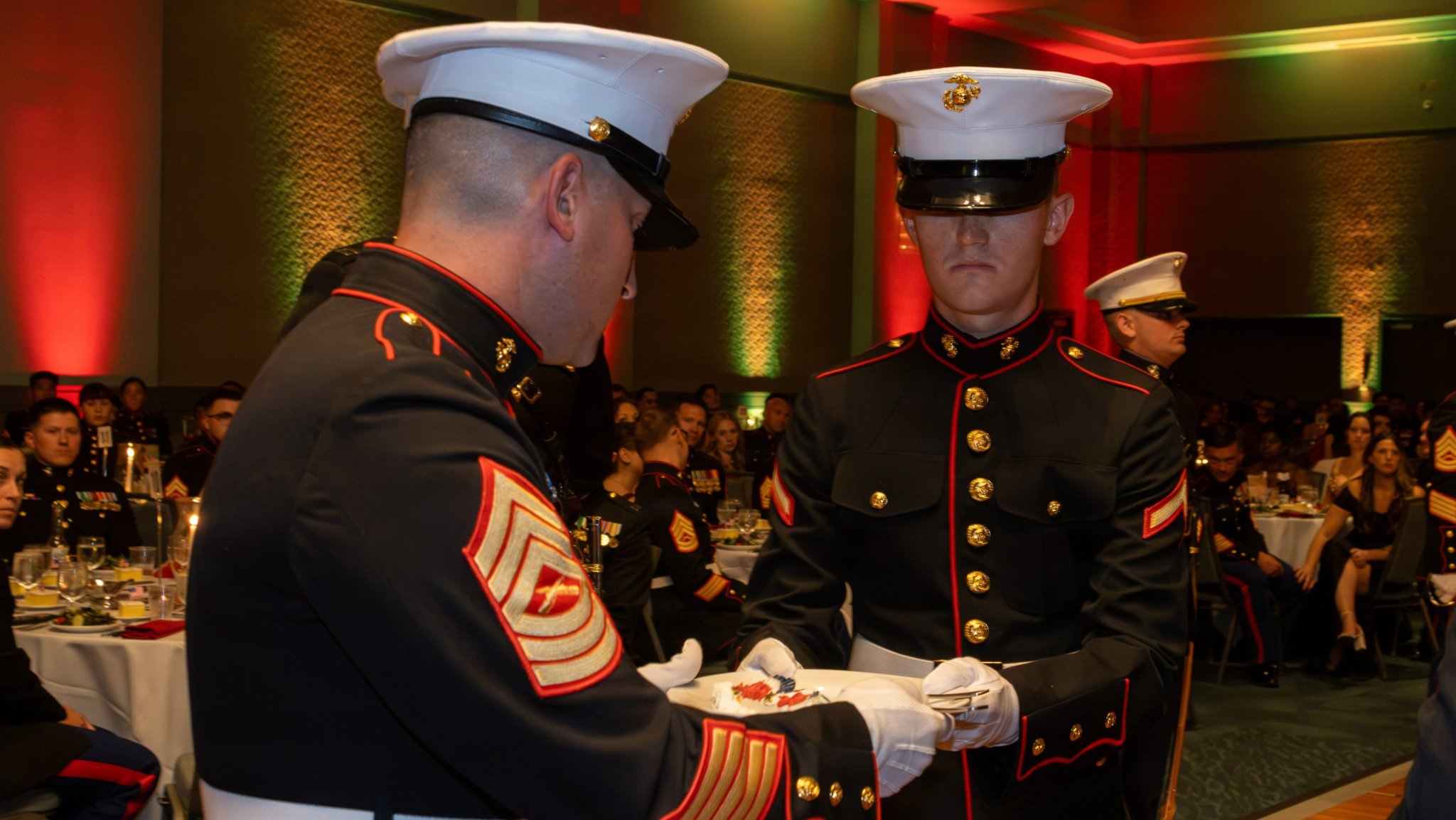
Each year on Nov. 10, Marines and their families gather for birthday balls, cake-cutting ceremonies and the reading of the Commandant’s birthday message—a tradition dating to 1921 when Maj. Gen. John A. Lejeune issued the first such message for the Corps’ 146th birthday.
The cake is cut with a noncommissioned officer’s sword, and the first slice traditionally goes to the Corps’ oldest Marine, who passes it to the youngest. The gesture symbolizes the continuity of the Corps, with experience handing down to the next generation.
The Marine Corps is made up of a force that has carried the nation’s wars across oceans, beaches, mountains and jungles, and who have held to demanding promise. “Semper Fidelis” is more than a motto; it’s a standard that each generation of Marines has taken up and made its own.
Happy birthday, Marine Corps. Oorah.