A third of military families report $500 or less in emergency savings
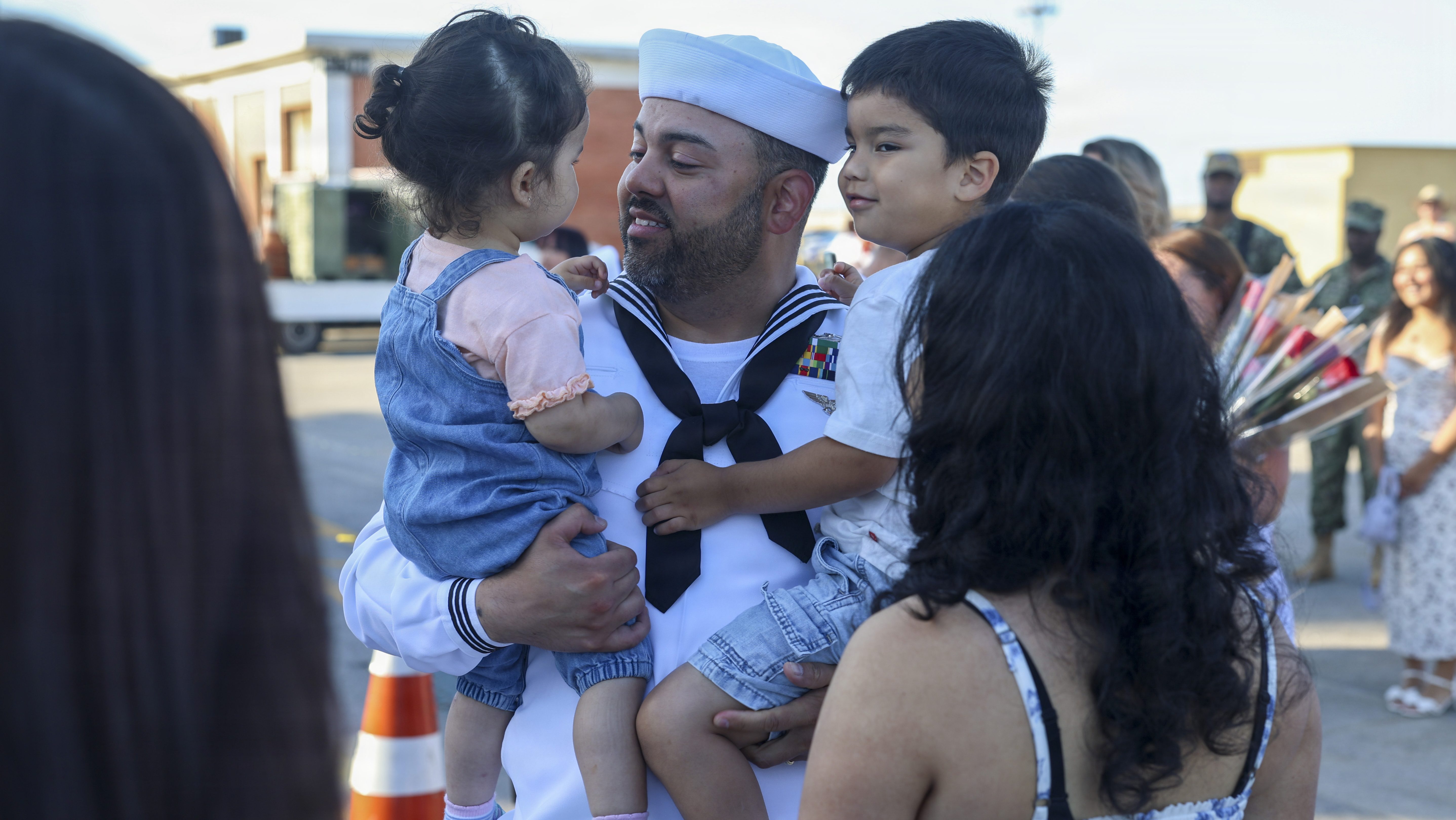
More than a third of military families reported having less than $500 in emergency savings, or none at all, according to the results of a 2025 survey released this week.
The findings were part of the Military Family 360 Survey, which was analyzed in a report released Monday by the Military Family Advisory Network. More than 10,000 people responded to the survey, with the majority being military spouses. They weighed in on topics like family, community connection, economic security, employment, and health care access.
Among the report’s findings was that “emergency savings remain critically insufficient across the military-connected population.”
Emergency savings are commonly looked at as an indicator of financial well-being, or strain.
The survey’s findings show a tougher reality for military families than what the majority of U.S. adults in 2025 reported facing, but the rates are somewhat similar to those of younger Americans. Per the U.S. Federal Reserve, 55% of all adults had three months’ worth of savings in 2025. For adults 18 to 29, about 37% reported having a few months’ worth of savings. Adults with at least a bachelor’s degree were more likely to report three months’ worth of savings compared to those without.
For actively serving families, more than 34% reported they had less than $500 in savings according to Monday’s report. For veterans and military retiree family members, the number was slightly higher, at 37%.
Shannon Razsadin, the CEO of the Military Family Advisory Network, told Task & Purpose that since 2023, their survey has shown an 11.9% increase in the number of families reporting minimal emergency savings, “highlighting that the number of military families facing financial vulnerability is, unfortunately, growing.”
Top Stories This Week
Veterans disability bill could cut tinnitus compensation to fund other benefits
By Patty Nieberg, Jeff Schogol
Army forms new command to create a ‘covering force’ in the Pacific
Army ‘Most Wanted’ fugitive caught after 30 years on the run
“For those households without the financial reserves, this unforeseen cost can certainly move from manageable disruptions to potential crises,” Shanna Smith, the associate director of research at Military Family Advisory Network, said Monday at an event accompanying the report’s release.
Smith said it was the first time that a good chunk of respondents, 33.5%, reported spouse unemployment as a barrier to savings.
“This does represent a change from our previous survey cycles where general cost of living and income constraints were the dominant themes,” she said. “But in 2025 grocery prices and spousal employment challenges have become more prominent obstacles.”
Half of currently serving families who responded to the survey reported facing a financial emergency in the past two years — something that other research has connected to a lack of savings.
“Research suggests that individuals who struggle to recover from a financial shock have less savings to help protect against a future emergency,” according to the U.S. Consumer Financial Protection Bureau. “They may rely on credit cards or loans, which can lead to debt that’s generally harder to pay off. They may also pull from other savings, like retirement funds, to cover these costs.”
The survey also asked families about their financial stress over the last year. Half of currently serving families reported extreme financial stress or high stress. These reports were “substantially higher” for enlisted family members who took the survey than they were for the families of commissioned officers.
Smith also noted that the group collected survey data from October 2025 through January 2026, which was a critical time for military families dealing with financial strain.
“It is important to note that this period coincided with a federal government shutdown and concurrent emergency response activities,” Smith said. “We recognize that these findings may have influenced survey responses, especially with regard to stress indicators, but they do add a critical layer of context to our findings this year.
Related Service stories

Yes, I Served in Iraq. But What if People Mistake Me for a Hero?
Illustration by Kim Vo The Department of Motor Vehicles was a good place to lose your identity, not find it, especially 30 minutes before cl
Officers only: New report lays out what a ‘US Cyber Force’ could look like
A new report argues that an independent Cyber Force should be staffed by only commissioned officers and warrant officers to better develop t

Navy researchers find wreck of World War II submarine that vanished 82 years ago
Nearly 82 years to the day after the USS Herring went missing during World War II, the Navy said it had found the wreck of a submarine that