After 100 years, the Army’s ISV finally figures out wheeled vehicle transport
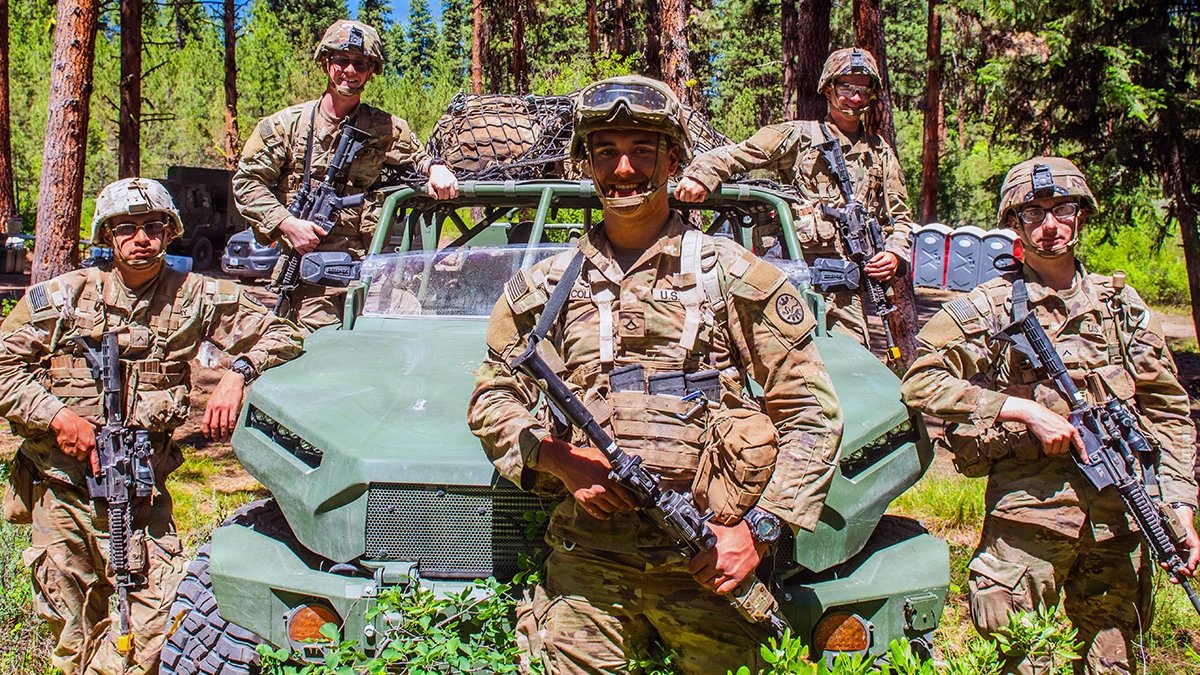
Since before World War I, the United States military has been constantly developing new ways to waste time at the motor pool adapt wheeled vehicles to the needs of the current battlefield. For its part, the U.S. Army has been trying to find the ideal vehicle to transport troops and supplies across combat zones ever since the introduction of the first automobiles.
Unfortunately, the “ideal” keeps changing with the times.
With a refocus on near-peer warfighting and a study of tactics from the Russo-Ukrainian War, the Army seems to have shaken the Good Idea Fairy from its ear and realized what many of us already knew: we don’t need clunky metal death traps that shake at 30 miles per hour. We just need something to get us to the front as fast as possible so we can kick in the enemy’s teeth.
Enter: the M1301 Infantry Squad Vehicle. The ISV has been around since 2020, but the Army just went all in on. After it stopped buying new HMMWVs and JLTVs last year, the Army expanded its ISV order from 649 to nearly 12,000, enough for 39 active duty and National Guard mobile brigades.
A Vehicle Based on Tactics
One problem the Army identified with vehicle transport in Ukraine is that armor slows vehicles down, which makes them easier to track, which makes them easier to target. If we have to send troops across large areas, we need to do it fast, preferably before an enemy can get a bead on us. So the Army decided the armor doesn’t matter.
Before you get snarky in the comments, let me point out that you do not have to use the vehicle in a gunfight. You can easily drop the vehicle at an Objective Rally Point or Tactical Assembly Area, camo it up, and head out for your mission on foot.
One other issue the ISV solves is troop capacity. A U.S. Army infantry squad is made up of nine soldiers. The HMMWV and JLTV carry five people (four seats, one in the turret). The ISV seats an entire squad with nine seats. So, instead of needing two vehicles per squad and the squad leader having to split their teams up, we can just put one squad in a truck and call it a day.
If you don’t have a bulletproof windshield (or any windshield), you can’t deadline the vehicle because a rock chipped it. If you don’t have a variable transmission or a ride height only adjustable via a Windows 11 control panel, you can’t have a deadlined vehicle if the system crashes.
That’s why the ISV is based on the Chevy Colorado ZR2 platform, makes the windshield optional, and gives you a basic control panel. If you can drive a $50,000 truck, you can drive the ISV. It’s probably the most grunt-proof vehicle in the entire US military at the moment. One major issue with the JLTV is that the vehicle is deadlined if the A/C breaks because the windows don’t open. The ISV doesn’t have that problem, because there are no windows. The entire vehicle is open.
You don’t need to send people to five-day courses to learn how to drive an ISV. Forty-eight hours ought to do it, and if it doesn’t, take that soldier’s driver’s license away until they ETS because they shouldn’t be driving anyway. They can still pay the outrageous interest rate on their privately-owned vehicle, though. They did that one to themselves.
A Win for Nerds
The coolest thing about the ISV is that it looks like the Warthog from “Halo.” It’s similar to how the Osprey looks like the Hornet from “Halo,” but the ISV is more likely to fulfill its role without crashing. I doubt the public in Okinawa will advocate for the ISV’s removal the way they have for the Osprey for the past 14 years. And once we slap a turret on the back this thing, we’ll be cooking with peanut oil.
Overall, the ISV wins with simplicity. We seemed to have forgotten that vehicles really just need to transport troops and supplies to the frontlines, and our vehicle designs reflected that. We forgot that the Jeep was used more to cross large distances than to directly engage an enemy in combat. Even when we wanted the HMMWV to do that, it took almost 20 years to put armor on it.
Hopefully, we’ve found a design that will serve us as well as the Jeep did for numerous decades, and we’ve found our transport solution in the ISV.
Don’t Miss the Best of We Are The Mighty
• The M113 armored personnel carrier was supposed to be obsolete • A National Guard unit saw the most combat during World War II • The Jeep Wrangler Commando can only be purchased by military or veterans
After 100 years, the Army’s ISV finally figures out wheeled vehicle transport
Nearly every military branch is buying up snowmobiles—including a new Polaris 850 Voyageur
Army takes delivery of first XM30 combat vehicle to replace M2 Bradley fighting vehicle
Real military captains drive Jeep’s ‘Captains of America’ commercial
The MRZR Alpha 6×6 scratches a 1,000-pound itch for the military