Navy tests camera system to alert crew when sailors go overboard
A team of engineers noticed a safety gap aboard Navy ships, prompted by several man overboard incidents in recent years. Now, they say they’ve developed a new system that can detect if a sailor falls or jumps from a ship while it’s underway.
“Being a former sailor myself, that was always something that was in the back of my mind: ‘Wow, if I fall overboard in the middle of night, hopefully someone sees me,’” said Eric King, a former petty officer first class who served 13 years. “There’s nothing that will instantly detect if someone falls from the ship. I think the system closes that gap and provides peace of mind, and not just for the sailors, but for the fleet.”
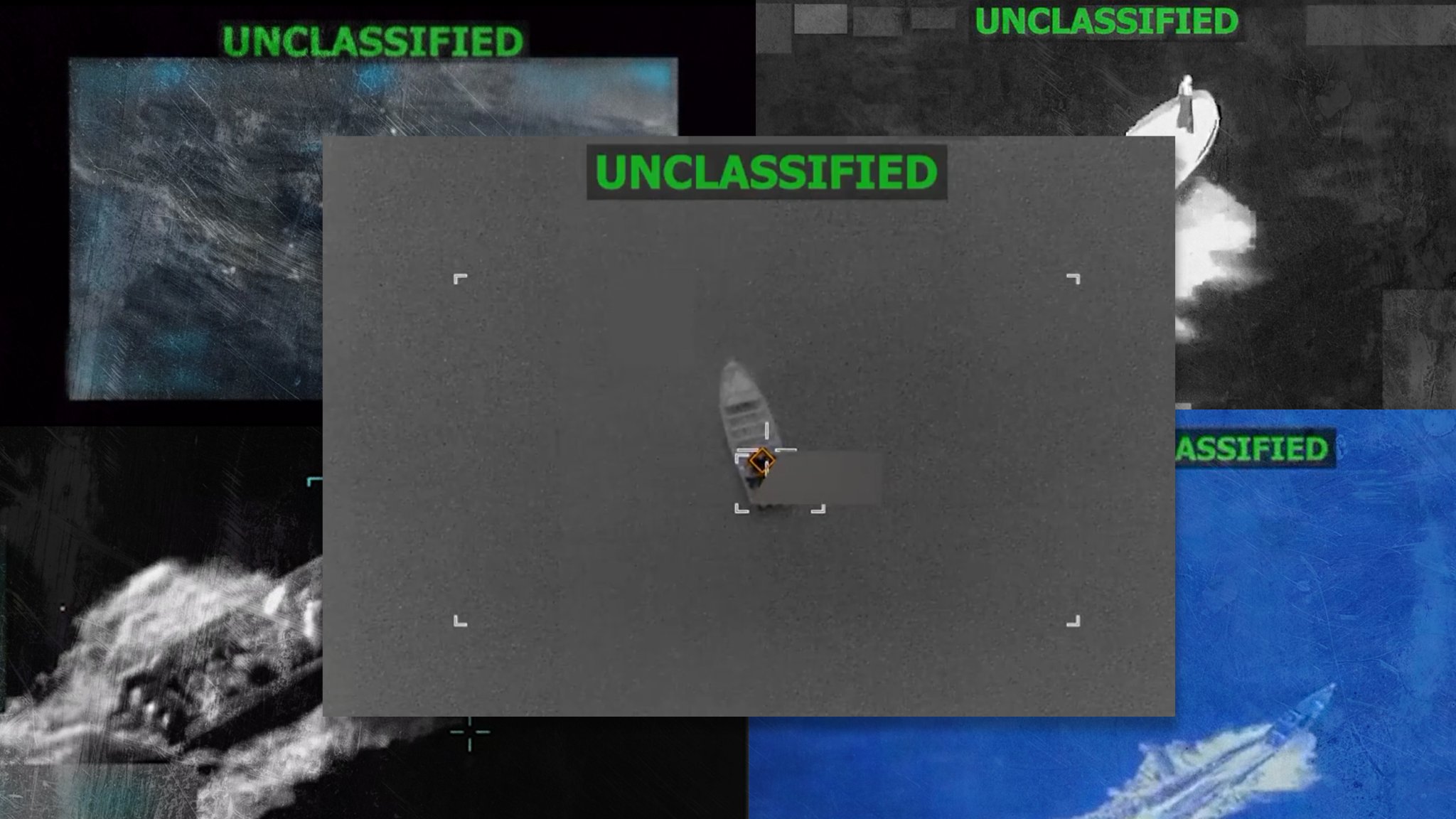
King and a team he leads at the Naval Surface Warfare Center, Port Hueneme Division in southern California, developed the Man Overboard Detection System, which uses thermal cameras that provide 360-degree coverage of the edges of a ship. The camera is linked to a software system that is triggered when “anything breaks that barrier,” he said. The camera captures a 10-second video of the incident, which the crew can use to determine if a sailor or Marine indeed went overboard. Those first few minutes after a fall, he said, can be crucial.
Earlier this year, a 21-year-old lance corporal fell from the USS Iwo Jima while the ship was in the Caribbean Sea taking part in U.S. military operations against alleged drug boats. The Navy launched a 72-hour search operation which included five Navy ships, an inflatable boat, and 10 aircraft. Three days later, the Marines declared him dead.
“That’s countless time lost at sea,” said King. “We just had three incidents within the past two years of sailors going overboard and not being recovered.”
In 2025, a 19-year-old Navy airman aboard the USS George Washington went missing during a training exercise in the Indian Ocean and was declared lost at sea after a 45-hour search mission that spanned 22,000 square miles. And in 2024, an aviation machinist’s mate from the USS Mason went overboard while the ship was in the Red Sea during Houthi attacks on commercial ships. The Navy declared the sailor lost days later.
Currently, the Navy relies on other sailors to alert the rest of the crew if one of their peers goes overboard. Once that happens, the entire ship’s crew springs into action, said Hendrick Simoes, a retired senior chief petty officer who served from 1999 to 2024 in the Navy.
“Maybe it’s somebody that sees it happen, or maybe it’s a watchstander who’s a lookout, and then they have to call up to the bridge, and then the bridge calls ‘man overboard,’ and then a flare goes into the water,” said Simoes, who deployed with the USS Kitty Hawk during the Iraq War and to the Indo-Pacific region. “That could be 30 seconds, 40 seconds.”
Simoes said “minutes matter” in those situations. The crew first needs to determine if someone fell, or if it was a mistaken piece of trash or equipment. If it is a sailor, the captain decides what resources to deploy — like a rescue boat or a helicopter — and the crew begins calculating survival time in the water.
If someone falls off a ship at night and no one sees it, they might not be recorded as missing until roll call the next morning. And on a large ship like an aircraft carrier, a busy flight deck with ongoing aircraft maintenance might be too loud to even hear someone fall, Simoes said.
Space Force wants to embed more guardians into the joint force
US expands alcohol restrictions for troops in Japan
Nearly 50 recon and intel Marines headed to undersea cable guard duty in Europe
“Even if you’re not doing flight ops or doing jet tests at night, and if you’re a watchstander, you might not hear that splash in the water,” he said. “In the darkness of night, you might not see somebody fall in the water because it’s such a big ship.”
The Man Overboard Detection system is triggered when anyone goes overboard — whether a sailor trips over equipment on the flight deck or accidentally gets thrown from the edge if a wave hits. King said the system could also be alerted if a sailor intentionally goes overboard — something that the Navy dealt with in recent months during a ship’s deployment to the Middle East.
“If you have somebody who’s intentionally trying to hurt themselves or trying to end their life, they might try to jump in the water in a place where they think the lookouts can’t see them,” Simoes said. “If they have a system that automatically detects something like that, that could potentially be life-saving as well.”
The next step is ‘drone integration’
The team developed the system with funding from the Naval Innovative Science and Engineering program. They recently tested the detection system by throwing a 6-foot, 35-pound dummy over the side of the decommissioned USS Paul F. Foster test ship, which King said was successful. Their goal is to run more tests with cameras along an entire ship’s perimeter and do simulations on a guided missile destroyer that’s underway. They also want to add more tech to help with the actual sailor rescues.
“The next step is our drone integration to be able to mark a location, drop a life ring down to the sailor, and eventually maybe do some sort of retrieval down the line,” King said.
The software behind the Man Overboard detection tool is already used by civilian cruise ships. A federal law passed by Congress in 2010 mandated that cruise ships integrate technology to capture images or detect someone falling off the ship. The law does not apply to military ships, King confirmed.
King said some Navy ships have cameras, but they’re only located in certain areas. Their detection system would wrap around the entire ship’s perimeter.
“Navy cameras are generally used for flight deck safety awareness, situational awareness, and operational security,” he said. “Not so much for man overboard events.”