Air Force wants to use lasers to help protect rescue helicopters after Iran mission
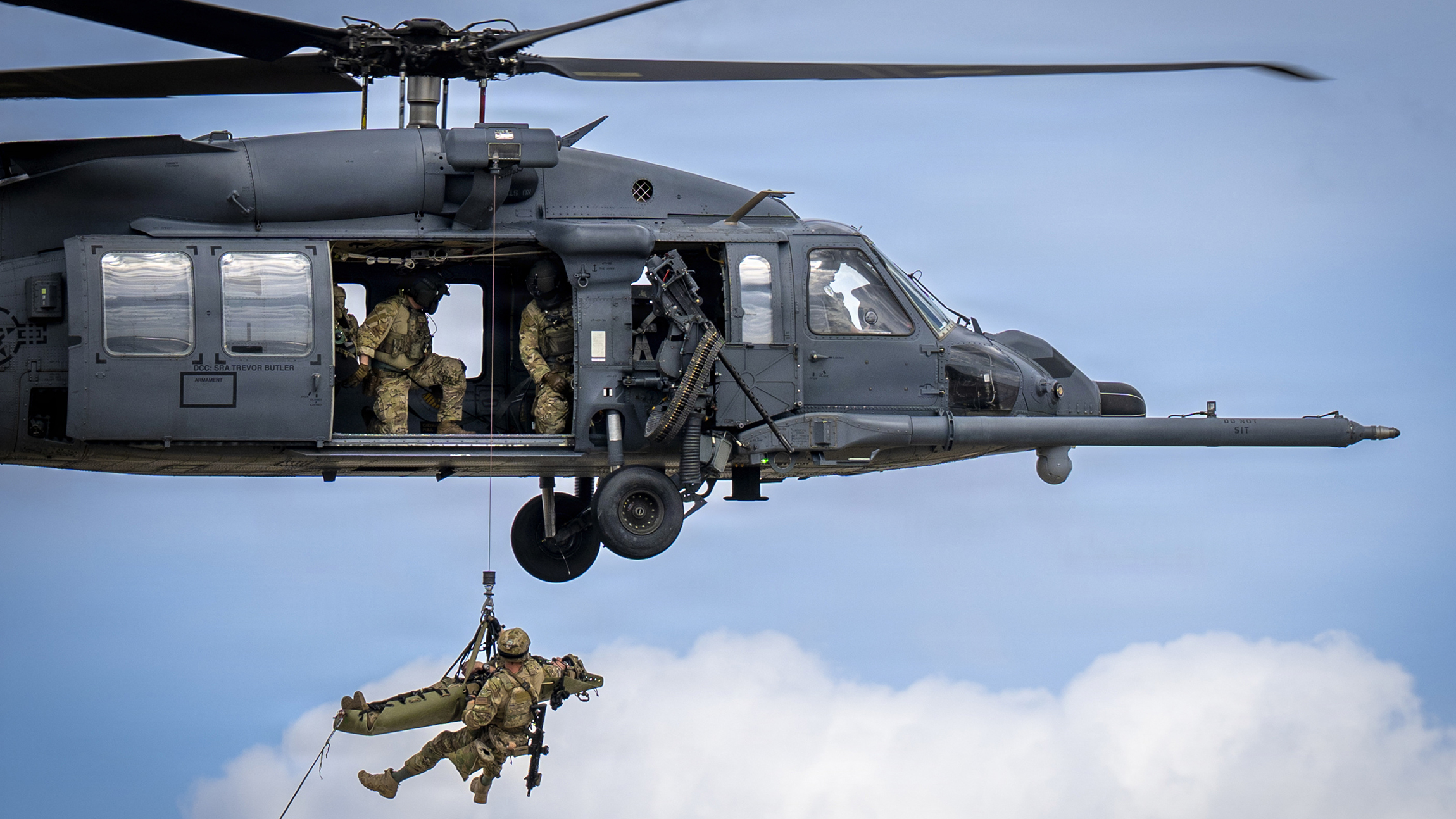
Four days after a daring daylight rescue mission whisked a downed American fighter pilot out of Iran under heavy fire, a notice appeared on a federal contracting website. The Air Force, it said, was seeking to upgrade its fleet of combat search and rescue helicopters to fend off heat-seeking missiles.
The timing of the contract appearing just after the high-profile mission may have been coincidental, but it highlights two issues in the Air Force’s small rescue community — a vulnerability in its newest helicopters to shoulder-launched missiles, and the commitment to CSAR operations from the greater Air Force.
The April 7 “sources sought” solicitation notes that HH-60W Jolly Green IIs are in critical need of a lightweight system that can shoot lasers at incoming missiles, jamming their guidance systems until they tumble impotently to the ground.
It was one such weapon, according to President Donald Trump, that sparked the frenzied rescue mission behind enemy lines.
“What took out this one (F-15E fighter jet) was a handheld shoulder missile, a heat-seeking missile,” Trump said at a press conference on April 6, during which he appeared to disclose more military details about the affair than the Pentagon desired. “We flew seven hours over Iran. That’s a long time, over unbelievably hostile territory where they have nothing but weapons.”
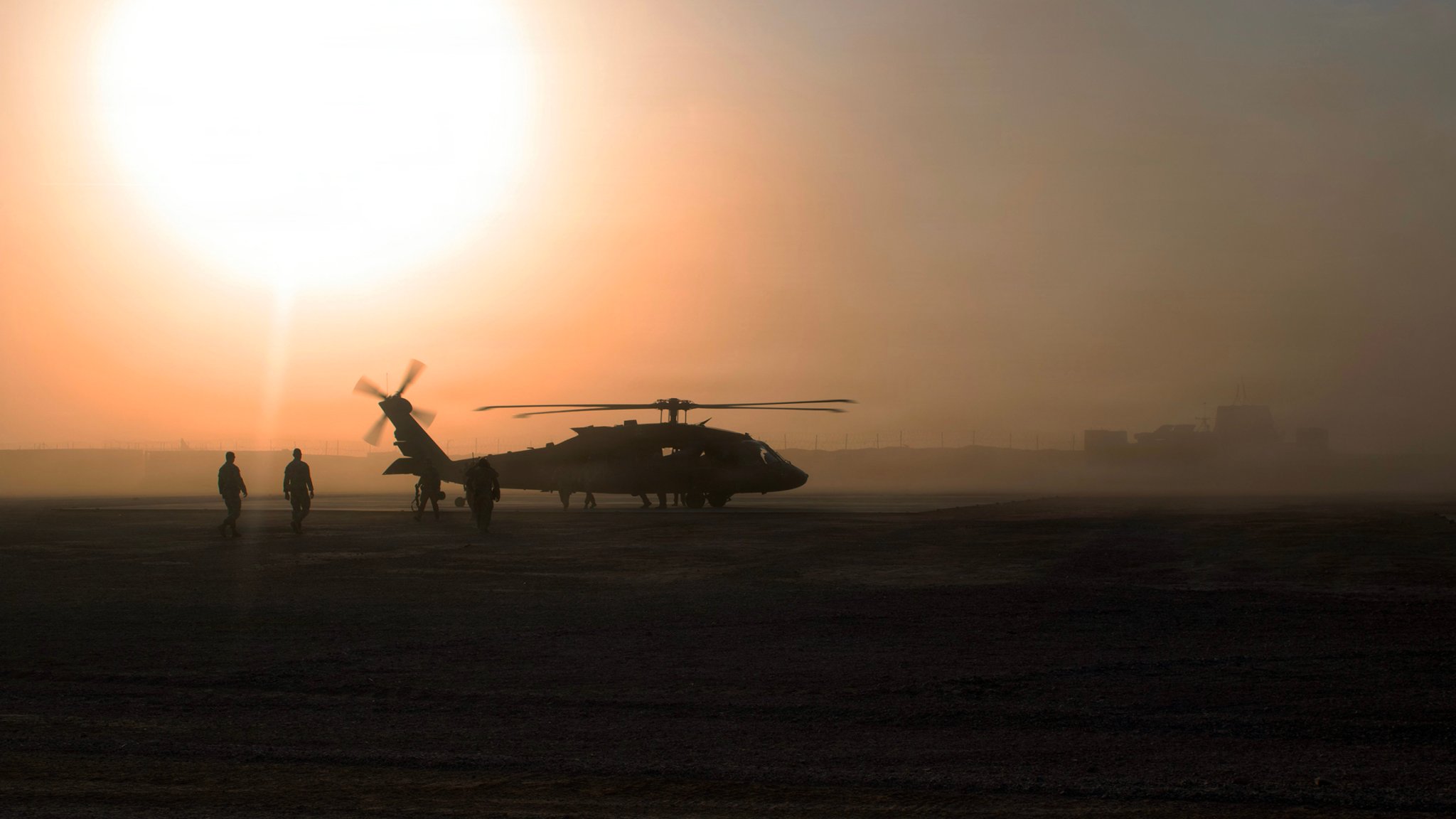
The HH-60W, which crews often refer to as a Whiskey-model or just the “Whiskey,” began rolling off the assembly line in 2020. The helicopters are built with several countermeasures to parry ground attacks, including cutting-edge warning systems, pods that drop chaff to confuse radar-guided missiles, and flare decoys to trick heat-seeking missiles. But Air Force contract records note the Whiskey lacks an advanced infrared countermeasure that can thwart newer, and increasingly common, man-portable air defense systems, known as MANPADS.
“This absence significantly increases the risk of infrared-guided missile engagement, jeopardizing mission success, aircraft survivability, and crew safety,” the Air Force solicitation reads. “The integration of an (advanced infrared countermeasure) system is critical to mitigating this threat and ensuring the platform can operate effectively in contested environments.”
Top Stories This Week
Marines on way to Middle East seen using rifles with anti-drone smart scope
How a Navy photographer snapped an iconic Artemis II astronaut photo
Air Force can’t quit the A-10 Warthog, extends service into 2030
By Nicholas Slayton, Matt White
Heat-seeking jamming technology already exists and has been on larger Air Force planes for over a decade. It began to arrive on helicopters in 2015, after military officials put out an urgent request for weapons makers to develop more advanced systems to combat the growing MANPADS threat. Laser-based systems were eventually installed on Army special operations helicopters, Marine attack helicopters, and the Air Force’s then-current rescue helicopter, the HH-60G.
But current and former CSAR aviators told Task & Purpose that HH-60Ws were not originally equipped with the systems because the new aircraft was in its own development limbo.
Now, the Iran rescue mission has put the MANPAD threat back into sharp focus.
When the two HH-60Ws flew into Iran on April 3 to recover the pilot of the downed F-15E, a flurry of strike aircraft cleared the way ahead, and the fight was fierce, Chairman of the Joint Chiefs of Staff Gen. Dan Caine said afterward. Amid the onslaught, Caine said, one of the helicopters took small-arms fire that injured two crewmembers, while an A-10 attack plane was crippled enough that the pilot had to leave the mission and limp back to friendly territory before bailing out.
Wake-up call
Retired Air Force Lt. Col. Brandon Losacker, an Air Force Weapons School graduate who spent much of his career flying CSAR helicopters, said the contract seeking more advanced infrared countermeasures for the Whiskeys was likely in the works before the Iran rescue mission.
“I would be surprised if they whipped out a ‘sources sought’ notice in just a few days,” Losacker said. “Or maybe they had it all lined up, and recent events just kind of gave a nudge.”
U.S. Central Command and the Air Force agency that posted the contract opportunity declined to comment.
The rush to upgrade the HH-60Ws comes after several years of uncertainty among Air Force CSAR crews on whether helicopter rescues had any future in the service.
The Air Force began taking deliveries of 75 HH-60Ws in recent years to replace its aging HH-60G Pave Hawk fleet. But those 75 new helicopters were a cut from the more than 100 originally ordered. And while the HH-60Ws brought greater flight range, armament, and other sensors, they lacked the laser-based anti-missile tech that has since been developed for other helicopters by Northrop Grumman and Leonardo DRS.
In a conflict against modern adversaries bristling with powerful air defenses, the Air Force has long feared that low-and-slow CSAR missions would be impractical.
But after years of the CSAR community wondering if their mission would soon be obsolete, the Iran rescue appeared to some like a wake-up call.
“The eyes of the world were on these missions, and the cost of failure would have been nearly insurmountable,” Losacker said. “Imagine what that would have done to America’s ability to even try and enter into discussion with the Iranians on a conclusion to the conflict. The strategic consequence of failed CSAR would completely undermine national will and decision space for the commander-in-chief.”