How Army veteran Clint Eastwood survived after a bomber crashed into the Pacific
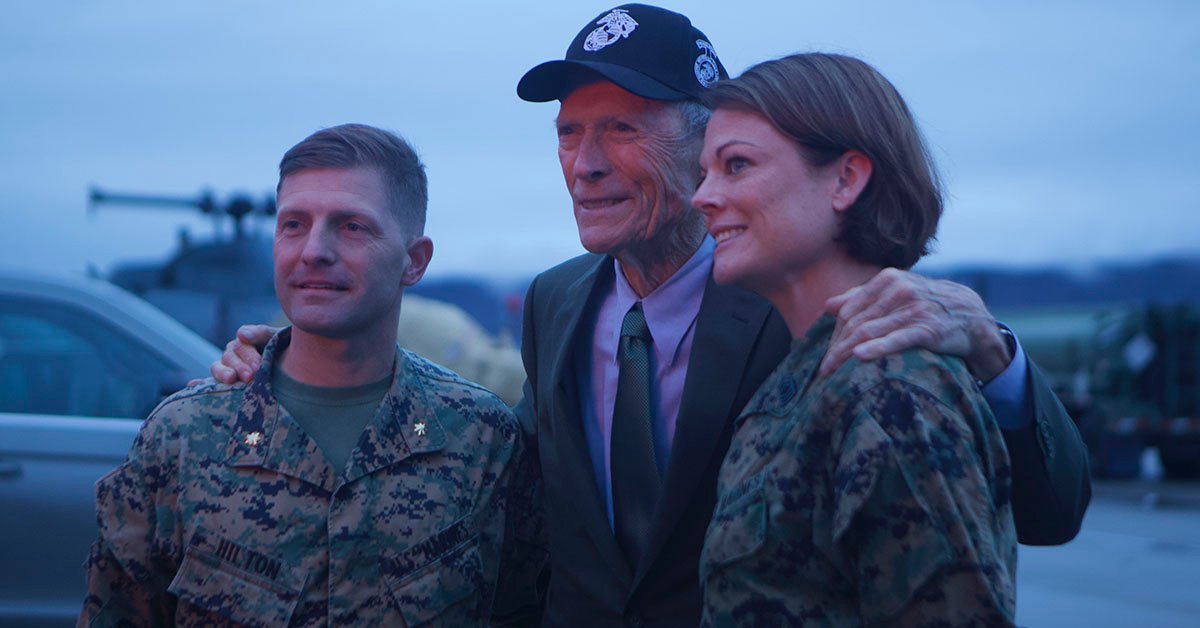
During likely the most dramatic moment of Clint Eastwood’s life, he wasn’t acting.
Eastwood actually had no Hollywood aspirations when the U.S. Army drafted him in 1951. The United States was embroiled in the Korean War, but Eastwood wasn’t sent overseas. The Army kept him stateside, sending him to Fort Ord in California.
About six months after joining the military, Eastwood’s familiarity with the water saved his life. On September 30, 1951, the transport plane that was carrying Eastwood—the only passenger on board besides the pilot, Lt. Francis Coleman Anderson—from Seattle back to base crashed in the Pacific Ocean.
Eastwood and Anderson quickly grabbed life rafts and started making their way toward shore two miles away. Rough waves upended their rafts at some point, forcing them to swim the rest of the way.
A Flight that Eastwood Never Forgot
Eastwood, 96, grew up in the San Francisco Bay Area with a goal of becoming a professional musician. He intended to study music in college before he joined the Army. Eastwood swam for his high school team and had been a lifeguard, which led to the military assigning him to become a swimming instructor. His primary responsibility was making sure soldiers could swim.
Eastwood enjoyed working at the pool, basically spending all of his time there after relocating his bed to the facility.
“While everybody else was getting up at 5 in the morning, in the cold air, I was sleeping,” Eastwood remembered to the Monterey Herald newspaper in California in 2022. “I didn’t have classes until about 10 or 11 o’clock or whatever they were that day. It was a good life.”
Eastwood’s time in the military, which ended with an honorable discharge in 1953, might have been a footnote in his lengthy biography, if not for the aforementioned flight aboard a Navy AD-1Q Skyraider torpedo bomber.
Then a wide-eyed 21-year-old longing to see his family and girlfriend, Eastwood jumped on a space-available flight to Washington state. He enjoyed his visit, and when he left to return to Fort Ord, the 6-foot-4 Eastwood crammed himself into the confined space aboard the bomber.
The first near-death experience that Eastwood faced on the flight occurred when the plane’s door opened in midair, he recalled in an interview with The Telegraph. A frazzled Eastwood realized the radio was out when he tried to reach the pilot and couldn’t. He scrambled to shut the door but only after almost being sucked out of the Skyraider.
“I was a mile up holding on for dear life,” Eastwood recalled.
“A Stark Fear, a Stark Terror”
The lack of radio communication was the first domino to fall on the troubled flight. As Anderson guided the transport aircraft toward Fort Ord, oxygen ran out inside the bomber. Flying in bad weather, including dense fog, Anderson faced enough challenges.
Then the fuel in the Skyraider’s tanks ran out.
Once Anderson informed Eastwood he planned to ditch the plane in the Pacific, the young private—barely out of his teens—felt immediate anxiety.
“What was going through my mind was just a stark fear, a stark terror, because [in the] first place, I didn’t know anything about aviation at that particular time,” Eastwood told The Hollywood Reporter in 2015. “I was just hopping a ride.”
That ride was no longer in the air. Eastwood and Anderson were on their own now, far from dry land. A gifted swimmer, Eastwood spent incalculable hours in the pool but nothing like this. Battling the waves and bone-chilling water, he and Anderson headed toward the Point Reyes Peninsula—about 30 miles west-northwest of the city of Eastwood’s birth, San Francisco.
Eastwood had no way of knowing how long it precisely took them to reach the beach. When they did, the future acting legend felt an overwhelming sense of relief.
“[I] found out many years later that it was a white shark breeding ground, but I’m glad I didn’t know that at the time or I’d have just died,” Eastwood said to The Hollywood Reporter.
Establishing Himself as an Actor
After leaving the military, Eastwood went to Los Angeles City College on the GI Bill. Eastwood landed a contract with a movie studio in 1954. It didn’t last long, and Eastwood struggled for years to land a breakout role. It finally arrived in 1959 when producers cast him as Rowdy Yates, a Civil War veteran turned cowboy, in the television series “Rawhide.”
That exposure on the small screen catapulted Eastwood to a burgeoning movie career, which began in earnest with several appearances in so-called “spaghetti westerns.” (They were so named, because Italian filmmakers produced them.) Eastwood gained even wider recognition by perhaps portraying his most iconic character: “Dirty” Harry Callahan.
Eastwood appeared in all five films in the “Dirty Harry” franchise, and he wasn’t averse to military roles, either. They include the World War II film “Where Eagles Dare” in 1968, starring Richard Burton. Eastwood appeared in “Kelly’s Heroes” in 1970, alongside fellow military veterans Telly Savalas, Don Rickles, and Carroll O’Connor.
Eastwood also played a gruff Marine in and directed “Heartbreak Ridge” in 1986.
Living Life as a Retiree
Eastwood’s films grossed nearly $4 billion worldwide, according to the Internet Movie Database (IMDB). Eastwood’s filmography delighted movie fans, but his biggest critical successes occurred in productions in which he also served as director.
Eastwood earned four Academy Awards during his career—two each for “Unforgiven” in 1993 and “Million Dollar Baby” in 2005. Both brought Eastwood Oscars for Best Director and Best Picture.
Eastwood released his last movie, “Juror No. 2,” in 2024. His son Kyle—a musician and film composer—announced his father’s retirement in an article in the San Jose Mercury News this year.
Regardless how famous he became, Eastwood never forgot his war experience.
“The Korean War was only a few years after World War II. We all went,” he told Esquire magazine in 2008. “But you couldn’t help but think, ‘Shit. What the hell? What have we gained?’ One minute, you’re unleashing the tremendous power of nuclear fission, and then a few years later, you’re jockeying back and forth on the 38th parallel. It seemed so futile.”
Eastwood discovered his calling after the war. In retrospect, he only got that chance because he was such a good swimmer.
Don’t Miss the Best of We Are The Mighty • Smith and Wesson revives the Indiana Jones revolver • Hollywood legend and Air Force vet Tom Skerritt dies at 93 • ‘The Terminal List’ kicks in your door and raids your house with season two
Smith and Wesson revives the Indiana Jones revolver
9 War stories more terrifying than any horror movie
Movies and TV
An Afghan commando who fought beside US Special Forces is getting a film on Prime Video
Movies and TV
8 World War I easter eggs in ‘It’s the Great Pumpkin, Charlie Brown’
Movies and TV
‘The Mosquito Bowl’ is based on a real World War II football game