How World War II, ‘GI Joe’ and a Vietnam War Marine shaped ‘Transformers’
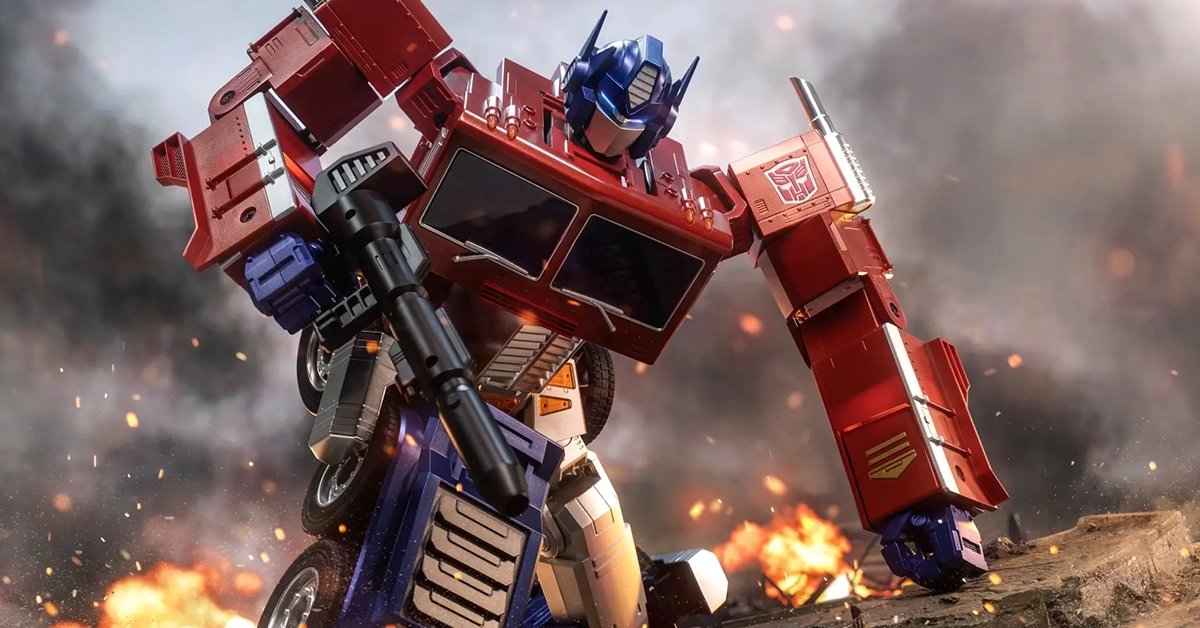
Today, “Transformers” has a worldwide presence in toys, comic books, video games, TV shows, movies, and even amusement park rides. You don’t even need to be a real fan—Just hearing the name brings to mind (and ears) the iconic jingle or that signature robotic transforming noise.
It’s incredible to think that this franchise that dominates the globe owes its existence to the Second World War, G.I. Joe action figures and one very special Marine—brother to Peter Cullen, the true voice of Optimus Prime.
Following the end of World War II, American troops occupied the Japanese Home Islands to lead a defeated Japanese Empire into the process of reconstruction. One of the key elements in reviving the Japanese economy was its once-prominent toy industry. But, with so few raw materials available after the war, toy makers were forced to resort to some pretty unconventional sources.
There was at least one material in abundance on the islands at the time: scraps of metal. American GIs occupying Japan were fed with canned rations, which were made to be discarded. It was the metal from these cans that was recycled and used to craft Japanese robot toys.
To highlight Japanese craftsmanship, these toys were often motorized with clock mechanisms that allowed them to walk and roll.
The popularity of Japanese robot toys increased through the 1960s and 1970s. With the expansion of television in those decades, the robot toys were paired with manga comics and anime cartoons that engaged children and promoted toy sales. Japanese robot-based entertainment like “Astroboy,” “Ultraman,” “Shogun Warriors,” and “Gigantor” became increasingly popular in the United States.
Despite their popularity, even robots from the east couldn’t compete with the “Real American Hero,” “G.I. Joe.” High sales of G.I. Joe action figures in the States were enough to convince Japanese toy maker Takara to license “G.I. Joe” for the Japanese market.
Having gained respect in the Japanese toy world for their toy dolls, Takara wanted to branch out and make a toy line for boys. However, G.I. Joe’s iconic scar and grimacing expression were a bit too harsh and aggressive for postwar Japan. To market the toy to Japanese boys, Takara decided to make G.I. Joe into a superhero with superpowers.
When the designers realized that G.I. Joe’s body wasn’t conducive to a superhero build, they resorted to type and made him into a robot. With a clear plastic body displaying his metal computer-like internals, “G.I. Joe” became “Henshin Cyborg.” Henshin meaning “transformation”—the first step towards what we know today as “Transformers.”
Following the Oil Crisis of 1973, the 11.5-inch-tall toy and all of its accessories became prohibitively expensive to produce. Like G.I. Joe in the United States, Takara introduced the 3.75-inch “Microman.” A mini version of “Henshin Cyborg,” the “Microman” toy line focused even more on transforming toys with robots that could change into sci-fi spaceships. “Microman” was so popular that it was marketed in the U.S. under the name “Micronauts.”
By the 1980s, robot toys that transformed into exotic spaceships were starting to lose popularity. To rejuvenate the robot toy concept, Takara introduced the “Diaclone Car Robo” and “Microman Micro Change” lines. Diaclone toys transformed from robots into 1:60 scale vehicles like cars and trucks while Microman toys transformed into 1:1 replicas of household items like cameras, cassette players and toy guns.
At the Tokyo Toy Show, Hasbro executives took notice of “Diaclone”, “Microman Micro Change” and the plethora of other Japanese transforming robot toys and wanted to develop their own toy line. A deal was struck with Takara and Hasbro adapted almost every one of their toy lines for the U.S. market, including “Diaclone” and “Microman Micro Change.”
To review, Hasbro licensed “G.I. Joe“ to Takara in the 1970s. Takara turned “G.I. Joe“ into “Henshin Cyborg.“ “Henshin Cyborg“ was shrunk down to “Microman.” “Microman” evolved into “Diaclone“ and “Microman Micro Change,“ both of which were licensed back to Hasbro.
Things had really come full circle.
With all of these transforming robot toys, Hasbro turned to Marvel Comics to develop a backstory for the new toy line. Over a weekend, Marvel writers came up with the names and backstories for the first 26 Transformers as well as the plot for the first comic book issue.
“Diaclone” and “Microman Micro Change” robots were renamed and became “Transformers” as we know them today. “Micro Car” became “Bumblebee,” “Cassette Man” became “Shockwave,” “Gun Robo” became “Megatron,” “Battle Convoy” became “Optimus Prime”—and the war for Cybertron between the righteous Autobots and the oppressive Decepticons had begun.
The first commercial for the Transformers toys introduced the now iconic jingle and the phrases, “Robots in Disguise” and “More Than Meets the Eye.”
The 1984 release of “Transformers” was a huge successm netting Hasbro $5 million in sales. The popularity of the franchise was due in large part to the “Transformers” cartoon, the star of which was the venerable Optimus Prime.
Peter Cullen, the original voice of Optimus Prime, became so iconic that he was brought back to reprise the role of the Autobot leader in the 2007 “Transformers” film and its many sequels. Cullen, also known for voicing Eeyore in the “Winnie the Pooh” franchise, crafted the voice of Optimus Prime with inspiration from his older brother, Larry—or Marine Corps Capt. Henry Laurence Cullen, Jr.
Larry Cullen was a decorated veteran of the war in Vietnam. While serving with Kilo Company, 3rd Battalion, 5th Marine Regiment, 1st Marine Division, Cullen was awarded a Bronze Star with a V device as well as two Purple Hearts for his actions during Operation Hastings in June 1966.
When his younger brother told him he was going to audition for the role of a hero in a cartoon series, CaptainCullen said, “Peter, if you’re gonna be a hero, be a real hero. Don’t be one of those Hollywood heroes pretending they’re tough guys when they’re not. Just be strong and real. Tell the truth. Be strong enough to be gentle.”
With his older brother’s words echoing in his mind, Peter Cullen delivered the strong yet gentle voice performance that Transformers fans today will always hail as the one, true Optimus Prime.
“He had a lot of influence on me, you know, and especially coming back from Vietnam. I noticed somebody different,” Cullen remembered of his older brother. “Going into that audition, Larry was with me. I mean, he was right there beside me. When I read the script, Larry’s voice just came out. He was my hero.”
From recycled ration cans, to a classic American action figure and an inspirational leader of Marines, the “Transformers” franchise has had a lot of American military influence to get to where it is today.
Don’t Miss the Best of We Are The Mighty
• The ship that delivered the atomic bomb was sunk, and nobody came to look for it • The 10 most useless GI Joes of all time • How ‘Major Payne’ became a Marine Corps comedy classic
Movies and TV
How World War II, ‘GI Joe’ and a Vietnam War Marine shaped ‘Transformers’
6 reasons why the military community loved Dolly Parton
Movies and TV
New ‘Ghost Soldier’ trailer is a special operator’s dream sequence
The mathematical reason NFL teams are now more aggressive on 4th down
Movies and TV
A summary of everything on Marvel’s pre-‘Doomsday’ watch cheat sheet
Related Legacy stories
This American flag survived D-Day, then was returned to the US 75 years later
When Howard Vander Beek died in 2014 at the age of 97, he left behind a distinct reminder of his World War II service. Vander Beek, a lieute
Medal of Honor recipient and legendary Vietnam War helicopter pilot ‘Old Snake’ has died
Retired Army Col. Bruce Perry Crandall, the legendary helicopter pilot who was awarded the U.S. military’s highest decoration for valor for
Air Force crew honors WWII-era Flying Tigers with A-10 paint job
It started as a routine transfer. Following an asset transfer from Korea, maintainers at Moody Air Force Base, Georgia, accepted and process