New York Guardsmen worked almost a million hours as prison guards
A New York National Guard mobilization that put soldiers into state prisons to work as guards was so expansive that at least a handful of soldiers were airlifted by Black Hawk from a baseball field in the Bronx to report for duty at a small prison 250 miles away.
The flight was part of a strikingly large-scale mobilization that tapped thousands of New York National Guardsmen to work as replacement prison guards in 42 of the state’s 45 prisons last year, according to a 2025 annual report on the New York National Guard published in July. Over 8,000 Guardsmen spent over 800,000 hours in state prisons during the operation, each collecting $4,000 in monthly bonuses on top of regular duty pay.
In 2025, New York Gov. Kathy Hochul said that the deployment cost over $100 million per month at its height early in the year. Other state officials have said more recently that the operation continues to cost $50 million per month, more than a year after most of the civilian prison guards returned to work and the mobilization was converted from a mandatory to volunteer deployment.
Their mobilization began when Hochul ordered more than 1,400 Guardsmen to fill in for thousands of prison guards who went on strike in February 2025. The prison guards left work to protest chronic staffing shortages, pay and a law limiting solitary confinement for unruly prisoners, which prison workers said made their jobs harder. Some prisons required guards to work 24-hour shifts due to low manning.
In March 2025, the strike officially ended but a majority of the mobilized troops stayed to fill in as the state is still grappling with a shortage of corrections officers. Hochul also fired 3,000 guards who continued to strike past the settlement.
By April 1, the mandatory deployment ended and switched to a volunteer mission. The $4,000 bonus stayed in place for troops who stayed in addition to their state active duty pay and allowances.
“As part of the governor’s agreement with the corrections officer’s union, New York Military Forces troops remained on duty in the prisons to help reduce mandatory overtime for the civilian correctional officers,” the report said.
As of Dec. 31, nearly 3,000 guardsmen were still on duty, according to the report. More than 2,000 state prison guards were fired after the strike.
The report did not say how many Guardsmen remain on duty in prisons as of 2026, though a local New York outlet reported that current number was close to 2,600.
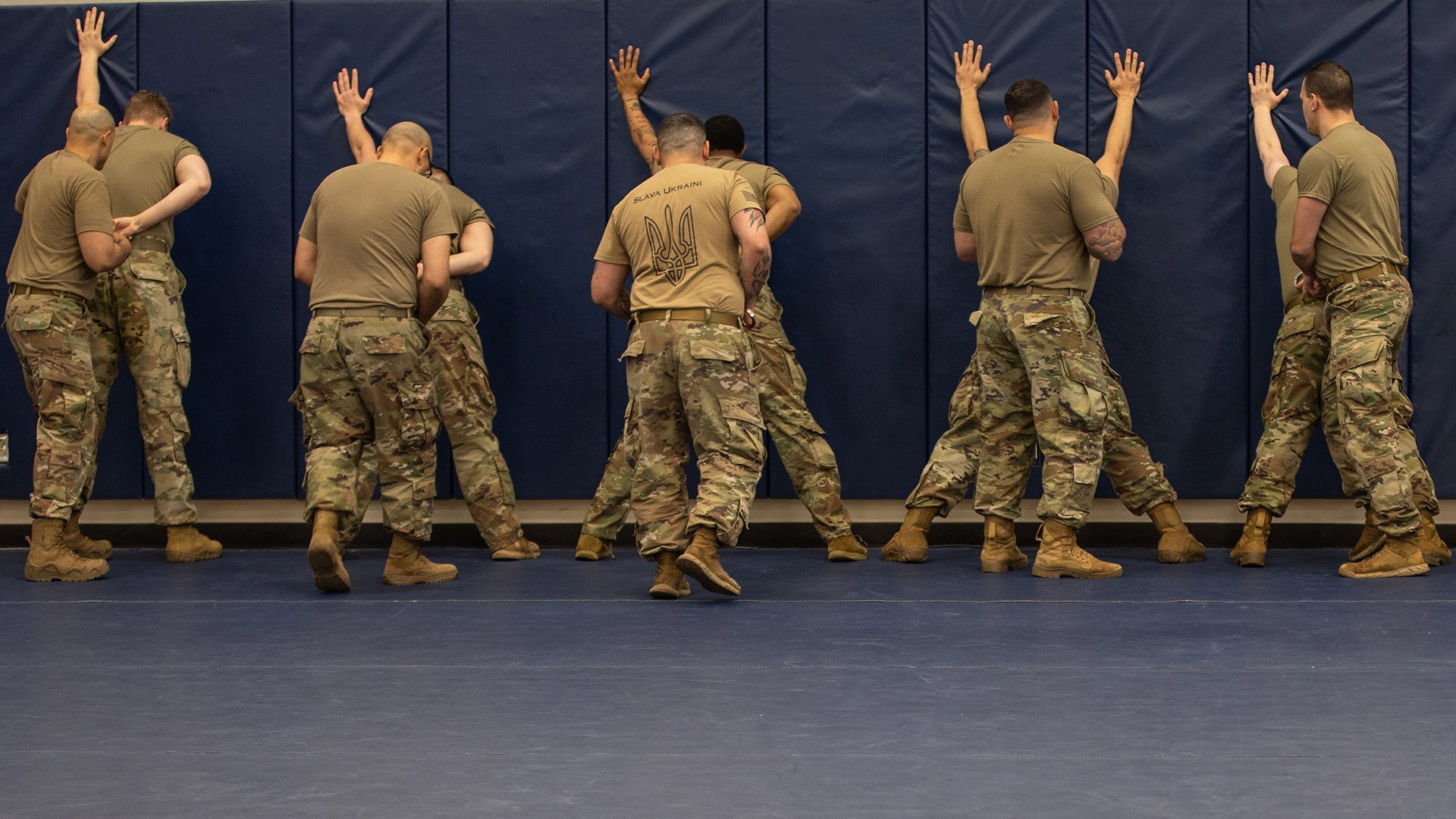
The report said that more than 3,100 Guardsmen received Department of Corrections training in a one-week course. National Guard officials said as part of their duties, service members conducted head counts, delivered meals, monitored inmates in solitary confinement and watched over others in medium and maximum-security cells and dorms.
The report also noted that the 42nd Expeditionary Combat Aviation Brigade used its Black Hawk helicopters to airlift soldiers from a Bronx baseball field and fly them to a recently shuttered prison 250 miles away in a “remote” part of upstate New York. By April, the unit had flown more than 600 hours and transported 1,050 passengers for the mission.
The conditions for guardsmen who joined the mission in the early days were described as “austere,” with soldiers sleeping on cots in prison gyms, dorms or “wherever they could find space.” As time went on, soldiers and airmen got Starlink for internet access and legitimate mattresses. Some were eventually moved into motels and hotels.