Scrawled in bunkers, the ‘first military art’ of the Iran War emerges
For thousands of American troops across the Middle East, the Iran War has been defined by the wavering siren just before a drone or missile attack, the dash to a bunker, and the monotony of waiting until it’s safe to emerge, sometimes hours later.
And when troops hunker down — whether in a concrete shelter or porta-potty — they often chronicle their trials and tedium through graffiti. Now, photos of the new war art are starting to emerge.
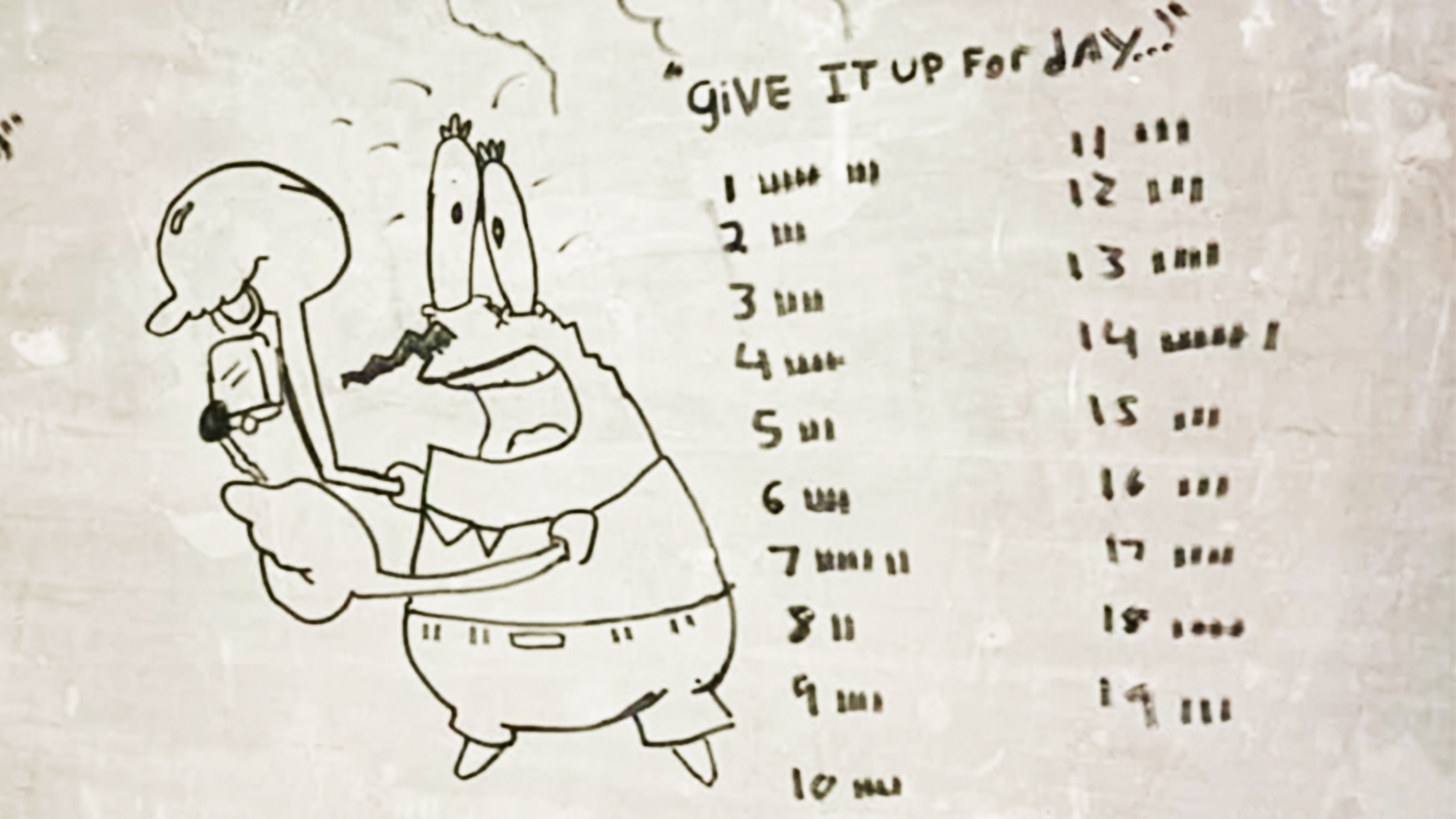
At an airbase in Jordan, one creative soldier took a Sharpie to his concrete confines, tracking his trips to an air raid bunker over a month alongside a character from the TV show SpongeBob. The drawing apes a popular meme of a boss ringing a bell, a symbol of tasks that drag on so long as to drive someone insane.
The soldier sent a picture of the bunker graffiti to the popular art history project War Murals, run by Army veteran Eric Strand, and it quickly spread across social media, with posters captioning it, “the first military art of the Iran War.”
The soldier who made the drawing told Task and Purpose that the idea came up after his unit had fallen into a routine in which Iranian attacks always arrived between midnight and 3 a.m., making a good night’s rest impossible.
“I was doing my best to keep humor alive inside there,” said the soldier, who is still serving and asked to remain anonymous. “I made it a priority to keep talking, telling jokes, and that (meme) was one of the jokes that stuck.”
Different wars, same art
Strand, who has received many more bunker graffiti pictures since posting the SpongeBob sketch, understands the fascination.
“It’s pure art and expression for a (military) culture that likes everything to be brown and tan and uniform,” he said.
For as long as U.S. troops have been in the Middle East, they’ve been leaving behind artwork, which Strand has collected. His findings vary from masterful paintings on steel-reinforced blast walls to doodles over urinals. By saving the images, Strand preserves the pieces long after the outposts bearing them have been demolished or abandoned.
Strand began the War Murals website and social media pages after serving at Camp Buehring in Kuwait in 2019. He called Buehring the “Louvre of military art” because of its rich assortment of concrete walls-turned canvases by years of units cycling in-and-out of Afghanistan, Iraq and Syria.
When he was there, Buehring felt far removed from the actual fighting, Strand said. The camp’s fortifications that had been set up to parry Iraqi Scud missiles decades ago almost seemed like art pieces, too. But in the Iran War’s opening days, an Iranian F-5 jet reportedly bombed Buehring, and many U.S. bases in the region that previously seemed so safe have been left almost uninhabitable.
“There was a joke for a long time that Kuwait was not a real deployment,” Strand said. “Well, that’s changed now.”
Much of the recent artwork Strand has been sent from soldiers in the Iran War shares characteristics with the paintings and graffiti from conflicts past. The World War II cartoon “Kilroy was here” remains a favorite, sometimes etched on the corners of larger pieces.
Epic Fury’s unique imagery
But there are unique elements to the Iran War that are reflected in the art coming out of it, including the waves of precision drones and ballistic missiles that no previous American troops have faced. The bunker graffiti often includes warnings, like “Don’t look up!” and a cartoon of dinosaurs being wiped out by an asteroid — all scrawled inside bunkers as soldiers waited out attacks.
In some murals, the troops fight back. One large barrier mural shows Patriot interceptors and robotic counter-drone systems, guns blazing, rising to meet incoming Iranian fire. They don’t always stop it before impact.
Seven Americans were killed in action before the ceasefire, and at least 400 were wounded, mostly from drone and missile impacts that have left troops with TBIs, according to Pentagon data. The U.S. soldier whose bunker graffiti first went viral recalled how there were intercepts overhead their shelter that sent overpressure waves down; other bunkers had close calls that left troops with headaches.
Almost all of the recent images Strand has received are paired with a tally. Some track how many Shaheds have been blasted from the sky, others how long troops have inhabited their respective shelters. One soldier even shared pictures with Strand showing how he turned a bunker into a cozy nook, complete with a PlayStation, bedding, and rifle at the ready.
“This guy spent 25 days counting every night in there,” Strand said. “Just trying to make it home sweet home.”