The American general most respected by the Nazis might surprise you
Let’s be clear: if the German high command had any respect for American generals at the outset of World War II, they would never have declared war in the first place. But as we all know, respect is earned and not issued, so it took a little time for the United States to earn respect on the battlefield.
By then, however, it was too late for Nazi Germany.
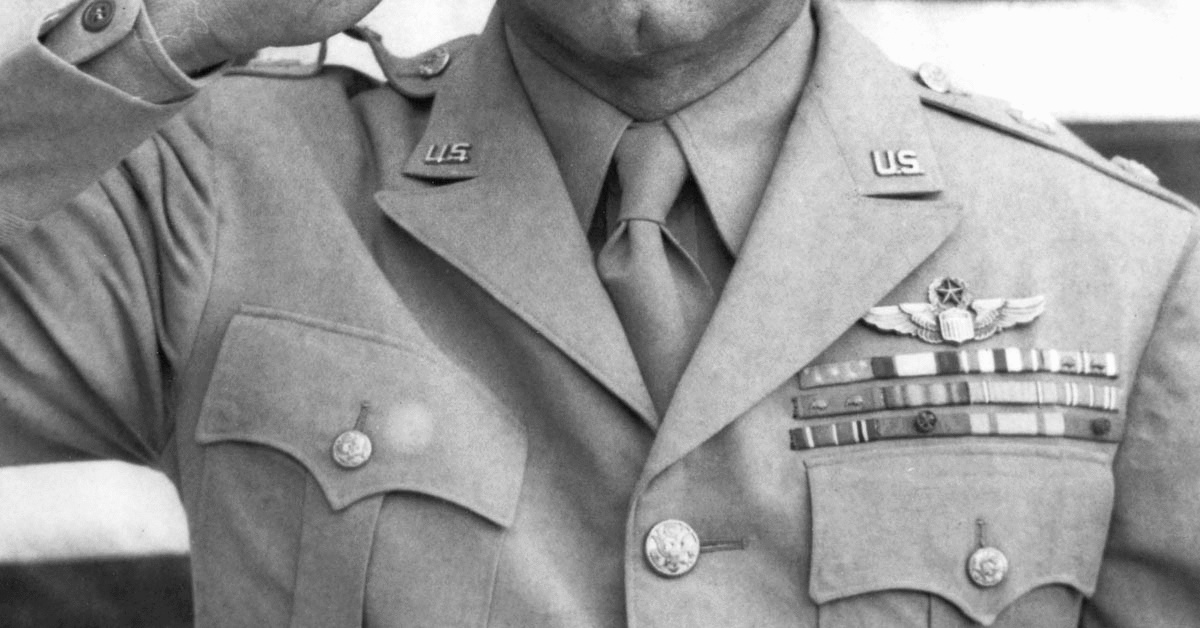
History may remember the most audacious personalities and events, while some figures end up quietly stealing the spotlight through bravery and determination. James Doolittle was both.
Before the many, many armchair historians start clacking away at their keyboards try to remind me that Gen. George S. Patton existed and that Nazi High Command feared him the most, let me remind readers that fear and respect are not the same thing and that Patton’s history is often apocryphal.
Even Patton’s personal biographer wrote he was not a “hero even to professional German officers who respected him as the adversary they most feared in battle.” For most of World War II, the German general staff barely noticed Patton at all.
This isn’t to imply that Patton didn’t deserve his accolades and reputation or that he didn’t do what history says he did. Patton’s shifting of American forces from entrenched positions in North Africa to a more mobile kind of warfare, one designed to destroy the enemy’s forces rather than hold land, helped turn the tide for the Allies in World War II.
But to the Germans, Patton was one threat among many. By 1944, Patton didn’t even warrant a one-paragraph briefing in the German High Command’s War Diary. In their view, the Allied invasion of Sicily was nothing to really brag about. Even as 3rd Army commander in Europe, the Germans facing Patton used words like “timid” and “systematic” to describe his tactics.
When the Japanese bombed Pearl Harbor in December 1941, James Doolittle was Maj. James Doolittle. He was promoted after the United States entered World War II, and of course, immediately began planning his infamous raid over Tokyo.
The Doolittle Raid involved secretly getting 16 B-25 Mitchell bombers as close to Japan as possible aboard the USS Hornet, and then taking off on a short runway—an aircraft carrier, something that had never been done—then flying these stripped-down tin cans full of bombs over the Japanese homeland and crash landing in China, hopefully surviving and avoiding Japanese patrols.
This was a plan so unprecedented and audacious that I can’t even come up with a modern real-world comparison. The Japanese certainly didn’t expect it. It was a success, but that success came at a cost. Three of the Doolittle Raiders died after dropping their ordnance, one crew was interned in the USSR, eight were captured by the Japanese, and all planes were lost.
But Doolittle was flying in the lead plane. And it was his first combat mission. But while the Doolittle Raid may have shocked the Japanese and awed the American public, it did little for the Nazis’ opinion. Doolittle wasn’t finished, though.
Within just two years, he would be promoted to lieutenant general and go from commanding a squadron of 16 bombers to commanding the entire Eighth Air Force—and the largest aerial formation ever assembled.
The air war over Europe was very, very different from the fighting on the ground and was a much longer war. By 1944, Doolittle was in command of Eighth Air Force in Europe, and the Allies were making preparations for the coming D-Day landings. Doolittle and the Eighth were tasked with reducing the effectiveness of the Luftwaffe and giving the Allies complete air superiority over Europe.
At the time, the German air forces were wreaking havoc on Allied bombers. Before Doolittle, American bombers would avoid any contact with the Luftwaffe if they didn’t have fighter protection, and even when they did, the Nazi’s twin-engine Zerstörergeschwader heavy fighters and Sturmböcke were still able to take their toll on Army Air Forces. But Operation Argument—better known as “Big Week“—changed all that.
The Germans had thousands of fighters at their disposal in 1943, and would send hundreds to intercept bomber formations. Doolittle wanted to plan Big Week in a way that would force Germany to respond with those heavy fighter interceptions so he could either destroy the Luftwaffe in the air or destroy the production of replacement aircraft.
The Nazis, with their heavy fighter tactics, were more than willing to challenge the Eighth Air Force bombers. But Doolittle had two surprises waiting for them. The first was the new longer-range P-51 Mustang fighter, one that could escort the bombers all the way to Germany. The second was a revolution in bomber defense tactics: instead of being forced to stay close to the bombers, fighter escorts could sweep the skies clear well ahead of the bombers.
Doolittle targeted factories all over Germany, in 11 cities, including Leipzig, Brunswick, Gotha, Regensburg, Schweinfurt, Augsburg, Stuttgart, and Steyr, just to name a few. To hit them he gathered 3,894 heavy bombers and 800 fighters. They took off from England, using the new P-51 flying well ahead of the bomber force. And the Luftwaffe arrived in force to greet them.
The new Army Air Forces fighters and their new tactics were devastating to the unexpecting German fighters. Allied airmen hunted down and picked off the fighters before they could even get close to the bomber formations. During 3,000 sorties over six days, the Allies punished the German air force and the country’s industrial capacity.
The Big Week air raids damaged or destroyed 75% of the factories that produced 90% of Germany’s aircraft. The Luftwaffe was “helpless” in the face of the aerial onslaught.
It hit the Luftwaffe particularly hard. The Nazis lost hundreds of airplanes and pilots, and had the capacity to replace neither. The Allies would soon have total air superiority over Europe, just in time for the June 1944 invasion of France.
To top it all off, Doolittle also ordered his fighters to hit any military targets on the ground if the opportunity arose. By the time Allied forces landed in Normandy, flak was taking down more Allied bombers than fighters were. The Nazis noticed, especially Adolf Galland, a fighter ace and senior commander of the Luftwaffe under Hermann Goering.
Galland would become friends with many of the Allied officers he fought after World War II. One of those friends was James Doolittle. After the war, Galland told Doolittle that the German High Command had no idea what was happening to them until it was much too late, and they were overcommitted.
His tactic of allowing fighters to sweep the skies instead of being in formation with the bombers took the Luftwaffe from offense to defense for the rest of the war, and never again would the Luftwaffe be a considerable threat to the Allies in the air. Because of this, the Germans knew Doolittle could destroy the German oil industry, as well as its communications and transportation infrastructure—and the Army Air Forces did just that.
Don’t Miss the Best of We Are The Mighty
• The Anduril Fury is the Air Force’s new autonomous wingman • The new Jimmy Stewart biopic depicts his World War II service • ‘The Babyface Gunner’ took one of World War II’s most dangerous jobs at age 14
World War II
World War II
The American general most respected by the Nazis might surprise you
World War II
A new AI database helps viewers search for Nazi families
World War II
The USS Devilfish suffered the only kamikaze attack on a US submarine
World War II
This is why the 1st Marine Division ships out to ‘Waltzing Matilda’
World War II
Meet the dog who went from a family pet to a World War II hero
Related Legacy stories
This American flag survived D-Day, then was returned to the US 75 years later
When Howard Vander Beek died in 2014 at the age of 97, he left behind a distinct reminder of his World War II service. Vander Beek, a lieute
Medal of Honor recipient and legendary Vietnam War helicopter pilot ‘Old Snake’ has died
Retired Army Col. Bruce Perry Crandall, the legendary helicopter pilot who was awarded the U.S. military’s highest decoration for valor for
Air Force crew honors WWII-era Flying Tigers with A-10 paint job
It started as a routine transfer. Following an asset transfer from Korea, maintainers at Moody Air Force Base, Georgia, accepted and process