The BBC broadcast Britain’s Falklands War invasion plan before the invasion
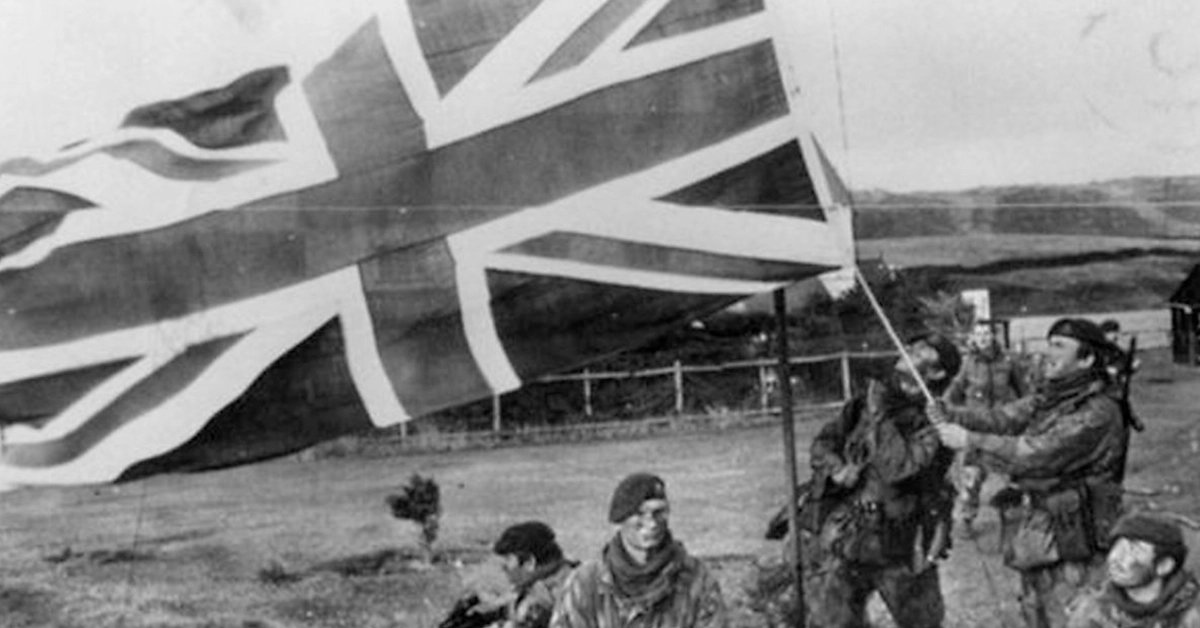
It doesn’t take a military genius to know that an enemy acquiring your war plans could be an unmitigated disaster. Journalist Geraldo Rivera got kicked out of the Iraq War in 2003 for giving away troop movements on live television. General George McClellan won the Battle of Antietam in part because he had the Confederate battle plan.
There’s just a lot that could go wrong if the enemy has a clue as to what’s about to happen.
With this in mind, it’s easy to understand why then-Prime Minister Margaret Thatcher would be upset at the idea of the British Broadcasting Corporation (BBC) transmitting the UK’s war plans live on the air—before the invasion kicked off.
To be clear, the BBC didn’t actually have the Royal Navy’s exact plans, but what it learned was close enough for The Iron Lady to accuse them of aiding the enemy.
On April 2, 1982, Argentina under dictator Leopoldo Galtieri invaded the Falkland Islands. The Falklands have a long colonial history, and the British have been willing to fight over it since 1770. But British troops have been on the islands since 1833 and the islands themselves were made a Crown colony in 1840. The government of Argentina has disputed the British presence there ever since.
The Falklands War was the one time Argentina has tried to dispute the British presence using weapons, ships, and aircraft. For good reason.
In 1976, the democratically elected government of Isabel Perón was overthrown in a coup. In its place, the military installed a right-wing junta that suspended Argentina’s Congress, along with trade unions and locally elected rule. Galtieri rose to lead the repressive junta after years of economic crises.
But Galtieri was a textbook, right-wing dictator. He inherited a country that was already struggling economically, and his economic policies only made things worse. Wages and GDP plummeted, inflation was out of control, and the country’s debt pushed it to the brink of default. When the new dictator’s popularity in the country began to flounder, he ordered the Argentine military to take the Falklands by force.
The operation was over in a single day. The fallout would echo in eternity.
Despite appearances, the invasion did not catch the British entirely by surprise. British intelligence knew about the invasion (in general terms) before it was launched, but the British government could not prepare an adequate countermeasure in time.
Once the invasion was on, however, Britain was at war, whether it was declared or not. Margaret Thatcher quickly convened a war cabinet, and set a 200 mile exclusion zone around the islands. With the islands occupied and Argentina refusing to abide by a UN resolution to leave, the British task force of 127 ships was hastily assembled and departed on April 5, 1982.
It arrived in the exclusion zone on April 29.
For the uninitiated, the BBC is a news service funded by the British government, one that can be heard practically around the world by anyone with a receiver. But when it came to the Falklands War, the broadcaster, in spite of who was footing its bills, decided to remain neutral in the conflict, reporting on it as if British forces were not from their country.
The BBC issued a directive to its services: “We are not Britain. We are the BBC.” As a result, they would avoid referring to British troops and ships as “our” troops, leading Thatcher to recall that language as a “chilling use of the third person.”
A year after the conflict ended, Thatcher would write a 17,000-word remembrance of the Falklands War, recalling her displeasure with the way the BBC reported on it. The PM’s beef with the BBC might have started with its neutral reporting, but it reached a crescendo with what the BBC reported.
Specifically, the United Kingdom’s troop movements.
The Queen Elizabeth II was a luxury cruise ship converted to a troop transport for the Falklands invasion. When began to ferry soldiers to other ships to prepare for the invasion itself in May 1982, the BBC reported its operation and whereabouts. Thatcher was enraged.
“They were sometimes reporting as if they were neutral between Britain and Argentina,” she wrote. “At other times we felt strongly that they were assisting the enemy by open discussions with experts on the next likely steps in the campaign… My concern was always the safety of our forces. Theirs was news.”
On May 28, as the 2nd Battalion, Parachute Regiment was preparing a surprise attack on the strategic Argentine positions at Darwin and Goose Green, the BBC World Service announced that the battalion was “poised and ready to assault Darwin and Goose Green.” The Argentine troops definitely heard the broadcast, but Argentinian Col. Italo Piaggi didn’t believe the reporting.
The BBC also reported that Argentinian bombs dropped on British ships were not exploding because the pilots were dropping the bombs from too low an altitude. This reporting led to those pilots changing the way they dropped bombs.
British troops recaptured South Georgia on April 25. After weeks of combat in the air and at sea, British commandos finally established beachheads on the Falklands by May 21. Paratroopers and regular infantry landed on the islands on May 27, 1982. By June, the British had retaken their possession, but not without considerable effort—and losses.
The BBC reported on it all, and its reports seemed to have little effect on the outcome. Argentina still lays claim to the islands, but is unlikely to mount an armed invasion again. The win boosted Thatcher’s party’s popularity at home, but the dictatorship of Leopoldo Galtieri quickly collapsed. Argentina was militarily humiliated, which turned the military junta against him.
As people rose in opposition in the streets, he was forced to step down, eventually finding himself in an Argentine prison.
Don’t Miss the Best of We Are The Mighty
• The world’s first jump jet: How we got the legendary Harrier II • ‘Starship Troopers’ is (finally) getting a reboot—here’s what could be different • That time two countries’ Special Forces squared off in combat
The BBC broadcast Britain’s Falklands War invasion plan before the invasion
Rigged shells, poison pens, the mob: inventive ways the CIA tried to kill Fidel Castro
Why the Pentagon tried to convince Pat Tillman not to become an Army Ranger
World War II
Low river waters in Hungary’s capital reveal World War II dead
The tense discussions behind Ronald Reagan’s ‘Tear Down This Wall’ speech
Related Legacy stories
This American flag survived D-Day, then was returned to the US 75 years later
When Howard Vander Beek died in 2014 at the age of 97, he left behind a distinct reminder of his World War II service. Vander Beek, a lieute
Medal of Honor recipient and legendary Vietnam War helicopter pilot ‘Old Snake’ has died
Retired Army Col. Bruce Perry Crandall, the legendary helicopter pilot who was awarded the U.S. military’s highest decoration for valor for
Air Force crew honors WWII-era Flying Tigers with A-10 paint job
It started as a routine transfer. Following an asset transfer from Korea, maintainers at Moody Air Force Base, Georgia, accepted and process