The history behind the Navy’s iconic ‘Dixie Cup’ hat
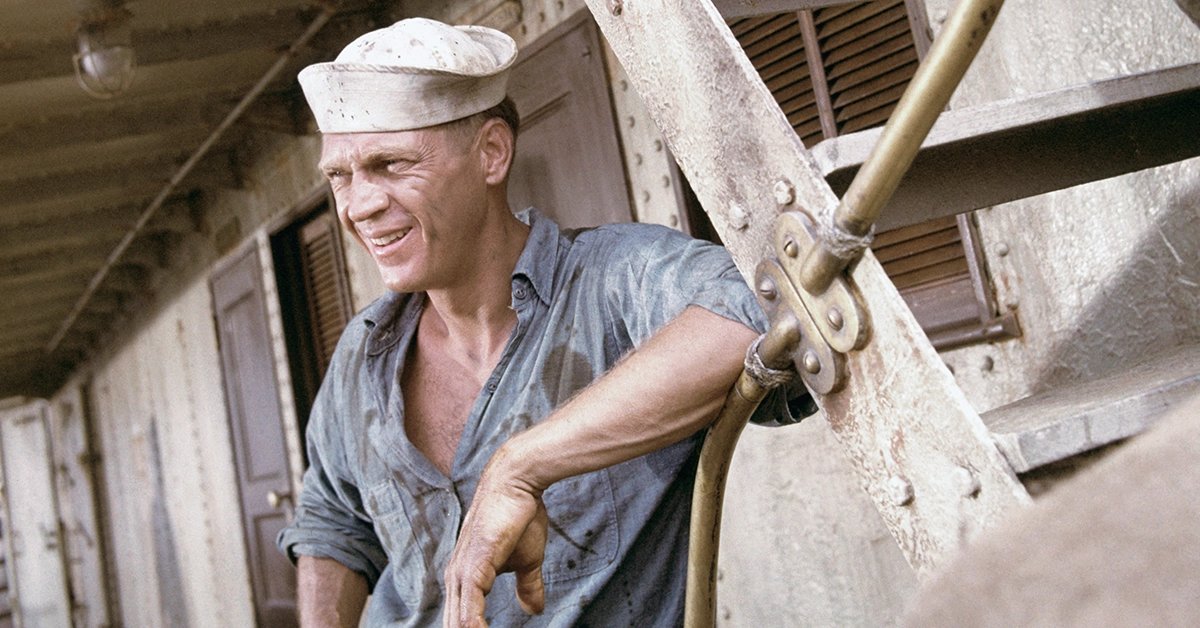
Saltier sailors might call the Navy’s “Dixie Cup” hats a “gob hat” or “dog dish,” but you can spot a sailor wearing their “hat, white” (which is what it’s officially called) from a mile away. No matter what you call it, it’s definitely one of the most identifiable symbols in U.S. military history.
Historically, however, this now-familiar piece of headgear wasn’t the first sailor’s hat worn by the brave men and women who man their battle stations. The Dixie Cup hat is a relatively new look for sailors. Before the white service cap was introduced, American sailors wore so-called “flat hats,” first authorized in 1852, and became the standard cover throughout the American Civil War.
The white hats were introduced to replace the sennet (or sennit) straw hats worn in hot weather.
The Men in the Hat, White
Sailors had been wearing straw hats in an unofficial capacity long before the Navy allowed them. The white sennet straw hat was introduced in 1866, to be worn during the summer months to help shield sailors from the sun. That came on top of a white cover the Navy added to the soft, visorless blue flat cap in 1852.
Before 1841, the Navy didn’t seem to care what enlisted sailors wore aboard ship, and even when dress regulations were introduced, details were sparse. There was no mention of a cover. Knit caps and wool-felt round caps were the go-to headgear.
The flat hats were made from dark blue wool and usually had an embroidered headband of the ship’s name to the sailor belonged on the front of the brim. The wool was a fabric known as Metcalf serge, and if the skipper allowed it, a white cover could be attached to the top in warm weather. Early hatbands came in colors including red, green, yellow and light blue.
But it wasn’t until 1886 that a high-domed, low-rolled brim made of wedge-shaped pieces of canvas was written into uniform regulation. The Navy wanted a practical summer hat that was easy to clean and stow, cheap to manufacture, and comfortable to wear. The canvas hat replaced the straw one, while sailors kept wearing the dark flat hat in winter.
Eventually, the canvas material was replaced by a cheaper, more comfortable cotton. This option became popular with the sailors who wore them as they could bend the cover to reflect their individual personality—even though the regs technically forbade it.
Ship names on enlisted hat ribbons were first required in 1866, along with the vessel’s name in half-inch block letters, preceded by “U.S.S.,” woven in gilt thread through the center of the ribbon. That feature ended in January 1941 to make it harder for potential enemies to learn what American ships were in any given port. Instead, ship names were replaced with a U.S. Navy embroidery.
This wasn’t the first time ship names came off sailor hats: in 1918, the Navy switched all enlisted ribbons to “U.S. Navy,” but a 1920 general order brought the names back.
The flat hat outlived its 19th-century origins by decades. After Dixie Cup hats entered the seabag, many sailors were issued both, and which one they wore was up to skippers at sea and commanders ashore. By the 1950s and 1960s, they were rarely seen, and the Navy officially retired the flat hat on April 1, 1963.
The Dixie Cup was the hat for enlisted sailors—and still is.
Hollywood made the Dixie Cup hat the icon it is today by making them synonymous with travel. There are countless scenes set in train stations, bus stations, and airports, where sailors’ distinct white caps could be seen in the background on the heads of men in crackerjacks, often carrying their seabags over one shoulder.
Sailors were, apparently, constantly on the move.
The Dixie Cup Nickname
Why the Hat, White is called the “Dixie Cup” is fairly obvious, but how and when it gained the nickname might not be. The paper product was created by a Boston lawyer and inventor name Lawrence Luellen in 1907, but when it hit shelves, it was called the “Health Kup.” At the time, people used to drink from shared tubs or fountains, using shared cups or “dippers.”
Now, more than ever, we can imagine the public health nightmare that must have been. When the Spanish Flu began killing people around the world, the need for a more sanity way to drink water in public became clear. Public drinking vessels soon disappeared.
Luellen’s cup was marketed by the Individual Drinking Cup Company, not Dixie. He also created an individual drinking cup vending machine that offered ice-cooled water. His individual cups, their dispensers, and the pure water tanks caught on and began to spread across America. Luellen soon began makings partnerships to scale the business and by 1919 it was renamed the Dixie Cup Company.
Then came World War II.
The Dixie Cup hat earned its nickname during World War II, because it resembled the paper cup, which was everywhere by then. Dixie cups and a portable water tank dispenser went to the armed forces, the Red Cross, and war industries.
Don’t Miss the Best of We Are The Mighty
• Revolutionary War uniforms and the birth of an American army • Check out the Air Force’s old dress white uniform • 10 life lessons that William McRaven learned in Navy SEAL training
The history behind the Navy’s iconic ‘Dixie Cup’ hat
Where the term ‘dependa’ came from and why it’s so inflammatory
World War I troops said ‘f*ck’ so much, it was scarier when they didn’t
The fascinating history of the military duffel bags we know and love
The tradition and history of the military Challenge Coin