The mathematical reason NFL teams are now more aggressive on 4th down
Ask any military historian and they’ll probably tell you that tactical aggression is a game changer. Throughout the history of armed conflict, forces who were more aggressive saw more success. Say it however you want: Seize the day. Take the initiative. Fortune favors the bold. It’s all the same maxim.
In a game of strategy and tactics like NFL football, the same kind of aggression pays off—and there’s a mathematical reason for it.
Ulysses S. Grant won the Civil War for the Union by marching into the Confederates’ backyard, after years of dithering restraint. When Maj. Gen. Lloyd Fredenhall was soundly beaten by the Nazi Afrika Korps at the Kasserine Pass, he was replaced by the famously aggressive George S. Patton, who promptly kicked the Axis out of Africa altogether.
“We are advancing constantly and we’re not interested in holding onto anything except the enemy,” Patton once said. “”We’re going to hold onto him by the nose and we’re going to kick him in the ass.”
Military wisdom says go for it on 4th down. But that’s not how NFL coaches once thought.
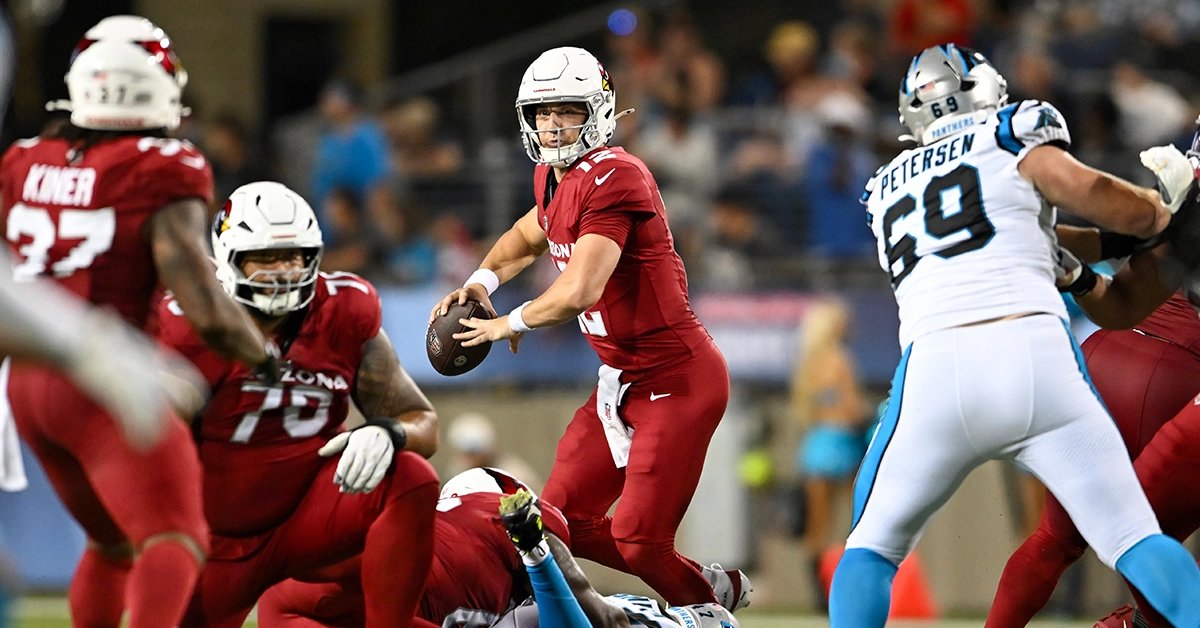
The Cincinnati Bengals squared off against the Kansas City Chiefs on Oct. 21, 2018. After a stalled drive in the 3rd quarter, Cincinnati opted to take a field goal, despite being down by 23 points. A lot of conservative, old-school football watchers know that a field goal or a punt on fourth down is traditionally the safe play call.
Fans in Cincinnati were losing their minds. Why not risk the turnover when you’re running out of the time it takes to score the four touchdowns you need?
That call—still a bad one—is NFL doctrine and has been for a long time. It’s one made even in situations not quite as extreme as the one Cincinnati faced that Sunday night. The Bengals made the field goal, but didn’t score again and lost the game 10-45. But regardless of this outcome, when a team is facing a 4th down with 4 yards to go on their opponent’s 40 yard line, there’s a good chance they’ll still opt to punt the ball away.
They shouldn’t.
Kicking the ball, either for a punt or a field goal, is the safe choice. Whenever a team opts for the kick, the sportscasters praise the coach for making that decision. Economists and statisticians, on the other hand, lose their minds.
Why? Because there’s no real reason for a coach to be so conservative. Brian Burke, a former Naval aviator who used to fly the F-18C, is a nationally recognized expert on advanced sports analytics. Burke is currently an analyst for ESPN. In 2009, he published a study on Advanced Football Analytics that took a look at 4th-down decision making.
His data came from official NFL gamebooks for all non-preseason games 2000 through 2008, restricted to first and third quarters. Burke excluded the second and fourth quarters because that’s when the clock and score distort decisions. He compared the Expected Points value of three options (punt, field goal attempt, go for it) at every combination of field position and distance.
Conversion probabilities came from 4th-down data supported by 3rd-down conversion rates, since 4th-down attempts are rare (this also washed out the selection bias of coaches only going for it in favorable spots).
He concluded that coaches should be dramatically more aggressive. Burke’s final chart put 4th-and-1 in “go” territory essentially anywhere on the field, and had teams going for it on 4th-and-2 deep in their own end of the field.
His worked example: On a 4th-and-3 from the opponent’s 37 in a tied game, early second quarter, the math says going for it is the mathematically supported way to go. Coaches in that exact situation punted 100% of the time.
If you don’t understand the math after looking at his study, don’t worry about it. People who do understand math created a handy graphic for the New York Times, based on Burke’s calculation. So we can look at the Bengals horrible performance in Kansas City a different way.
Aside from the terrible ball handling that led to a turnover, the Bengals tried for a fake punt on 4 and 9 from their own 37-yard-line with almost the entire second quarter remaining, a move that worked against the Chicago Bears in a preseason matchup. The play was bungled, but no matter how the ball was handled, the Times’ 4th Down Bot says they should have punted it away.
Later in the game, with 6:20 left in the 3rd quarter and the Bengals down 28-7, Lewis opted to kick the field goal from the Kansas City 15-yard-line. Bengals fans everywhere were livid, given the score. While the the bot created by Burke’s formula and the New York Times doesn’t account for what to do in a blowout situation, Lewis made the correct call, according to the math.
In 2015, Burke joined ESPN as an analyst and remade the network’s 4th down decision analyzer. It now looks at score, time remaining, distance to the sticks, yard line, timeouts remaining for each team, each team’s pregame win probability, and the relative strength of the offense and defense involved.
The result is a model more aggressive than the average coach, which recommends going for it on fourth-and-1 in typical situations anywhere on the field—consistent with the 2009 EP study. Despite popular belief, the one you see on screen does not always say “go.” It only appears that way because broadcasts display the graphic only when the call is interesting or controversial.
The biggest question, however is: does it work? In 2025, the answer would be no. The NFL as a whole set a record for fourth-down aggression (teams averaged roughly 30-31 attempts) but success rate dipped slightly from the prior year, and the pattern held: volume of attempts tracked more closely with losing than with winning.
Teams that went for it most often finished near the bottom of the standings. The Jets led the league with 41 fourth-down tries and finished 3-14. Carolina was next at 40 attempts and went 8-9. The Giants (39), Cowboys (35), Titans (35), and Saints (34) all ranked among the most aggressive and none of them reached double-digit wins.
The best teams largely stayed conservative. Seattle, the Super Bowl champion at 14-3, attempted just 12 fourth downs—the fewest in the league. Denver (14-3) and Houston (12-5) were also near the bottom in attempts.
Don’t Miss the Best of We Are The Mighty
• AUSA graphic novel spotlights ex-NFL player who earned the Medal of Honor • A hungover Air Force veteran scored the first Super Bowl touchdown ever • The Army Black Knights are the cleanest team in college football
The mathematical reason NFL teams are now more aggressive on 4th down
Why the Pentagon tried to convince Pat Tillman not to become an Army Ranger
The Army Black Knights are the cleanest team in college football
Marine veteran Ted Williams delivered the best All-Star Game showing ever
A former soldier with a TBI found his purpose in helping other veterans
Related Service stories

Yes, I Served in Iraq. But What if People Mistake Me for a Hero?
Illustration by Kim Vo The Department of Motor Vehicles was a good place to lose your identity, not find it, especially 30 minutes before cl
Officers only: New report lays out what a ‘US Cyber Force’ could look like
A new report argues that an independent Cyber Force should be staffed by only commissioned officers and warrant officers to better develop t
Navy researchers find wreck of World War II submarine that vanished 82 years ago
Nearly 82 years to the day after the USS Herring went missing during World War II, the Navy said it had found the wreck of a submarine that