Tips for sending care packages to your deployed service member
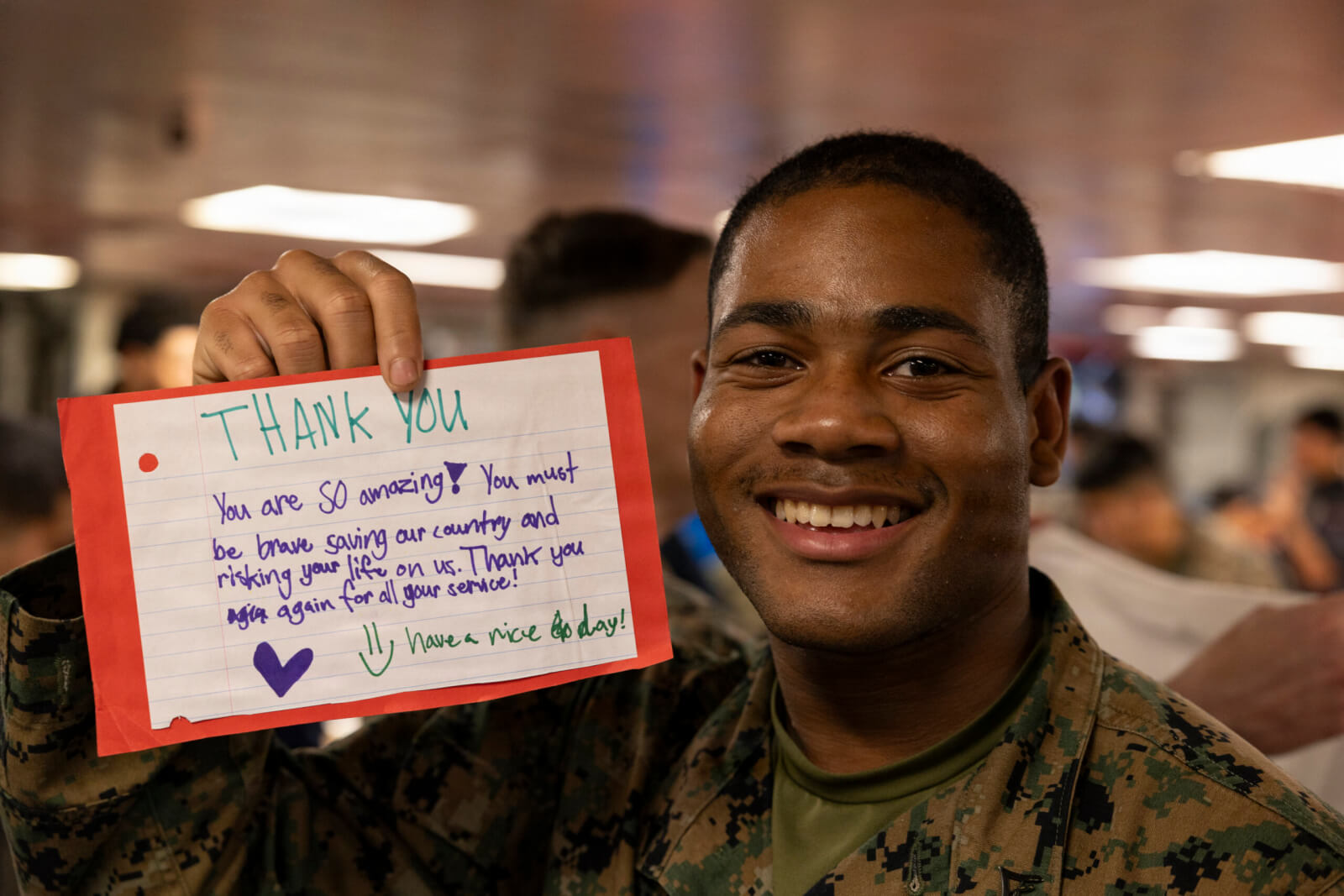
U.S. service members have always had one glimmer of hope while fighting away from home: mail. Letters — whether sealed with a sweetheart’s kiss or penned in the familiar hand of one’s mother — bring hope and provide a brief portal home. Beyond a written note, however, care packages filled with practical, nutritious and thoughtful gifts can boost a deployed service member’s morale and, if shared, a unit’s esprit de corps.
History of ‘comforts’
In 1913, parcels up to 11 lbs. began to ship through the United States Postal Service (USPS) via its “Parcel Post Service.” Soldiers in World War I were the first American service members to receive packages from home during conflict, though Benjamin Franklin (the first U.S. postmaster general) had noted the benefit of care packages to troops long before.
“During the French and Indian War … Franklin recognized that the officers on the frontier lacked access to supplies and were in need of comforts,” said USPS Historian and Corporate Information Services Manager Steve Kochersperger. “At Franklin’s request, the Pennsylvania Assembly approved a gift of ‘necessaries and refreshments’ for the officers. The gifts, packed in 20 parcels, included luxury items such as Madeira wine, Jamaica spirits, loaf sugar, coffee, tea, chocolate, Gloucester cheese, and cured hams.”
While we don’t recommend sending cheese to someone overseas, service members appreciate receiving care packages while deployed. Here are some items service members enjoy receiving, as well as tips for packing, what not to send (and why!), and organizations that routinely send care packages to troops.
What service members want
During deployments, my husband has requested care packages of “snacks, toiletries and a pillow [if needed].” Yes, a pillow. During a portion of an OIF deployment — before I met him, it should be noted — my husband did not have one, and instead slumbered on a folded towel. These days, I have spare travel pillows to toss into care packages, just in case.
As far as snacks go, homemade treats will always be a hit but can be tricky. One spouse shared that when packing baked goods, adding a piece or two of bread to the sealed bag will ensure that they will remain moist while in transit. Veteran (and Military Families Magazine’s own communications manager) Jena Hutchison cautioned not to send any chocolate due to the likelihood of melting.
One military spouse who endured multiple deployments during OIF/OEF said, “I always sent coffee, gum, Oreos and packaged meals like Dinty Moore,” adding she also sent cake in a jar for birthdays.
For other food and drink options, protein bars and coffee are durable choices. If you are unsure what appliances may be available while forward, instant coffee like Starbucks VIA Instant Coffee packs don’t take up too much space while still offering a “freshly brewed” experience. Electrolyte mixes such as Liquid I.V. and Drip Drop are quick ways to add vitamin- and mineral-enhanced hydration. Vitamins and supplements are also often requested.
Toiletries like shaving cream, body wash, hair products, and toothpaste are nice to include, especially on long deployments. But it doesn’t all have to be utilitarian. Hutchison recalled one deployment where they were sent face masks, nail polish, and hair shears, transforming Sunday nights into “spa nights.”
If this is overwhelming, there are several organizations that send service members care packages. For example, Packages from Home has a Pay-It-Forward program that uses donations to provide snacks, toiletries and even entertainment to service members. If you or your loved one is currently deployed, you can request a care package online. Hero Care Packages offers a similar service where you can send a ready-made care package or build your own with options like popcorn, coloring books, journals or even a massage gun!
If you want to donate to a nonprofit that supports our troops, Heroes Strong in Florida sends troops care packages on the last Friday of every month through their program Heroes Overseas Packages (HOP). Marine spouse Megan Slaton volunteers with HOP, and as the owner of Sugar, Spice, and All Things Iced, she routinely ships a dozen vacuum-sealed cookies in each box — something the troops really appreciate!
Final tips
To protect your care package items against insects and critters, as well as contain any spills, melts and leaks, make sure to securely seal them separately in plastic bags. For significant others and spouses sending care packages: remember to seal with a kiss.
And perhaps throw in a travel pillow.
Related Service stories

Yes, I Served in Iraq. But What if People Mistake Me for a Hero?
Illustration by Kim Vo The Department of Motor Vehicles was a good place to lose your identity, not find it, especially 30 minutes before cl
Officers only: New report lays out what a ‘US Cyber Force’ could look like
A new report argues that an independent Cyber Force should be staffed by only commissioned officers and warrant officers to better develop t
Navy researchers find wreck of World War II submarine that vanished 82 years ago
Nearly 82 years to the day after the USS Herring went missing during World War II, the Navy said it had found the wreck of a submarine that