What it means when a Marine Corps officer hands over a sidearm during a war
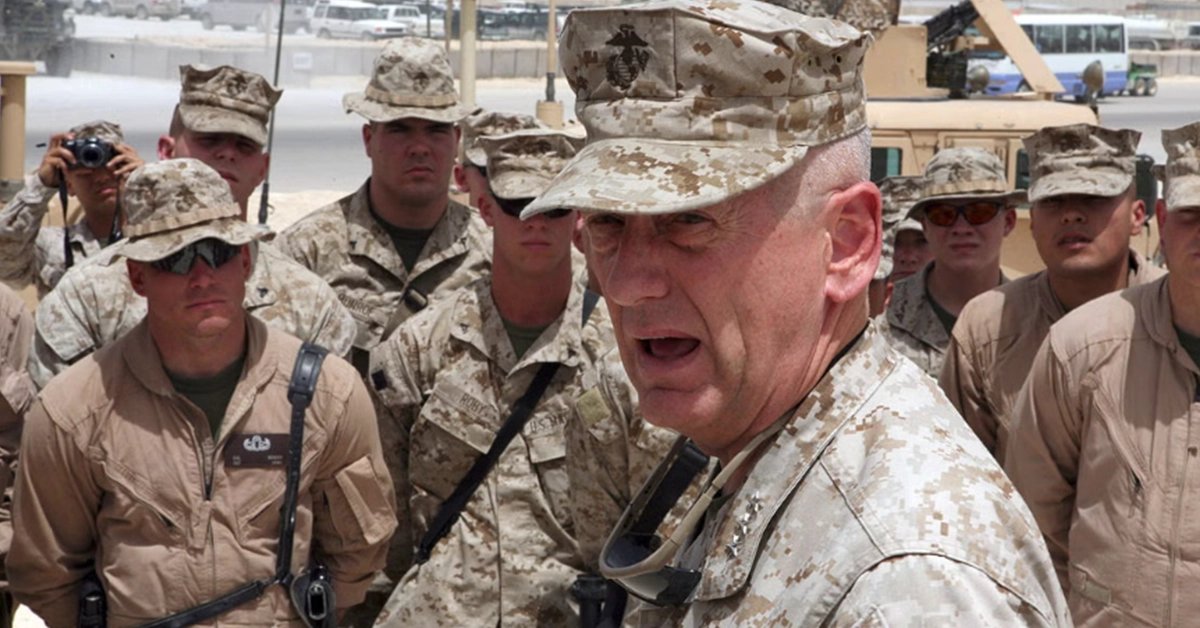
On April 4, 2003, in the middle of the U.S.-led invasion of Iraq, then-Maj. Gen. James Mattis entered the command post of Marine Corps Col. Joe Dowdy and delivered news that would effectively end a nearly 24-year military career. Mattis told Dowdy he was being relieved of command, then asked him to empty his sidearm and hand over the ammunition.
“He thought I was going to try to kill myself,” Dowdy later told the Wall Street Journal.
Though the scene wasn’t depicted in the 2008 HBO miniseries “Generation Kill,” it did warrant a mention on the show because of the how the Marines react to the news and how it appears in “Generation Kill” author Evan Wright’s book, and for what it represents in Marine Corps culture.
Having a general ask for the rounds in your weapon is about the clearest sign of professional ruin a Marine Corps officer can get.
Mattis was prosecuting a strategy known as “maneuver warfare” against Saddam Hussein’s Iraqi forces. The plan called for rapid, continuous movement by dispersed units to keep the enemy disoriented, force hesitation, and create opportunities to exploit. Speed wasn’t just preferred, it was the operational center of gravity.
Dowdy, as commanding officer of Regimental Combat Team 1, was not delivering the speed Mattis needed.
A spokesman for the 1st Marine Division, said Dowdy’s removal “was a decision based on operating tempo.” RCT-1 was fighting Saddam Fedayeen fighters for two weeks and was within 130 kilometers of Baghdad when Mattis walked into his command post. The unit suffered just one killed in action during the fighting, which supported Dowdy’s instinct for force protection. In Mattis’s view, however, it meant a lack of aggression.
Mattis’s staff described Dowdy as “fatigued beyond normal” and “overly concerned about the welfare” of those under his command, to the point that he was “not employing the regiment to its full combat potential.”
Dowdy was replaced by Col. John Toolan, then the 1st Marine Division’s chief of staff.
A Marine officer being relieved of command in combat is an “unusual” event and devastating for the relieved officer’s career— andDowdy was the only senior officer so relieved during the entire invasion of Iraq. He later told the Wall Street Journal he would have rather taken an enemy bullet.
His removal shocked many in the Corps because he hadn’t disobeyed orders or failed a mission in any conventional sense. The two men simply understood the battlefield differently: Mattis believed speed was paramount. Dowdy believed that subordinating everything to speed exposed his Marines to unnecessary risk. Mattis was the superior officer, and the United States Marine Corps is not run on consensus.
Dowdy left the Marine Corps in May 2004, after nearly 24 years of service that included deployments to Beirut in 1982 and Somalia in 1993. He was revered by the officers and enlisted Marines who served under him. He later worked as a special operations manager at NASA’s Kennedy Space Center. In the years that followed, he was frequently sought out for counsel by other Marine officers who had been relieved of command, men who knew what it felt like when the world he’d built came down.
“The whole world that you’ve built comes crumbling down,” Dowdy told Task & Purpose in 2018. “And then to end it, to be subject to international humiliation—to be the only commander in the whole war to be relieved—it’s very difficult to deal with that.”
But in 2004, when the wounds were still fresh, Dowdy told a reporter, “At least I don’t have a butcher bill to pay.”
On April 4, 2003, in the middle of the U.S.-led invasion of Iraq, then-Maj. Gen. James Mattis entered the command post of Marine Corps Col. Joe Dowdy and delivered news that would effectively end a nearly 24-year military career. Mattis told Dowdy he was being relieved of command, then asked him to empty his sidearm and hand over the ammunition.
“He thought I was going to try to kill myself,” Dowdy later told the Wall Street Journal.
Though the scene wasn’t depicted in the 2008 HBO miniseries “Generation Kill,” it did warrant a mention on the show because of the how the Marines react to the news and how it appears in “Generation Kill” author Evan Wright’s book, and for what it represents in Marine Corps culture.
Having a general ask for the rounds in your weapon is about the clearest sign of professional ruin a Marine Corps officer can get.
Mattis was prosecuting a strategy known as “maneuver warfare” against Saddam Hussein’s Iraqi forces. The plan called for rapid, continuous movement by dispersed units to keep the enemy disoriented, force hesitation, and create opportunities to exploit. Speed wasn’t just preferred, it was the operational center of gravity.
Dowdy, as commanding officer of Regimental Combat Team 1, was not delivering the speed Mattis needed.
A spokesman for the 1st Marine Division, said Dowdy’s removal “was a decision based on operating tempo.” RCT-1 was fighting Saddam Fedayeen fighters for two weeks and was within 130 kilometers of Baghdad when Mattis walked into his command post. The unit suffered just one killed in action during the fighting, which supported Dowdy’s instinct for force protection. In Mattis’s view, however, it meant a lack of aggression.
Mattis’s staff described Dowdy as “fatigued beyond normal” and “overly concerned about the welfare” of those under his command, to the point that he was “not employing the regiment to its full combat potential.”
Dowdy was replaced by Col. John Toolan, then the 1st Marine Division’s chief of staff.
A Marine officer being relieved of command in combat is an “unusual” event and devastating for the relieved officer’s career— andDowdy was the only senior officer so relieved during the entire invasion of Iraq. He later told the Wall Street Journal he would have rather taken an enemy bullet.
His removal shocked many in the Corps because he hadn’t disobeyed orders or failed a mission in any conventional sense. The two men simply understood the battlefield differently: Mattis believed speed was paramount. Dowdy believed that subordinating everything to speed exposed his Marines to unnecessary risk. Mattis was the superior officer, and the United States Marine Corps is not run on consensus.
Dowdy left the Marine Corps in May 2004, after nearly 24 years of service that included deployments to Beirut in 1982 and Somalia in 1993. He was revered by the officers and enlisted Marines who served under him. He later worked as a special operations manager at NASA’s Kennedy Space Center. In the years that followed, he was frequently sought out for counsel by other Marine officers who had been relieved of command, men who knew what it felt like when the world he’d built came down.
“The whole world that you’ve built comes crumbling down,” Dowdy told Task & Purpose in 2018. “And then to end it, to be subject to international humiliation—to be the only commander in the whole war to be relieved—it’s very difficult to deal with that.”
But in 2004, when the wounds were still fresh, Dowdy was more to the point, telling a reporter, “At least I don’t have a butcher bill to pay.”
Don’t Miss the Best of We Are The Mighty
• Iraq’s ‘Triangle of Death’ is still famously dangerous real estate • The $1 billion robbery that Saddam Hussein pulled off before US bombs fell • The time the SAS defied orders to rescue two of their own in Iraq
What it means when a Marine Corps officer hands over a sidearm during a war
The Navy said her son died by suicide. This mother pushed back fiercely for the truth
Marine veteran Ted Williams delivered the best All-Star Game showing ever
Country music legend George Jones’ legendary lawn mower booze run
Retired Marine colonel to lead NASA’s Artemis III mission
Related Service stories

Yes, I Served in Iraq. But What if People Mistake Me for a Hero?
Illustration by Kim Vo The Department of Motor Vehicles was a good place to lose your identity, not find it, especially 30 minutes before cl
Officers only: New report lays out what a ‘US Cyber Force’ could look like
A new report argues that an independent Cyber Force should be staffed by only commissioned officers and warrant officers to better develop t
Navy researchers find wreck of World War II submarine that vanished 82 years ago
Nearly 82 years to the day after the USS Herring went missing during World War II, the Navy said it had found the wreck of a submarine that