Why grave robbing Confederate Civil War dead is big business
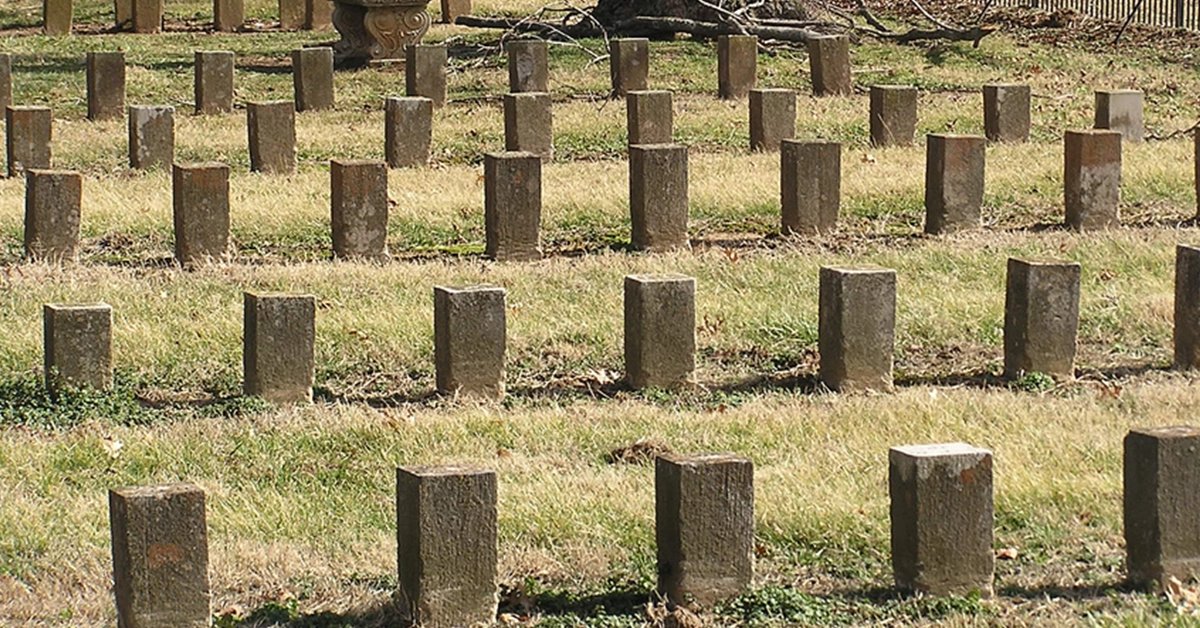
In April 2013, an old iron casket was found dug up and pulled out of a desecrated gravesite, its contents spilled all over the Old Church Cemetery near Waynesboro, Ga. A man, later found to be Ralph “Bubba” Hillis, along with accomplice Jerry Atkinson, had taken to digging up graves in the cemetery.
Why target the little Old Church Cemetery near Waynesboro? Because it dates to 1758 and holds the remains of Revolutionary War soldiers as well as those of Confederate troops from the Civil War—and old war relics are big business.
Dealers and auction houses say Confederate-attributed items are the most valuable relics when it comes to Civil War militaria, and officer’s swords and Confederate handguns move in the four- to five-figure range at current auctions.
Both men pleaded guilty. Hillis got five years in prison plus three on probation and a $1,000 fine on five felony counts of disturbing the contents of a grave; Atkinson got five years and ten on probation on the same five counts plus manufacturing meth, obstruction, and two counts of felon-in-possession, with 250 hours of community service.
But that won’t put an end to grave robbing from the war dead. Investigators never recovered what was stolen from the graves.
The issue of grave robbing by those searching unique, ancient artifacts is a huge problem the world over, especially in places like Egypt, Peru, and Cambodia. These are areas filled with archaeological treasures and a steady flow of individuals who are struggling economically and are willing to risk punishment to go dig up said artifacts for the right price.
And that price can always be found. Illegally-sold Egyptian antiquities are found all over the world as they make their way from the Valley of the Kings to Syria to Dubai to New York and, finally, to whatever buyer is waiting at their final destination. Eager collectors are just waiting to find the right artifact from the right seller at the right price. The same technology that brings the world closer together also brings looters and grave robbers closer to these buyers.
Meanwhile, long-running television shows like “Pawn Stars” and “American Pickers” have spent more than a decade demonstrating how readily a few authentic pieces of history convert to cash. The ease of moving ill-gotten items and the interest their origins generate are making grave robbing a profitable crime right here in the United States, too.
The value of Civil War-era artifacts has led to the growth of a booming black market. A rare Confederate uniform button can bring thousands from the right collector. Southern antiques auction listing value an officer’s pistol at upwards of $9,000—and that’s before any documented name is attached to it. Provenance multiplies the sum: a sword traceable to a named officer has been appraised by brokers at $50,000. A named general’s blade can drive the price even higher.
Provenance in this field means a chain of ownership, like a bill of sale, a family letter, a dealer’s records. A relic pulled out of the ground has none of that by definition. But collectors can tell a dug piece from an attic piece; soil leaves its mark on brass. What nobody can tell from the object itself is whether it came off a battlefield, out of a farmer’s field with permission, or out of a grave.
As a result, there is treasure literally buried all over the South. And people are digging for it.
On federal land, it’s a crime under the Archaeological Resources Protection Act of 1979. Violators risk up to $20,000 in fines, or two years in prison (or both). But looted grave goods are undocumented by definition. Once a button or a sword enters the market with no provenance, nobody can prove it came out of a grave rather than an attic. So prosecutors don’t charge the value of the goods; they charge damage to the site.
The most extreme case ever prosecuted didn’t come from a cemetery, it came from a battlefield: Petersburg National Battlefield.
Over four years, John Jeffrey Santo worked the park with a metal detector and his dog, and investigators eventually recovered more than 9,000 relics from him. They found items like bullets, buckles, cannonballs, breastplates, and buttons. He kept a journal of every trip. One entry described five buttons pulled from a single spot, which a park historian took as a sign that an unrecorded soldier had been buried there.
Santo pleaded guilty to two counts of damaging archaeological resources and one count of pillaging the battlefield, and despite the massive haul, drew only 366 days in prison and $7,346 in restitution for the damage his holes did to the ground.
He’s also the exception: the National Park Service says only about 14% of looting cases are ever solved, and roughly 95% of the ones that are end in misdemeanor convictions.
On paper, the black market is a lot more difficult. eBay now bars the sale of items taken from historical grave sites and requires antiquities listings to carry provenance and documentation of legal sale. Whether that stops anything depends entirely on enforcement, and on a seller volunteering where a button actually came from.
Your local Civil War museum is almost certainly clean, but not because there’s a system watching. Legitimate institutions won’t accession an object without a documented chain of ownership, which a looted relic could never produce. But undocumented material doesn’t end up in museum display cases, it ends up in the hands of private collectors, usually with no questions asked.
At some locations, authorities don’t expect people to play by the rules. Instead, they take the proactive approach of removing historical relics themselves and moving them to national cemeteries. At New Mexico’s Fort Craig, for example, federal archaeologists exhumed 67 sets of remains after determining that 20 graves had already been looted by a collector who died while he was being investigated for the crime.
Leaving the rest in the ground was just not an option.
Don’t Miss the Best of We Are The Mighty
• President Lincoln personally led a recon mission during the Civil War • Modern dishes anyone can make using Civil War foods • 5 reasons why John Bell Hood was the worst Civil War general
Why grave robbing Confederate Civil War dead is big business
Mighty MilSpouse
Her husband’s deployment was just extended to a year. She says the reality is ‘a gut punch.’
Army, Navy, and Air Force: Your 2026 service academy football preview
Mighty 25
The Mighty 25 2026: Influence with Impact
Movies and TV
You’re not ready for this prisoner of war film based on a true story
Related Legacy stories
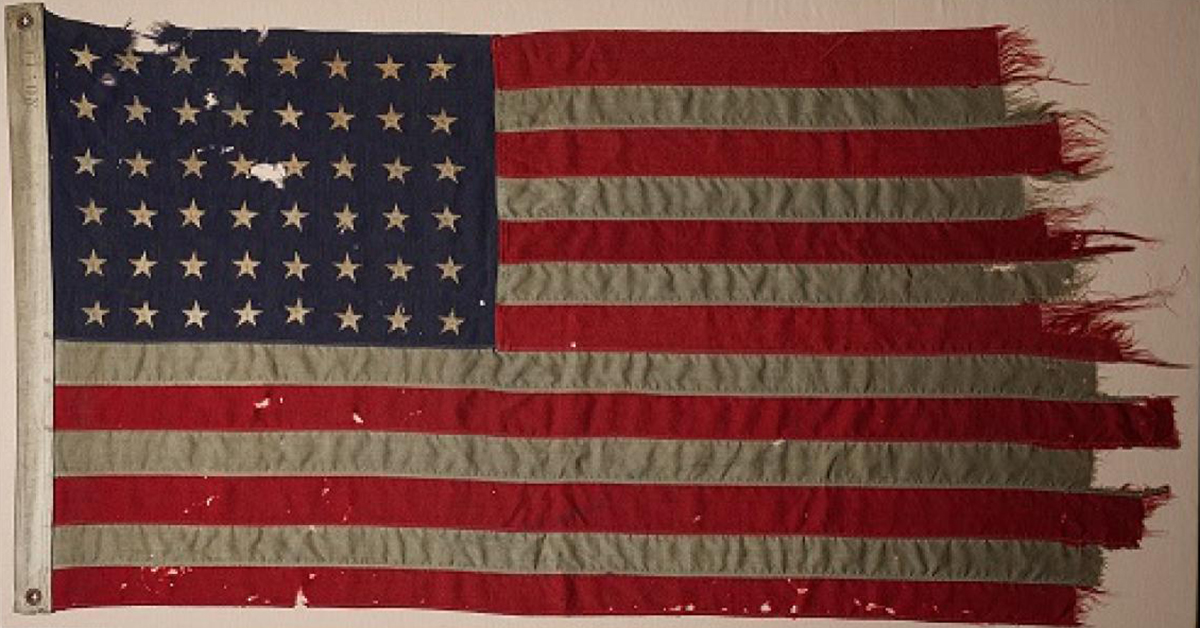
This American flag survived D-Day, then was returned to the US 75 years later
When Howard Vander Beek died in 2014 at the age of 97, he left behind a distinct reminder of his World War II service. Vander Beek, a lieute

Medal of Honor recipient and legendary Vietnam War helicopter pilot ‘Old Snake’ has died
Retired Army Col. Bruce Perry Crandall, the legendary helicopter pilot who was awarded the U.S. military’s highest decoration for valor for

Air Force crew honors WWII-era Flying Tigers with A-10 paint job
It started as a routine transfer. Following an asset transfer from Korea, maintainers at Moody Air Force Base, Georgia, accepted and process