Why the US military wants to take your wisdom teeth so fast
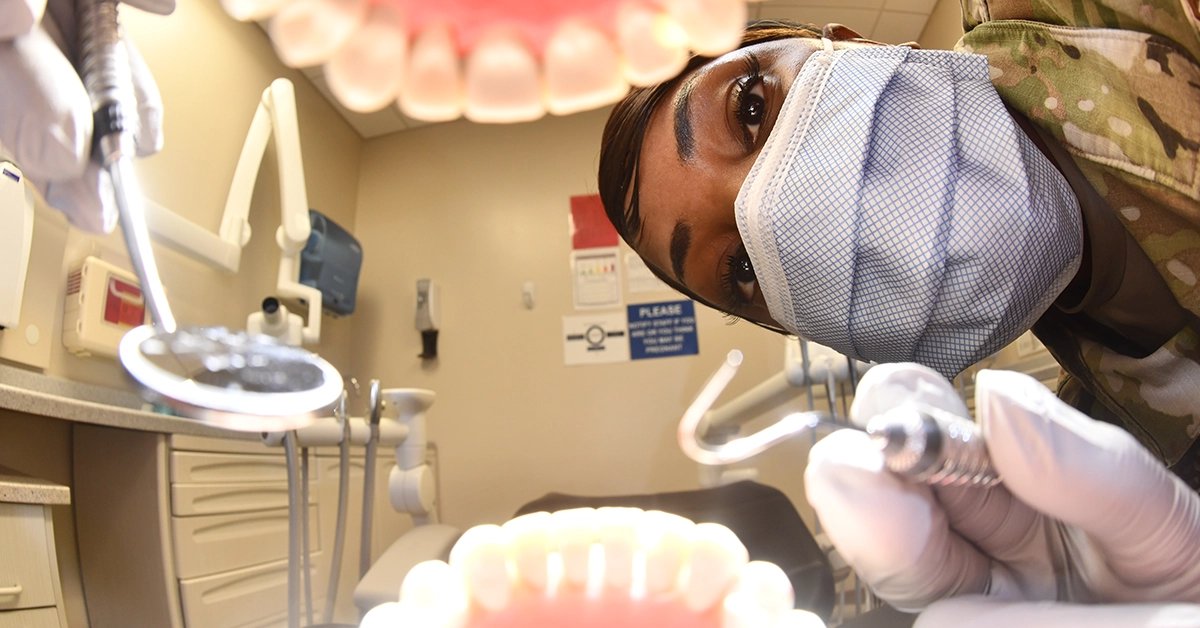
You probably never signed up for this part. You did not research your surgeon, read his reviews, or ask a single follow-up question. Nobody ever asked your opinion. One day you had wisdom teeth, and the next day the United States military snatched them from your face like they’re the secret component of a doomsday weapon.
It might come in basic training. It might come during your first months at your first duty station. But sooner rather than later, your wisdom teeth are more than likely coming out before you take off the uniform.
Here’s something to think about while drooling onto your shirt: the military did not take your wisdom teeth for laughs, or to toughen you up, or because some dentist had a quota to hit before COB. It took them because a tooth is a liability, and the military hates a liability it cannot control.
Somewhere down the road, there will be a war, or a ship, or a mountain valley where the nearest dentist is a helicopter ride and a long distance of pain and complaints. Your third molars were eventually coming out; the only questions the military settled for you were where, when, and here are some Percocets.
“Voluntold”
Basic training sets aside days for this kind of thing. The military lines you up, looks in your mouth, and makes a decision about your immediate future that you will not be invited to weigh in on. It feels arbitrary because, from the chair, it looks arbitrary.
It is not.
Honestly, not everyone will lose them; but there’s no need for extra anxiety. A Navy dentist who said he works at a Marine recruit depot once laid it out plainly: only wisdom teeth that meet certain criteria come out, and not every recruit who needs one removed gets all four taken out.
If your molars are sitting pretty and behaving themselves, you might just make it through basic training together. If they are impacted, crowded, or look like gold to an oral surgeon, they are forfeited.
And every so often, somebody reads the fine print. One sailor, who was told in Navy boot camp that his wisdom teeth were coming out, asked whether anything was actually wrong with them. Informed that there was not, he declined, and he kept them.
A wisdom tooth does not respect anything. It can’t. It sits there, quiet, impacted, and indignant, for years, and then pick the single worst week to flood your jaw with infection. The military has an equally cold name for the category of misery this falls under: disease and non-battle injury, the inglorious attrition that pulls more troops off the line over a long deployment than the enemy does.
And there’s no pain quite like tooth pain.
Researchers tracking third-molar cases across Iraq and Afghanistan found that more than half of the troops who showed up in genuine pain felt nothing at all beforehand. The tooth gave no warning. It simply waited for the worst possible time to pop off. And of the personnel who needed to travel for treatment, roughly 70% were transported by helicopter. A helicopter, a pilot, a crew, and a chunk of someone’s tactical day scrambled; all for a throbbing tooth.
Consider it a cautionary tale that the entire system exists to prevent. MarineParents.com tells the story of a Marine named Derrick, whose wisdom teeth came out not in boot camp but later, while his unit was training in Japan.
Almost immediately after, the call came down that they were headed to Iraq. He flew into a combat zone with bloody rags smooshed into his mouth, spending his first days in theater healing instead of fighting alongside his friends. The military would much rather that happen on a quiet morning at the dental clinic than on a transport plane bound for a war zone.
The Wisdom in Wisdom Teeth
Our military, being our military, designed a tier list specifically for this situation; your records will be stamped one of four classes. Class 1 means your mouth is squared away and you are good to go anywhere. Class 2 means you need minor work, but you can still deploy.
Class 3 means you have something likely to explode in your mouth within a year, and until it is fixed, you are not going anywhere. Class 4 means you skipped your exam, and the system assumes the worst and grounds you too.
A bothersome wisdom tooth is more than enough to land you in Class 3 and place your career on hold. The risk behind the rule is documented: a Class 2 service member is about twice as likely to have a dental emergency as a Class 1 service member, and a Class 3 service member is roughly seven to eight times as likely. So the dentist peering into your mouth in week three of training is not being “icky.” They are doing what good leaders do and looking for anything about your head hole that might affect you and your mates when it truly matters.
If that still sounds like “a tad too much” for a few teeth, look to your experts, sweet summer children.
Studies of deployed troops have clocked dental emergency rates somewhere between roughly 137 and 230 per thousand per year, which means that in any given year, a real slice of everyone downrange ends up needing a dentist they cannot conveniently reach.
One accounting of U.S. Army dental emergencies across 2009 and 2010 tallied 11,642, an estimated 24 lost duty hours per unit per week, and a price tag running into the tens of millions of dollars. Every single one of those numbers is a person who is not doing their job because their teef staged a mutiny.
Spit, Rinse, and Get Back to Work
Finally, as your swelling wanes on day three and turns you into a somewhat sympathetic figure, you move on to the phase of mashed potatoes, applesauce, lukewarm soup, and a strict, anxious avoidance of straws, because those dreaded words whispered by every survivor of extraction, “dry socket,” float ominously in your brain, as it awaits those who get too confident in their suckling.
Veterans trade the same stories as civilians, bonding over shared trauma, then offering sage advice to assist future sufferers. One buddy will be sent back to formation still leaking from his face holes, swelling photos will be posted on Instagram, and all will find out that the military’s answer to losing four teeth is the same as its answer to being blown up, which is ibuprofen, water, and possibly a cushy 18-hour work day at Battalion until you’re ready to join your unit.
There is one small mercy buried in the ordeal. In boot camp, getting your wisdom teeth out can buy you a day of bed rest and a temporary reprieve from your drill instructor. In that particular universe, a quiet afternoon horizontal with a bag of ice counts as a luxury vacation.
You handed over four teeth and a weekend of pudding in exchange for the assurance that your own mouth would never be the thing that pulled you out of a fight. Perhaps one night, when you are sipping a cold beverage with zero discomfort, you’ll come to see this as one of the very few deals the military ever offered that came out in your favor.
Don’t Miss the Best of We Are The Mighty
• A 100-plus year history of iconic US military helmets • How to get the VA to pay for civilian hospital visits • Everything you need to know about military ranks and what they mean
Join the Military
The complete guide to Space Force ranks
The complete guide to West Point
Everything you need to know about military ranks and what they mean
The 7 best enlisted military jobs to get after being drafted for World War III
The complete guide to Navy ranks and insignia
Related Service stories

Yes, I Served in Iraq. But What if People Mistake Me for a Hero?
Illustration by Kim Vo The Department of Motor Vehicles was a good place to lose your identity, not find it, especially 30 minutes before cl
Officers only: New report lays out what a ‘US Cyber Force’ could look like
A new report argues that an independent Cyber Force should be staffed by only commissioned officers and warrant officers to better develop t
Navy researchers find wreck of World War II submarine that vanished 82 years ago
Nearly 82 years to the day after the USS Herring went missing during World War II, the Navy said it had found the wreck of a submarine that