Navy says aviators can no longer command amphibious warships
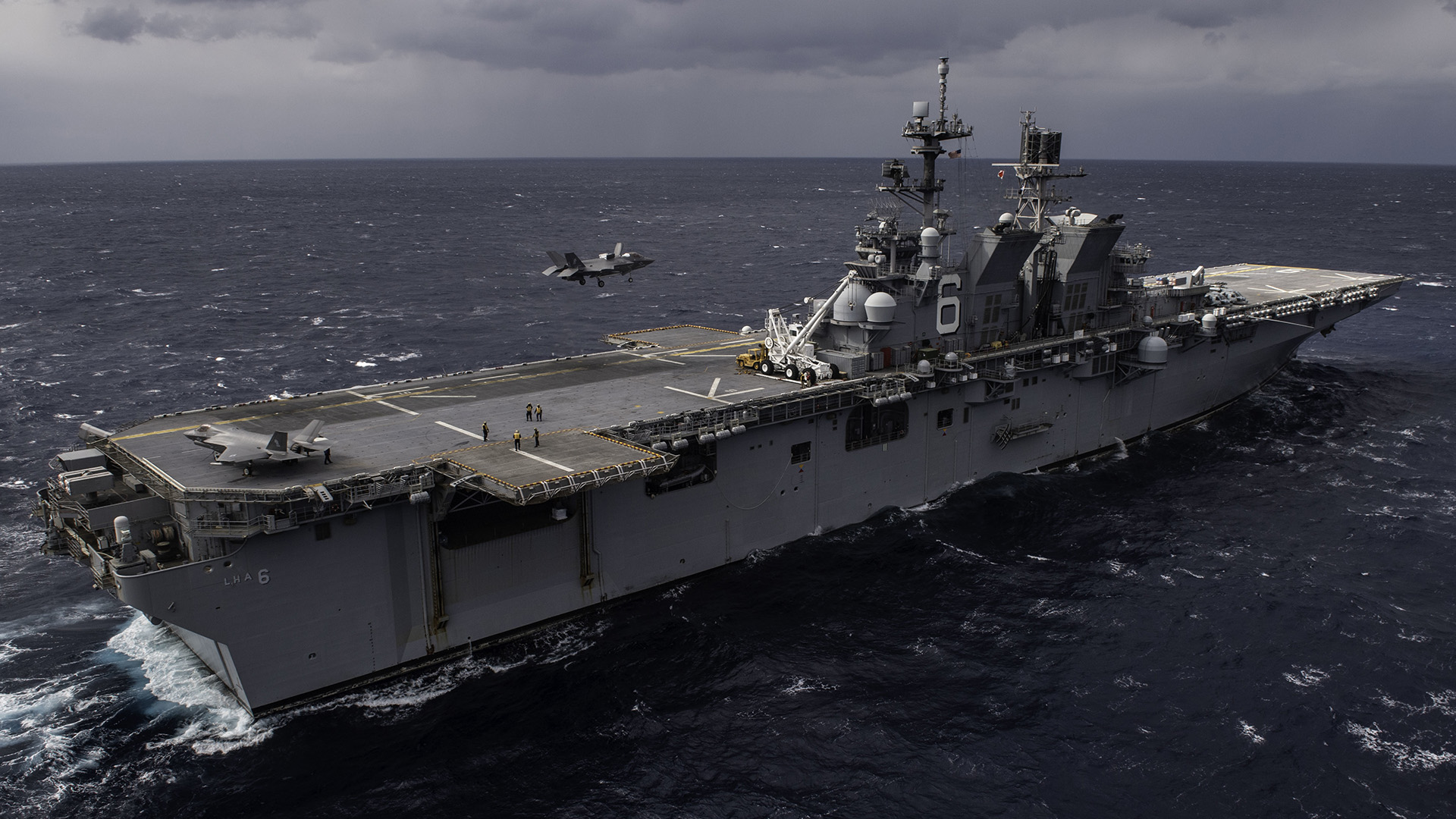
In a major break with tradition, Chief of Naval Operations Adm. Daryl Caudle has directed that the Navy ships that transport Marines into war zones be commanded by surface warfare officers instead of aviators.
The change applies to amphibious assault ships, transport docks, and dock landing ships, Caudle wrote in an April 24 memo that has been shared on Reddit. The Navy confirmed to Task & Purpose that the memo is authentic.
The Navy currently has a total of 32 amphibious warfare ships, including nine big deck amphibious assault ships, which carry Marines and vertical-take off aircraft like the MV-22B Osprey, helicopters and F-35 fighters.
In the memo, Caudle wrote that his decision is tied to Navy efforts to improve amphibious warfare ships’ readiness.
“Inherent in these improvements is the need for [commanding officers] to not only have exquisite knowledge of readiness, maintenance procedures, component design, and failure modes, damage control, and operational procedures, but also to be masters of their ships while remaining in command long enough to make real and effective changes,” Caudle wrote. “This is generally considered to be at least two years.”
Top Stories This Week
A firefight is too late to start trusting the new Corps, say senior Marines
By Jeff Schogol, Kyle Rempfer
Special Operations Command lays out high-tech wish list
Army drill sergeants get prison for ‘prohibited’ trainee relationships
For years, the readiness rates for amphibious warfare ships lagged behind those of other vessels. Navy Adm. James Kilby, vice chief of naval operations, told lawmakers on April 15 that only about 45% of amphibious ships are “combat surge ready,” or available to deploy soon for their mission in a crisis, compared with 63% of surface ships and 65% of submarines.
In a statement to Task & Purpose, Caudle said requiring amphibious vessels to be led by surface warfare officers is meant to “leverage their specialized expertise and knowledge of complex maintenance and amphibious operations that have been developed over a career.”
“Further, this change enables Commanding Officers to stay in place longer in order to provide more command stability, focused oversight, and solution ownership required to drive measurable performance,” Caudle said in his statement.
Aviators are still authorized to command aircraft carriers, if they are nuclear trained, along with other vessels including Expeditionary Sea Bases, amphibious command ships, and submarine tenders, Caudle wrote in his memo.
Caudle also wrote that the Navy will look into whether aviators will continue to be required to command large vessels — known as a “deep draft command tour” — to be eligible to serve as commanding officers of aircraft carriers.
“Our amphibious fleet has faced different challenges than our aircraft carriers — challenges that require properly leveraging the depth of mariner expertise resident in the [surface warfare officer] community,” a Navy official told Task & Purpose. “The Navy will continue to study the most effective method to develop command-at-sea competency and proficiency for aviators selected for the nuclear power pipeline to reduce or eliminate the requirement for a separate deep draft command tour.”
Historically, aviators have served as captains of certain amphibious warships to meet that requirement, said retired Navy Capt. Bradley Martin, a senior policy researcher with the RAND Corporation.
Caudle’s recent decision could indicate that he believes surface warfare officers better understand amphibious ship operations and maintenance than aviators, Martin told Task & Purpose.
“There’s more places in their career where they can serve on amphibs and gain expertise than there would be for aviators,” Martin said. “My experience with aviators commanding amphibs has been generally positive, but they wouldn’t be experts. They wouldn’t necessarily know very much about the ships themselves. This is a way of trying to codify amphibious experience, and the [surface warfare community] community has a better path to do that than aviation would.”
A former surface warfare officer himself, Martin had considerable experience with amphibious vessels during his Navy career, which included commanding a dock landing ship and later leading an amphibious squadron.
“I was the chief engineer of an amphibious ship, so I knew a lot about how to maintain an amphibious ship,” Martin said. “So when I became a CO of an amphibious ship, I had a considerable amount of background in what works, what it takes to make things happen. I also had spent at least a tour becoming familiar with amphibious operations. So I knew about [Amphibious Assault Vehicle] launch and recoveries, and I knew about the boat limits and stuff like that. I just had more exposure to it than any aviator could have gotten, because it just wasn’t their path.”
Related Service stories

Yes, I Served in Iraq. But What if People Mistake Me for a Hero?
Illustration by Kim Vo The Department of Motor Vehicles was a good place to lose your identity, not find it, especially 30 minutes before cl
Officers only: New report lays out what a ‘US Cyber Force’ could look like
A new report argues that an independent Cyber Force should be staffed by only commissioned officers and warrant officers to better develop t
Navy researchers find wreck of World War II submarine that vanished 82 years ago
Nearly 82 years to the day after the USS Herring went missing during World War II, the Navy said it had found the wreck of a submarine that