19-year-old soldier completes Ranger, Airborne, Air Assault and Pathfinder schools
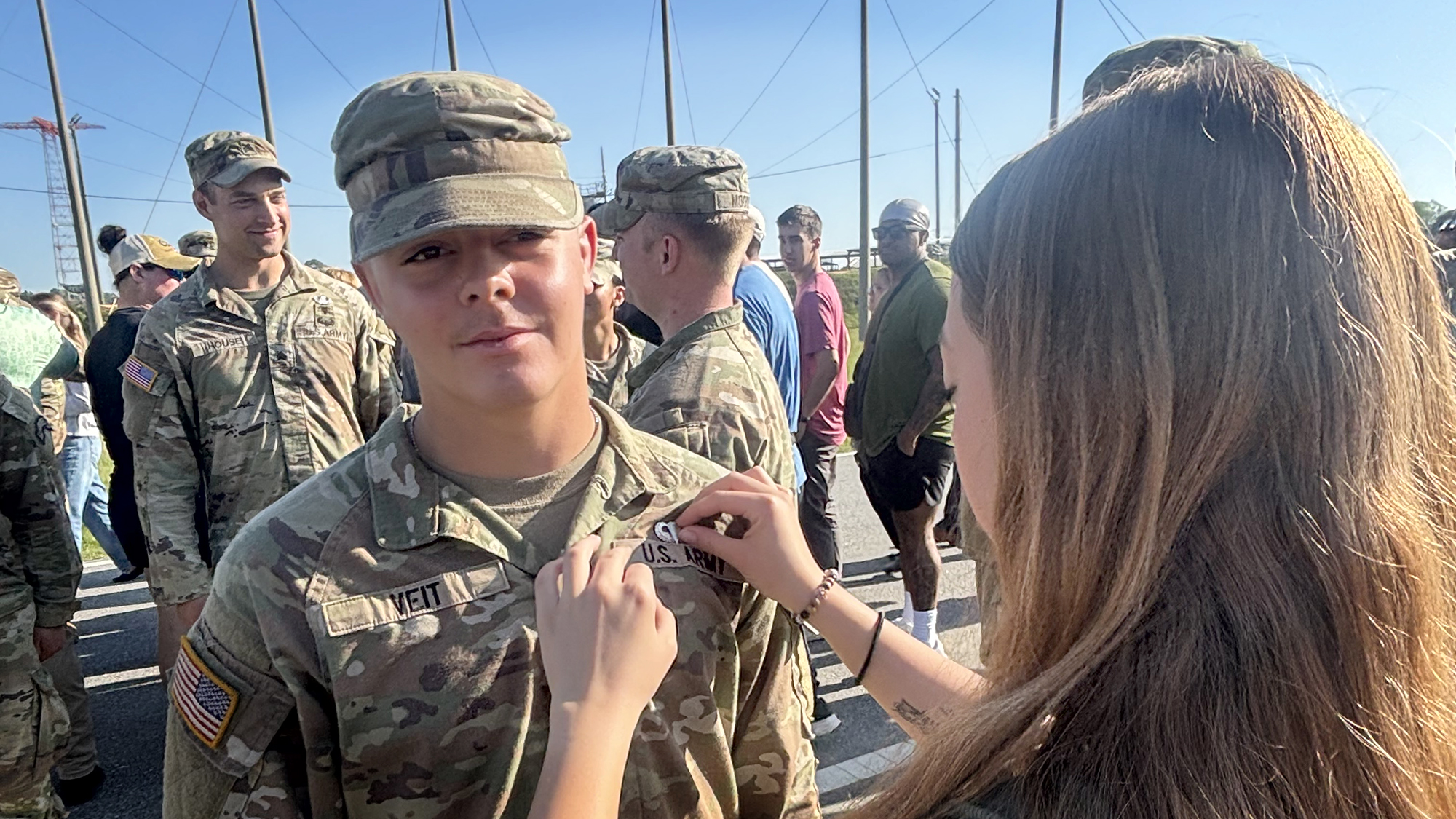
Army Pfc. Mace Veit knew completing four of the Army’s most distinguished training courses in less than six months, including the rigors of Ranger School, would be tough.
Constant testing. Brutal fitness standards. Lack of sleep. He knew he was ready for all that.
What Veit didn’t expect was the growing number of funny looks he’d get from fellow soldiers as he moved from school to school.
“I definitely have explained the path of my career, I guess you could say, more times than I can count, to students and instructors,” Veit told Task & Purpose this week, laughing slightly at his unusual position. “It is pretty crazy, because a lot of people are like, ‘Oh, how’d you get all these schools? I’ve been waiting 10 years to get this one’ or something.”
On Friday, Veit will graduate from Pathfinder School at Fort Benning, Georgia, and, as a 19-year-old private first class, he will pin on his third hard-to-get skill badge — and that’s on top of his Ranger tab.
After graduating high school a year ago, Veit has been to boot camp and advanced individual training as a cavalry scout (where he was an honor graduate), and then beginning in January, he attended Ranger School, Airborne Jump School, Air Assault, and Pathfinder.
Notably, Veit passed all of Ranger School’s notoriously taxing phases on his first try, a 62-day speed run managed by less than 20% of students who attempt the course.
National Guard program for top recruits
After enlisting in the Nevada National Guard while still in high school, Veit said the key to his string of training schools was a newly expanded program at Fort Benning known as the Ranger Team Leader Initiative, or RTLI. Run by the National Guard, the program combs through classes in the Army’s entry-level basic and job training schools — known as One Station Unit Training or OSUT — for high-performing National Guard recruits, though some active duty soldiers join the program as well. RTLI trainers then put the new soldiers through a 30-day crash course to prepare them for an immediate chance in the guard’s formal pre-Ranger school on Fort Benning and, should they advance, a slot in Ranger School.
“We are definitely the pre-pre-Ranger course,” said Staff Sgt. Garrett Streeks, the noncommissioned officer in charge of RTLI. “We’re doing a lot of vetting. I think the hardest part for us is these kids have the buy-in. They’ve just been down here [in OSUT] for 18 or 22 weeks.”
The RTLI program is demanding, said Streeks, with a full Ranger fitness test every week, and training blocks on land navigation, patrolling, and physical events like ruck marches and runs to prepare for the harsh first week at the school, known as Ranger Assessment Phase. But with students who have just graduated from basic training, RTLI instructors skip a hardcore selection approach in favor of teaching and preparation.
“I was really scared at first,” Veit said. “I didn’t know if it was just gonna be like, survival of the fittest, who’s the best prepared for Ranger School. But then as I got here, I realized that, oh, they’re actually trying to help you.”
Those who pass RTLI then move elsewhere on Fort Benning to a formal 15-day pre-Ranger program run by the guard, where they mix in with soldiers from across the Army, nearly all of whom are more senior.
“It’s a lot of teaching, coaching, mentoring on the things, letting them know that they are not going to have the upper hand [in experience], you know, when they’re mixing in with a population of lieutenants and captains, and E-6 and E-7s who’ve spent time at the unit level,” Streeks said.
Top Stories This Week
Fighter pilots say Growler crews’ safe ejections were a ‘miracle’
Aircrews safely eject after two Navy jets collide during air show
Air Force now has 18 of its new Skyraider II ‘Swiss Army Knife’ aircraft, official says
Trainees who eventually make it through Ranger School, said Streeks, are sent to the Basic Airborne Course for jump training as the RTLI staff looks for other courses they might attend, based mostly on scheduling. In Veit’s case, his training happened to line up perfectly to run through all four advanced schools with almost no break — a non-stop gauntlet that, Streeks said, even top performers are often not ready for.
“A lot of times you offer these kids follow-on training opportunities, and you know they’re usually ready to go home after Ranger School,” said Streeks. “They actually see the time that they’re up against, the amount that it adds on to their pipeline, and they get a little overwhelmed with that.”
But Veit never wavered.
“He just followed right on to Airborne, Air Assault, and then the dates lined up to get him into Pathfinder,” said Streeks. “He’s kind of a quiet kid, which, you know, kind of makes sense, but just you can always tell, real humble, real motivated, always trying to do the right thing at the right time. I think a lot of these kids come in with the idea that they’re going into a course where they’re just kicking down doors and winning wars. It’s a lot different than what they’ve expected, but he was always asking good questions and motivated to learn.”
Kyle Rempfer contributed to this story.