Christopher Nolan’s ‘The Odyssey’ reveals the true cost of a homecoming
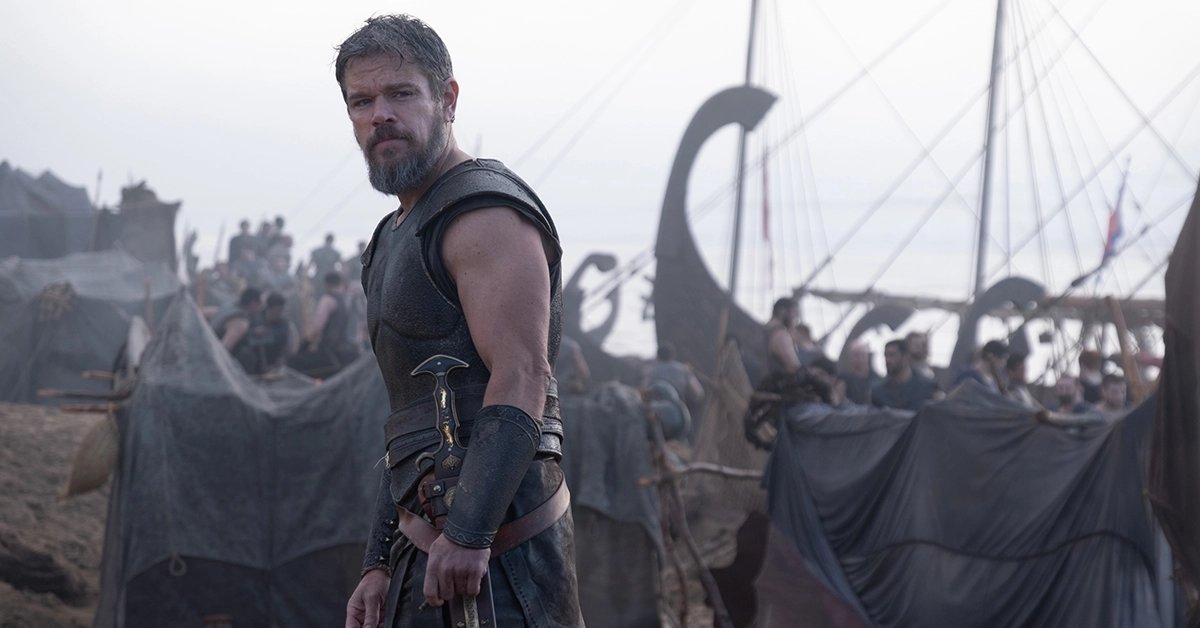
War stories often end with a homecoming.
Christopher Nolan’s “The Odyssey” begins there.
The film delivers everything audiences expect from Homer: towering monsters, impossible voyages, brutal combat, gods who play with men, and just enough spectacle to be worthy of Nolan’s mythic epic. But beneath the surface is a quieter, more devastating observation—one familiar to generations of warriors.
Getting home isn’t the victory. It’s learning how to live there again.
For centuries, Homer’s Odyssey was described as a story about the journey home. Nolan instead treats it as something more psychologically honest: a story about what war takes from you long after the fighting ends.
Odysseus survives Troy. He outwits harrowing monsters. He escapes death even when his crew dies. But survival doesn’t mean happiness.
The man who left home to serve in a war no longer exists.
That idea has lingered throughout Nolan’s career. “Memento” examines identity through fractured memory. His “Dark Knight” asks what heroism costs the people forced to carry it. “Dunkirk” understands survival as both a triumph and a burden. And “Oppenheimer” shows how a single act can permanently alter the person who commits it and all of humanity too.
“The Odyssey,” however, may be the culmination of all those heroes’ journeys, asking what remains after years of violence have reshaped a person, a civilization.
Nolan himself says the emotional center was never the Cyclops or the Sirens.
“With the execution—with the filming of it, the working with the actors, the casting—was really the idea of homecoming, and the scene between Odysseus and Penelope, what that would be,” he told We Are The Mighty.
That tortured ambiguity is the film’s greatest strength.
Homecoming, especially after war, is rarely the clean emotional release popular culture promises. Families change. Time passes. The warrior returning often feels like a stranger inside their own life.
Veterans describe this experience in countless ways. Some experience PTSD. Others talk about feeling disconnected from civilians who cannot understand what they’ve seen. Many simply describe the unsettling realization that, while everyone at home kept living, part of them was lost overseas.
Nolan never reduces that experience to a speech. Instead, he lets silence carry the weight.
Matt Damon’s Odysseus doesn’t walk back into Ithaca as a conquering hero, but rather as a weary traveler, a beggar. He returns as a stranger carrying scars that nobody can see. Meanwhile, Anne Hathaway’s Penelope waits for him—a ghost. Their reunion isn’t about whether they love each other, it’s about the fact that though they still carry love and a stalwart dedication to each other, neither of them can necessarily recognize who they’ve become in the decades apart.
Despite his spectacular arsenal of films, this may be the most authentic military story Nolan has ever told.
The film also refuses to romanticize violence even while embracing some truly epic action scenes. And Nolan acknowledges the difficult balance directly.
“You’re always working in this uneasy tension between the spectacle of violence and the entertainment value of action, and trying to have a sense of moral consequence, trying to have a sense of gravity that doesn’t betray the subject matter,” he said.
That’s a challenge every war film must tackle.
Combat can be exhilarating to watch while remaining horrifying in reality. Movies that ignore either side can ring false. “The Odyssey” manages a rare feat of delivering breathtaking trials without pretending its battles leave the participants untouched.
In perhaps the film’s most mature observation, Nolan refuses to present violence as either glorious or entirely avoidable.
“There is necessary violence in the world at times,” he said. “There is conflict that’s unavoidable. I think in any credible modern telling, the other side of that has to have equal weight. It’s important that there are real-world consequences.”
Military service always exists within a paradox. Courage is real. Loyalty is real. Sacrifice is real. But so are grief, trauma, guilt, and irreversible damage—death. One truth doesn’t erase the other.
Perhaps the film’s most powerful insight comes in its closing moments. Without offering easy answers, Nolan suggests that violence creates cycles that can either consume us or become the foundation for something better.
As he explains, “if you look at the idea of the cyclical nature of history, the cyclical nature of violence, there’s a negative way to look at that, and there is also a positive way to look at it. You’re either […] despairing about the endless repetition of mistakes, or you’re seeing the possibility of rebuilding and possibly building a better world.”
That tension gives the ending remarkable emotional weight. The war ends. The scars linger.
For military audiences, “The Odyssey” may resonate less because it depicts ancient combat and the storied history of the “warrior ethos” but more because it understands something else: surviving war is not the same as escaping it.
There is a tendency to celebrate survival as if it is a finish line. Veterans know better. Sometimes making it home is only the beginning of the hardest battle. War is change. It alters marriages. Families. Friendships. Identity. The way someone sleeps, trusts, grieves, and remembers. The uniform comes off, but war doesn’t neatly fold up on a shelf in the closet.
Nolan never suggests Odysseus can become the man he was before Troy. Instead, he asks whether he can become someone new.
That’s a far more complex but ultimately honest ending than triumph.
Nearly 3,000 years after Homer first imagined this perilous voyage home, “The Odyssey” feels startlingly modern.
It’s not about monsters you encounter along the way. It’s about the demons warriors carry home with them. All hope is not lost, however—there is always room to start anew.
Don’t Miss the Best of We Are The Mighty
• The real-life military experiment that inspired ‘Stranger Things’ • Why the US military always loses in a fight against zombies • ‘The Rise and Fall of an Ancient Superpower’ reveals the surprising history of Sparta
Christopher Nolan’s ‘The Odyssey’ reveals the true cost of a homecoming
What the balls is happening with Tom Cruise’s ‘Digger’ trailer
James Bond’s longest-running ‘Q’ survived 5 excruciating years as a POW
‘Jimmy’ celebrates World War II hero Jimmy Stewart for America’s 250th with a new trailer
Everything we know about the new ‘Lord of the Rings’ film ‘The Hunt for Gollum’