Fire destroys Adolf Hitler’s retreat known as the Eagle’s Nest
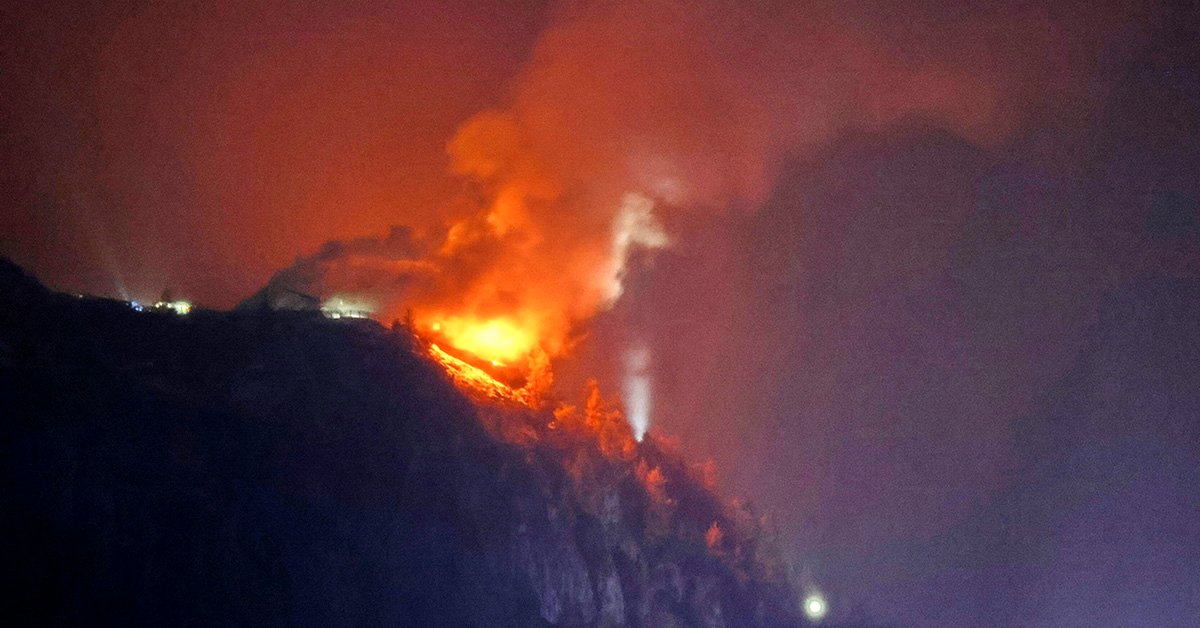
A fire late Friday decimated Nazi dictator Adolf Hitler’s mountain retreat known as the Eagle’s Nest.
When approximately 200 firefighters arrived at the scene, they encountered the structure largely engulfed in flames. Local officials told the assembled media Saturday that the blaze “largely destroyed” the Eagle’s Nest—formerly referred to as the Kehlsteinhaus.
Police arrested a 33-year-old German man, who was traveling down the mountain on his motorcycle when authorities apprehended him. They ordered a psychiatric evaluation for the man after he reportedly exhibited signs of mental illness.
“Where the person is linked to the fire is currently the subject of a criminal investigation,” Bavarian police said in a statement.
At the time of publication, police said they believe the man in custody acted alone. Given the historical significance of the Eagle’s Nest, police were also considering the possibility of a political motive behind the crime.
An alarm sounded in the town of Berchtesgaden, Germany, at 9:15 p.m. Friday night and alerted officials to the fire. When the first emergency personnel arrived at the Eagle’s Nest shortly before 10 p.m., they discovered the guesthouse in flames, authorities said. They were also unable to go inside the facility because of the threat that falling debris could hurt them or the structure could collapse. Snowy conditions and high winds also proved challenging.
No one was injured as a result of the fire.
About the Eagle’s Nest
The Eagle’s Nest is located in the German state of Bavaria. Joachim Herrmann, Bavaria’s interior minister, said he anticipates authorities will rebuild the Eagle’s Nest. In the immediate aftermath of the damage, however, he offered few specifics on a plan, moving forward.
“We’re not going to leave a ruin there,” Herrmann said. “… I think we will be able to find a sensible solution. It is important that we continue to do the work of remembrance.”
The Eagle’s Nest got its popular nickname from a French ambassador. It rests at an elevation of nearly 6,000 feet in the Bavarian Alps near Berchtesgaden. The Eagle’s Nest is reachable only by an elevator built inside the mountain at the end of a road without public access. Buses and visitors use the road during the day.
Construction workers finished work on the Eagle’s Nest, conceived as a guest residence for top Nazi officials and their guests, in 1938. Hitler went there sparingly, however, because he wasn’t a fan of heights. The Nazi dictator preferred his summer home, the Berghof—which was three miles away from the Eagle’s Nest—instead.
Hitler ruled Germany from 1933 until his death by suicide April 30, 1945.
The Eagle’s Nest survived after the Nazis surrendered to end World War II in 1945. Some in the region wanted to tear it down after the Allies’ victory, preferring to remove any remnant of the Nazis. They ultimated maintained it, though, as a site to attract tourists.
Various reports claimed the Eagle’s Nest attracted 300,000 to 350,000 visitors annually.
The Eagle’s Nest, which contained a historic exhibit, opened a cafe and restaurant in 1952. The location became not only a popular tourist destination, but also “a cautionary reminder of the abysses of the inhumane Nazi dictatorship.”
Don’t Miss the Best of We Are The Mighty • A National Guard unit saw the most combat during World War II • How ‘Axis Sally’ became the first woman convicted of treason against the US • How the US protected ‘utterly irreplaceable’ documents during World War II
World War II
World War II
Fire destroys Adolf Hitler’s retreat known as the Eagle’s Nest
World War II
More than half of the World War II 1st Ranger Battalion came from one National Guard division
A P-59 test pilot’s gorilla mask and cigar launched America’s Jet Age
By Daniel Tobias Flint
World War II
Kamikaze pilots couldn’t stop this Marine veteran, 104, during World War II
Meet the only Heisman Trophy winner who died while serving during wartime