Out of the 22 Navy officers just promoted to admiral, none were women
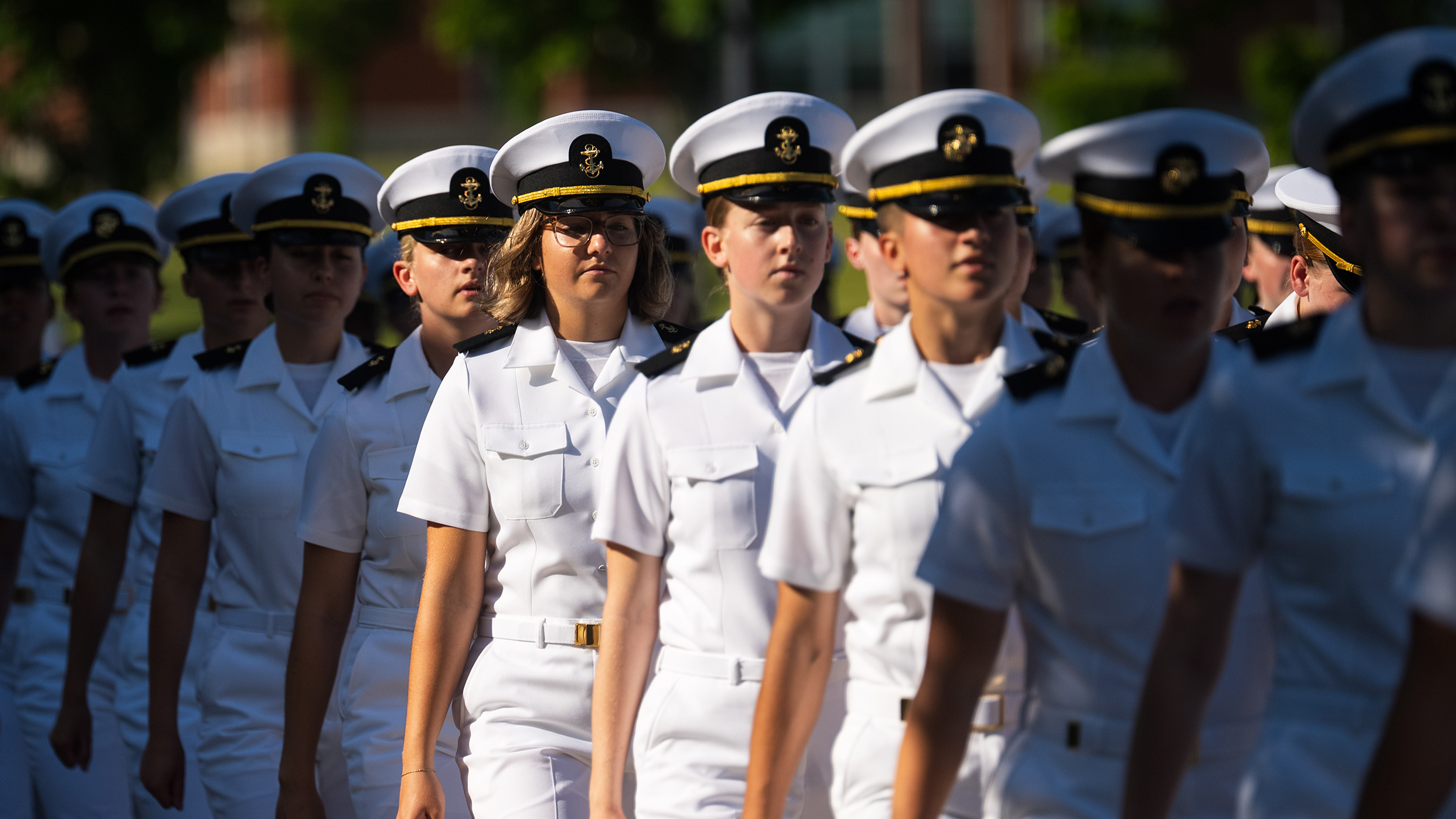
The Pentagon’s latest set of Navy promotions, advancing more than 20 Navy captains to one-star admiral, included zero women, reinvigorating a debate about the barriers women face in their climb to the highest rungs of the military.
Last week, the Pentagon released a list of 22 appointments by Defense Secretary Pete Hegseth of Navy captains to rear admiral, lower half, which are one-star flag officers at the O-7 paygrade.
Promotion from captain to admiral is the first of the flag ranks among the naval officer corps, and is the most selective for officers in the Navy.
The list released last week continued a year-long trend of women in the service not moving up to flag officer ranks. A review by Task & Purpose of Pentagon promotion lists found that the last time the Navy promoted a woman from captain to rear admiral was last June, when three women were among 15 captains given their first star. Since December 2025, 29 men have been promoted or assigned to new positions as admirals.
Top Stories This Week
19-year-old soldier completes Ranger, Airborne, Air Assault and Pathfinder schools
Security Forces airman becomes first Air Force graduate of Army’s revived jungle school
One dead, others wounded in shooting at Fort Hood recreation area
According to March Defense Department personnel data, about 15% of active duty Navy captains are women, or roughly one of every seven. However, only one of every 20 active duty admirals is a woman.
Jessica Ruttenber, a former Air Force KC-135 pilot and member of Women in the Service Coalition, first highlighted the recent promotion list in a May 24 Substack post.
“It could happen, but statistically it shouldn’t happen,” Ruttenber said.
Pipelines to higher ranks
The lack of women represented in the latest set of promotions is indicative of the systemic issues of the limited “pipelines” that feed the general and flag officer ranks, Ruttenber told Task & Purpose.
Part of the problem, Ruttenber points out, is that senior operational command positions are predominantly made up of sailors from operational career fields like surface warfare, submarine, aviation, information warfare, and special warfare.
Many of those jobs were previously closed to women, which impacted their ability to move into leadership positions.
Surface warfare and aviation roles were opened in 1993, when Congress allowed women to serve on combatant ships. The first wave of women who benefitted from those opportunities as young officers only began to reach senior ranks in recent years, said Shannon Martin McClain, a 20-year Navy pilot who retired in 2018.
“At this point, we are where women and men have served full careers with the opportunity for billets that would lead to operational command and flag officer rank,” she said. “Those women will be at 28-32 years of service at this point. So the first class of 1994 from the Naval Academy, for example, people who commissioned in 1994, would have been the first people who served a full career beyond that.”
Adm. Michelle Howard was the first woman to become a four-star admiral in 2014, and Adm. Lisa Franchetti became the first woman to lead the Navy as the Chief of Naval Operations in 2023.
Submarine billets were opened to women officers in 2010 and special warfare roles in 2015.
“I’m pretty incredulous that there would be no women on that list, because [it] just seems to me common sense percentage-wise. I understand there are issues with the pipeline,” said Julie Kubal, a former flight officer. “Submarines were only opened up to women so long ago, so there aren’t as many senior women in that particular part of the Navy, but women have been in aviation for and in combat aviation for a very long time now.”
Kubal commissioned from the U.S. Naval Academy in 1996 and flew EP-3E Aries II electronic reconnaissance aircraft. Kubal said as one of the earliest women in both the academy and at her squadron, today’s Navy should reflect the last few decades of progress.
“That was 30 plus years ago, and there were already senior women in my squadron who had already been promoted,” she said. “The number of women grads [at the Naval Academy] is much higher now than it was when I graduated in ’96, so the pipeline has been getting fed all these many years.”
Navy falls farther behind Army, Air Force
As of March, according to Department of Defense data, the Navy had 207 admirals, of which 13, or 6%, were women. Of the Army’s 259 generals, 11% were women. In the Air Force, 13% of its 230 generals were women — numbers that do not include this month’s promotions, which moved three female Army colonels to brigadier general and four in the Air Force, while the Navy promoted only men to admiral.
Task & Purpose reviewed 22 Pentagon announcements of General and Flag officer appointments since December 2025. The Navy announced 29 promotions or assignments for admirals in that time span. None went to women. In the same timeframe, 15% of general officer promotions in the Army went to women. In the Air and Space Force, combined, 10% did.
The Marine Corps has promoted 36 officers into or within its corps of 90 generals since December 2025, one of whom was a woman.
Ruttenber said the promotion pipeline gaps are emphasized by a string of high-profile firings of women in leadership positions across the services and reports of political interference in promotion lists.
Adm. Francetti was fired in Hegseth’s first weeks as defense secretary, and Vice Adm. Shoshana Chatfield was dismissed soon after. Last July, Vice Adm. Yvette Davids was removed as the superintendent of the Naval Academy. The New York Times and NPR have both reported that Hegseth has blocked several women in other services from promotion lists.
Ruttenber said she’s been doing pro bono work for federal lawmakers since the Pentagon shut down its Defense Advisory Committee on Women in the Services, DACOWITS — a civilian board of experts that studied recruitment, retention, and career issues impacting women.
“Without them having organizations like DACOWITS that studies this, there is no way to know,” Ruttenber said. “It took decades to get here and we are undoing years, decades of progress for women. It feels like one step forward, five steps back, and it’s gonna take a long time to recover from this.”