‘The Ballad of the Green Berets’ singer’s controversial life and death
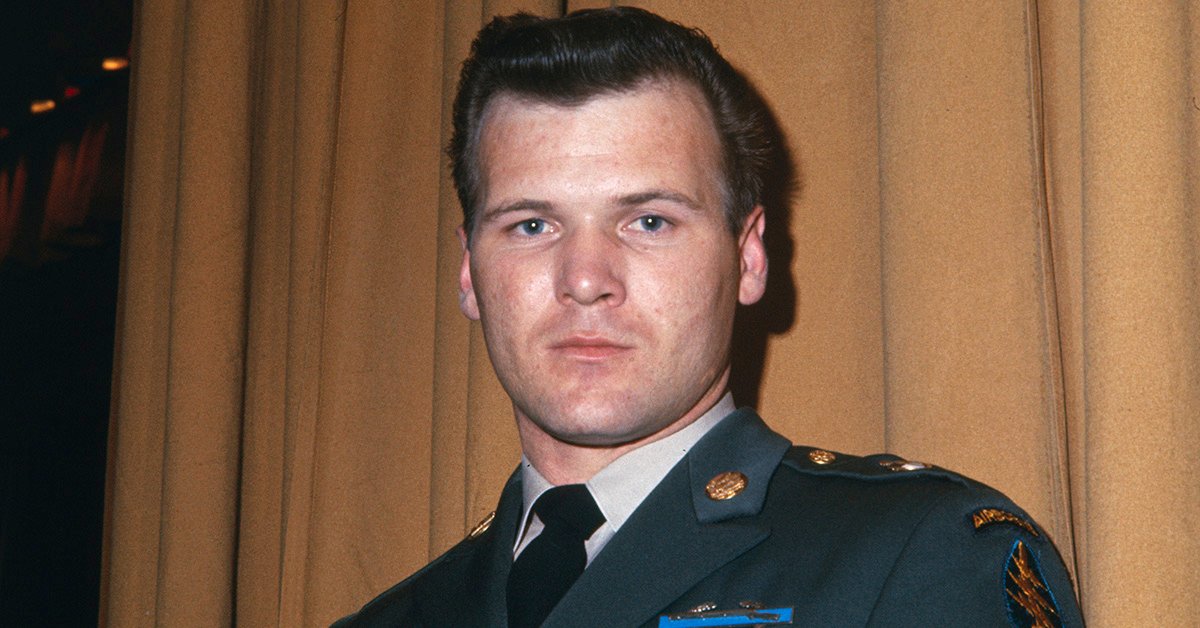
After Barry Sadler stepped on a punji stick in Vietnam in 1965, he returned to the United States for his rehabilitation.
With not much else to do, the Army Special Forces staff sergeant leaned into his musical background. Sadler taught himself to play the guitar as a child and craft some lyrics. He began composing a song about the Green Berets while undergoing training to become a medic. That song still wasn’t a finished product as Sadler recuperated, so he kept plodding away.
Still, that wasn’t enough. It was way too long, and Sadler realized he required an outside opinion to revise it. Sadler brought his song to author Robin Moore, whose book “The Green Berets” was a bestseller at the time. With Moore’s recommendations, Sadler helped trim the song to a more manageable length.
After Sadler signed a recording contract and presented “The Ballad of the Green Berets” to company executives, they likely recognized the commercial possibilities. They released the pro-military song in 1966, and it climbed to the top of Billboard magazine’s Top 100 chart. It remained there for several weeks and became the most popular song that year.
While still on active duty, Sadler traveled to sing “The Ballad of the Green Berets” while making television and public appearances, thereby promoting the Army in the process.
“Overgrown Social Workers”
Initially intended only for the military, “The Ballad of the Green Berets” sold approximately 9 million copies. It represented the height of Sadler’s success, a pinnacle that seemed unattainable less than a decade earlier when he dropped out of high school.
Sadler enlisted in the Air Force and spent four years there, mainly as a radar technician. He also earned a General Educational Development certification, commonly referred to as a General Equivalency Diploma (GED), during his stint as an airman.
Two months after receiving an honorable discharge, Sadler enlisted in the Army in 1962. He passed airborne training, then focused on joining the Green Berets as a medic. He served in southeast Asia for six months, beginning in December 1964, and tended indigenous people in Vietnam known as Montagnards. Sadler cared for injured and wounded service members too, as well as local citizens.
Sadler considered himself and the other Green Beret medics as “overgrown social workers.” Regardless, they were good at their jobs, and life became a lot tougher for Sadler once he got out of the military.
He tried to follow “The Ballad of the Green Berets” with other hits. However, other than a marginally popular song titled “The ‘A’ Team,” he struggled to remain relevant in the music industry. Sadler took on acting roles, but those didn’t boost his profile, either.
“He just didn’t take off like Audie Murphy,” an unidentified business partner told the Los Angeles Times in journalist Bob Sipchen’s excellent article on Sadler in 1989.
Sipchen detailed the lengths to which Sadler tried to find a successful venture. No idea, no matter how outlandish, was off limits. Sadler even once considered seeing whether he could make it as a professional wrestler with a military persona.
“I describe him in four words: a sheep in armor,” songwriter Billy Arr told the L.A. Times. “He hated violence, but he always had to put up a front because people expected it.”
Serving Time for Manslaughter
In the years after leaving the Green Berets, Sadler struggled to find his way. He became a mystery, including sometimes to those who knew him best.
He was at least a contradiction. If Sadler hated violence, that didn’t mean he didn’t participate in it occasionally. In one such example that Sipchen wrote about, he received a deep abdominal wound as a result of a stabbing during a brawl in a club in Nashville, Tennessee. Rather than seek medical attention, he drank more whiskey and “went home and sewed himself up.”
Compared to what happened later, Sadler acted like a choir boy that night.
On December 1, 1978, Sadler engaged in an altercation with the estranged boyfriend of a woman with whom Sadler was involved. The incident occurred at the woman’s apartment and escalated once Sadler followed Lee Emerson Bellamy to the parking lot. When Emerson pulled his keys from his pocket, Sadler saw a flash and fired his weapon. Emerson, who had a lengthy criminal history according to Sipchen’s reporting, allegedly had been harassing the woman and Sadler.
Sadler was convicted of voluntary manslaughter and received a prison sentence of 4-5 years. A judge later cut the former Green Beret’s sentence down to 30 days, along with two years’ probation. Because of good behavior, Sadler was a free man after only 22 days.
A Shooting and a Family Feud
Sadler’s wife, Levona (a former Women’s Army Corps nurse), admitted they experienced marital difficulties. It couldn’t have helped when Sadler left her and their two children to relocate to Guatemala in the 1980s.
Sadler continued his career as an author of pulp fiction in the Central American nation. Depending on the source, Sadler also became a mercenary.
Sadler’s time in Guatemala came to a bloody end when he shot himself in the head on September 7, 1988. Police considered the shooting an accident, but others don’t believe that. In any event, Sadler’s family transported him to a VA medical center in Nashville, Tennessee. He then moved to a military facility in Cleveland to continue his rehabilitation.
As Sadler—who was left with brain damage—recovered, his family engaged in an ugly dispute over who could make decisions for him. Levona and their two children faced off against Sadler’s mother Bebe, who had the support of some Green Beret veterans who knew her son.
“I gave him a cane and told him he could use it to lift up the nurses’ skirts,“ Levona told Sipchen, the L.A. Times reporter, in a nod to her husband’s womanizing tendencies. “They give him stuffed animals. Men don’t sleep with stuffed animals. You think Barry Sadler would sleep with a stuffed animal?”
It ultimately didn’t matter. Sadler never fully recovered before he died November 5, 1989. He was 49 years old.
Don’t Miss the Best of We Are The Mighty • Why the Eagles’ Joe Walsh relates so closely to Gold Star families • 6 reasons why the military community loved Dolly Parton • The ‘Jimmy’ soundtrack features an active duty Air Force Band
‘The Ballad of the Green Berets’ singer’s controversial life and death
Movies and TV
An Afghan commando who fought beside US Special Forces is getting a film on Prime Video
Movies and TV
Hollywood legend and Air Force vet Tom Skerritt dies at 93
Movies and TV
‘The Terminal List’ kicks in your door and raids your house with season two
Movies and TV
‘VisionQuest’ is the end of a trilogy—and of an era