Strengthening Veteran transitions through community connection

The transition from military to civilian life can be one of the most challenging periods service members face. When that journey is marked by isolation, stress or unmet needs, the risk of health, mental health and even suicide can increase—making coordinated, community-based support more important than ever.
To help states and communities meet this challenge, VA, in partnership with the Substance Abuse and Mental Health Services Administration (SAMHSA), convened the VA/SAMHSA Governor’s and Mayor’s Challenge Military Veteran Transitions Academy.
This event, held June 2–4 in San Antonio, brought together more than 300 state and local leaders, data and policy experts, VA suicide prevention coordinators, crisis response team leads, community-based providers and Veteran-serving organizations. Participants shared a common goal: reducing suicide among service members, Veterans and their families while expanding and implementing statewide suicide prevention best practices that will advance VA’s National Strategy for Preventing Suicide.
A national effort to prevent suicide
Over three days in San Antonio, interagency teams across six states—Arizona, Florida, Georgia, North Carolina, Pennsylvania and Texas—engaged in intensive working sessions and peer-to-peer learning. These efforts were designed to strengthen local suicide prevention strategies and implement best practices tailored to the needs of military and Veteran populations.
By aligning federal, state and local partners, communities can close gaps in care, improve coordination and ensure that every Veteran, along with their families, caregivers and survivors, has a pathway to the support they need.
Stacey Owens, M.S.W., LCSW-C, military and Veterans affairs liaison in SAMHSA’s Center for Mental Health Services, said, “What’s the one thing we can do for Veterans? We must know them and their communities to meet their unique needs.”
That simple idea—knowing Veterans, listening to their experiences and understanding their communities—anchors the work of the academy.
Centering the Veteran’s journey
For Lynda Davis, Ph.D., VA’s chief Veterans experience officer, it’s important to view suicide prevention through the lens of the Veteran’s lived experience. She highlighted how VA’s Veterans Experience Office (VEO) uses data, tools, technology and community engagement to better understand Veterans’ journeys and identify “moments that matter,” as well as pain points that can put them at risk.
“Bringing together leaders from across the country, we are improving coordination, closing gaps in care and ensuring that every Veteran, their families, caregivers and survivors have a clear pathway to what truly matters to them,” Davis shared. “From first contact with transition services to navigating benefits, healthcare, employment and community support… these touchpoints can shape whether a Veteran feels connected and supported or isolated and overwhelmed. By capturing the ‘voice of the customer’ and using insights from Veterans and their families, VEO helps VA and its partners design care and support that is timely, coordinated and responsive.”
This approach is reflected in the Veteran Transition Journey Map.
Building community networks that Veterans can trust
That perspective resonated with the group during the transition panel, where VA and the Department of War (DOW) highlighted the importance of working across systems to better understand and close gaps that can put service members and Veterans at risk. The discussion reinforced that no single agency could solve transition challenges alone; progress depends on federal, state and community partners listening closely, sharing insights and building solutions grounded in real experiences.
Liz Clark, Ph.D., director of the Defense Support Services Center at the Department of War, highlighted the importance of readiness throughout the military lifecycle so that when service members do separate, they are better equipped to translate their training, leadership and mission-driven experience into meaningful civilian employment.
Clark also highlighted Project Patriot Pipeline, “a workforce development framework launched by the Department of War to strengthen the defense industrial base. The initiative integrates career training, job placement and retention programs for transitioning service members, military spouses and civilian employees.
Davis added, “That commitment is also visible in the VetResources Community Network (VRCN), a collaborative community of practice that brings together Veterans service organizations, nonprofits, faith-based groups, community partnerships, peer networks and volunteers. The goal is to enhance trust, increase access to care and benefits, and ensure Veterans know where to turn when they need support.”
Through proactive outreach and communications, VRCN helps channel the voice of the customer back to VA and its partners, ensuring programs reflect real needs and experiences. By aligning local resources with federal and state efforts, networks like VRCN help ensure no Veteran falls through the cracks—especially during high-risk transitions.
Sustaining momentum
The VA/SAMHSA Governor’s and Mayor’s Challenge Military Veteran Transitions Academy is more than a one-time convening; it is a catalyst for sustained, collaborative action. By investing in training, peer learning and cross-sector partnerships, VA and SAMHSA are helping communities build durable systems of care that can adapt as needs change.
The work continues long after participants leave San Antonio. Teams will keep refining strategies, strengthening partnerships and expanding outreach to find more service members, Veterans and families where they are.
Every connection made, every insight applied and every partner engaged brings us one step closer to a reality where all Veterans—and those who support them—have access to the resources, relationships and support they need to thrive.
If you’re a Veteran in crisis or concerned about one, contact the Veterans Crisis Line to receive 24/7 confidential support. You don’t have to be enrolled in VA benefits or healthcare to connect. To reach responders, Dial 988 then Press 1, chat online at VeteransCrisisLine.net/Chat, or text 838255.
1-800-MyVA411 (1-800-698-2411) is also available 24 hours-a-day, 365 day-a-year to serve Veterans, their families, caregivers and survivors.
Related Health stories
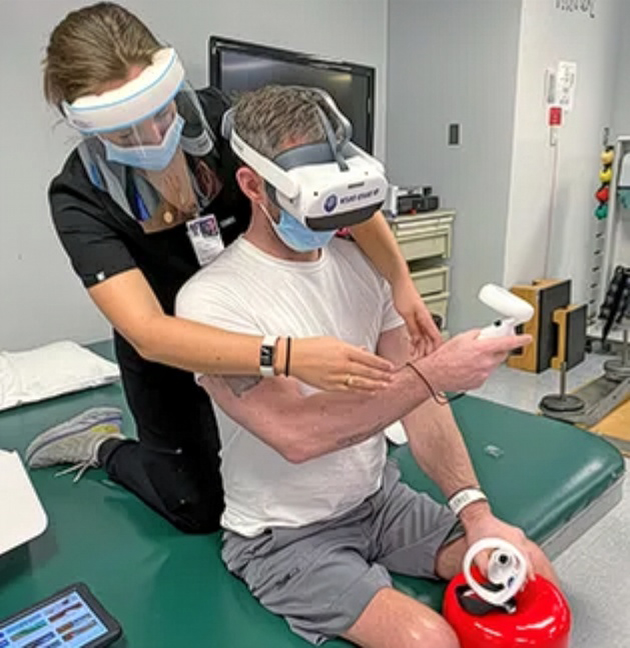
Virtual reality pain treatment expands for veterans
The Department of Veterans Affairs is expanding access to a U.S. Food and Drug Administration-authorized virtual reality (VR) therapy design

Live Whole Health #320: You deserve a break
Do you spend hours jumping between screens, messages and tasks during the day? Over time, this can make your mind tired and your body stiff.

First in VA to receive cutting-edge epilepsy treatment
A groundbreaking laser procedure offers a safer option for epilepsy treatment Back in 1980, when Robert Lindemann decided to enlist in the A