Iraq’s ‘Triangle of Death’ is still famously dangerous real estate
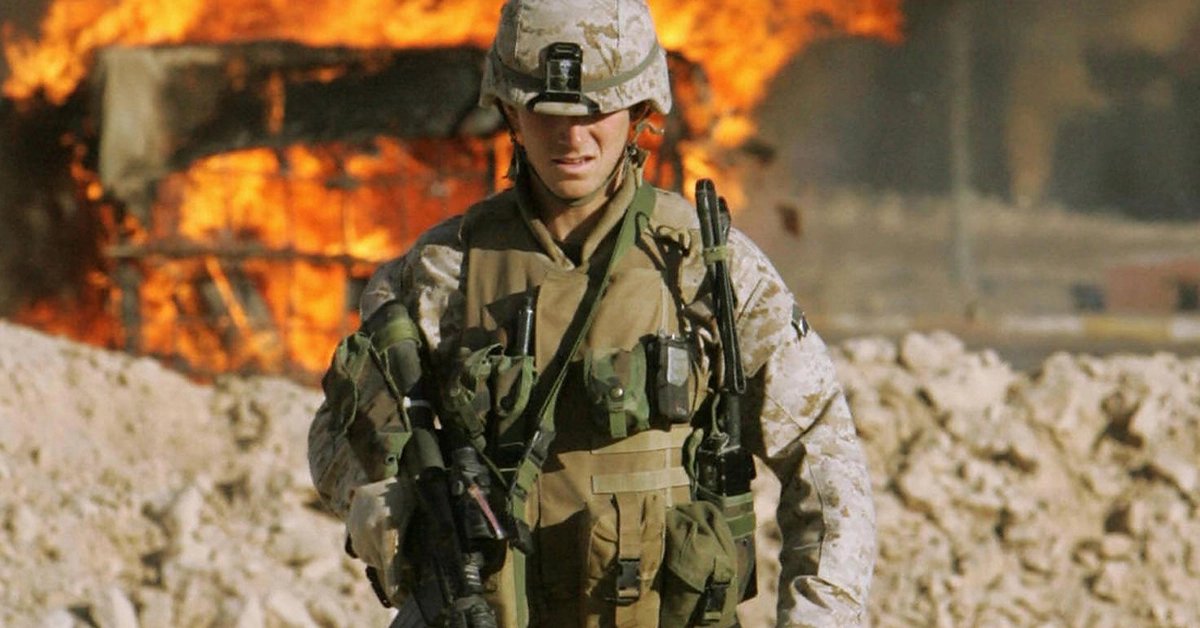
The road leading south out of Baghdad never looked like a typical killing field you’d imagine; it looked like farmland. Canals threaded between palm groves, wheat and date plots worked by the families who owned them, the Euphrates bending along the southwestern edge of all of it. If you ever rode those canal roads between 2004 and 2007, you learned fast not to trust any of it.
That culvert up ahead might simply be a culvert, or it might be a 155mm artillery shell wired to a cordless phone, buried by a man who farmed the field beside it.
A wedge of ground anchored by the towns of Mahmudiyah, Yusufiyah, and Iskandariyah formed a rough triangle riding just below the capital. American troops eventually would call the place the Triangle of Death.
It became one of the deadliest pieces of real estate in the entire war. It earned the title the way most things in Iraq earned their titles through the repetition of men and women who drove out and did not drive back.
Honestly, geography did half the insurgency’s work for it. The Triangle sat astride the coalition’s main supply artery running south from Baghdad, which meant nearly everything the war needed had to move through it: fuel, ammunition, food, and the troops themselves.
Around a million people lived there, a large majority of them Sunni, in farmland cut into a grid of irrigation ditches and shaded by groves thick enough to hide men, a weapons cache, or maybe a mortar team. Cover and concealment were plentiful. So were escape routes, in every direction, into terrain a patrol could not clear, and a satellite could not see through.
It also sat in the wrong neighborhood. The Triangle of Death bordered the Fallujah-Ramadi corridor to the west and Baghdad to the north, close enough that suicide bombers staged there before driving on to their targets. When the violence came, it came catastrophically.
On Feb. 28, 2005, a bomber struck a crowd of police and government job recruits in nearby Hillah, killing around 125 people in what was then the deadliest suicide bombing of the war. That July, in Musayyib, an attacker detonated his explosive belt beside a fuel tanker in a crowded market, killing another 98.
An Inspired Iraqi Insurgency
When the Baathist government started to fall, the Sunni population in the Triangle fell with it. De-Baathification turned a generation of trained, armed, newly unemployed men into exactly the recruiting pool an insurgency dreams about. And the weapons were already there.
The region had been home to the backbone of Saddam Hussein’s military-industrial complex: the Al Qa’qaa munitions complex, the al-Musayyib ammunition depot, as well as the al-Quds works.
As these sites were looted in the chaos after the invasion, hundreds of tons of high explosives mysteriously vanished from Al Qa’qaa alone, according to international inspectors, scattering into the hands of whichever sticky fingers wanted them most.
By late 2004, after U.S. Marines charged into the insurgent stronghold of Fallujah, Abu Musab al-Zarqawi’s network pushed its way south and dug into the villages inside Triangle of Death, embedding in sympathetic homes, utilizing groups small enough to scatter before a raid arrived. Once comfortably entrenched, they would start their new mission.
How the Triangle of Death Got the Name
The toll on American troops would be relentless and, eventually, personal in a way that embedded the region into the memory of everyone who ever served there.
On June 16, 2006, a Humvee crew was hit near the Jurf al-Sakhar bridge in southwestern Yusufiyah. Specialist David Babineau was killed at the scene. Private 1st Class Thomas Tucker and Pvt. 2nd Class Kristian Menchaca were taken alive. Their remains were recovered four days later beside a canal road, mutilated badly enough that identification required the use of DNA.
Insurgents ambushed a 10th Mountain Division element from the 4th Battalion, 31st Infantry near Yusufiyah with IEDs, rockets, and small arms. Five soldiers died, while three were taken prisoner. Private 1st Class Joseph Anzack’s body eventually surfaced in the Euphrates within days. Sergeant Alex Jimenez and Pfc. Byron Fouty stayed missing for more than a year before their remains were found near the same ground.
And then there was the crime that the name now carries, whether anyone says it aloud or not. Soldiers from the 101st Airborne’s 502nd Infantry Regiment raped and murdered 14-year-old Abeer Qassim al-Janabi and killed her mother, father, and six-year-old sister in their home near Yusufiyah.
The case ended in federal convictions and a life sentence. It remains one of the darkest acts committed by American troops during the war, and it happened here, in the Triangle, because this was the kind of place where the worst of a war coalesced.
What finally broke the Triangle was not one thing, and the part most people misremember is the part that might matter most.
In January 2007, President George W. Bush ordered what became known as “the Surge,” sending roughly 30,000 additional troops into Iraq and putting Gen. David Petraeus in charge of a strategy built around protecting the population rather than commuting to it from big bases.
Around the Triangle specifically, the newly activated Multi-National Division-Center, headquartered by the 3rd Infantry Division, deployed brigades into the towns on grinding 15-month tours and built patrol bases where there had only been supply routes.
Local Sunni fighters, repackaged as Sons of Iraq, with other concerned civilians, turned on al-Qaeda in the wider Sunni Awakening and began patrolling their own land.
The other half of the turn was Shia. Militia violence eased because Muqtada al-Sadr ordered his Mahdi Army to stand down. He declared the unilateral ceasefire in August 2007, after his fighters clashed with a rival Shia faction in Karbala, and then extended it into 2008.
It wouldn’t be Saddam Hussein who gave the orders; he was executed in December 2006 and was in no position to order anyone to do anything. Al-Sadr’s freeze, layered on top of the Surge and the Awakening, is what broke the Triangle. From spring into the fall of 2007, attacks in the area dropped sharply, and the deadliest ground in Iraq steadily went silent.
Americans would eventually leave by the end of 2011. Iraq’s Triangle of Death, however, did not stay quiet.
In 2014, when the Islamic State swept across central Iraq, the town of Jurf al-Sakhar fell to ISIS. The same bridge, the same canals where Tucker and Menchaca were taken. By Oct. 24, 2014, Iraqi government forces and Iranian-backed Popular Mobilization Forces recaptured it in a two-day push, speeding to keep ISIS away from the Shia shrine cities of Karbala and Najaf before the Ashura pilgrimage. The provincial council renamed the town Jurf al-Nasr, “victory bank.”
Then it just never reopened. The Iranian-aligned militia Kataib Hezbollah turned Jurf al-Nasr into a closed-access military base and ammunition complex. The approximately 100,000 residents who fled were barred from going home for a decade, most of them Sunni families of the al-Janabi tribe, the same tribe whose name the war crime carries.
But no one gets in. U.S. forces bombed it anyway, striking Kataib Hezbollah positions there in January 2024 and again amid the wider Israel-Iran confrontation.
The corridor that harmed so many Americans is now sealed off behind a militia checkpoint, its people remain scattered, and its name was rewritten to mark a victory that did not include them. The same terrain that made it so dangerous is what makes it valuable today, whether it be the canals, the groves, or the road to Baghdad. Some ground will never know peace; the Triangle of Death will only change hands to be soaked in blood and sweat once again.
Don’t Miss the Best of We Are The Mighty
• The Mk-19 grenade launcher and how it helped shape the War on Terror • A nod to NODs and the history of US military night vision • American troops drank 2 million energy drinks during Operation Epic Fury
The $1 billion robbery that Saddam Hussein pulled off before US bombs fell
Why Saddam Hussein’s Fedayeen troops wore Darth Vader helmets
The history of Rip It, the beverage that fueled the War on Terror
RED Friday returns as combat deployments ramp up
Operation Tapeworm: How the US Army’s most elite hunted down Saddam’s sons
Related Legacy stories
This American flag survived D-Day, then was returned to the US 75 years later
When Howard Vander Beek died in 2014 at the age of 97, he left behind a distinct reminder of his World War II service. Vander Beek, a lieute
Medal of Honor recipient and legendary Vietnam War helicopter pilot ‘Old Snake’ has died
Retired Army Col. Bruce Perry Crandall, the legendary helicopter pilot who was awarded the U.S. military’s highest decoration for valor for
Air Force crew honors WWII-era Flying Tigers with A-10 paint job
It started as a routine transfer. Following an asset transfer from Korea, maintainers at Moody Air Force Base, Georgia, accepted and process