At 18, he fought with Green Berets in Vietnam. Now, he finally has his Special Forces tab.
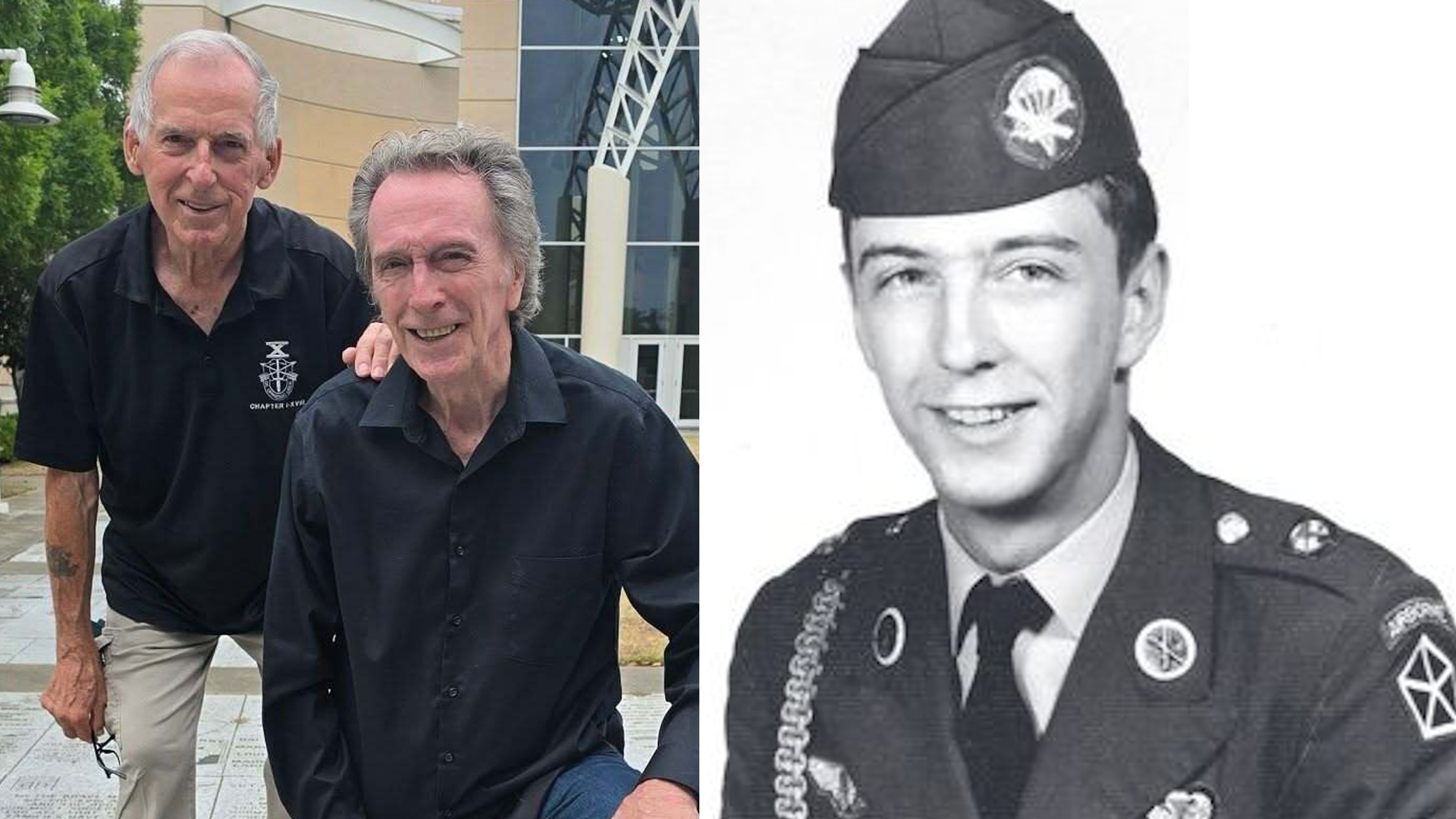
An old friend pinned a Special Forces tab onto Terry McIntosh’s blue blazer earlier this month during an impromptu celebration at Fort Bragg, North Carolina. The tab was a gift from Al Kittredge, a retired Special Forces officer, who presented it to McIntosh to mark the Army’s decision to formally acknowledge McIntosh’s status as an 18-year-old Special Forces soldier in 1968.
In March, Army officials altered McIntosh’s personnel record to retroactively award him the tab, verifying his unlikely path to fighting as a teenage Green Beret in Vietnam, a path that began, McIntosh said, with his very nervous mother.
“I dropped out of school at age 16 to mom’s disappointment,” McIntosh told Task & Purpose. Esta Lee Drew had seven children in Paducah, Kentucky, McIntosh said, and was “a wonderful, loving, Christian woman just making ends meet. My Dad passed when I was five, and she remarried a good man,” he said.
It was 1967, and the Vietnam War was ramping towards its peak. A friend who had also quit school suggested they both join the Army.
“I had just turned 17 years old,” McIntosh said. “American boys were dying, and it felt like the right thing to do.”
But, given his age, he needed his mother to sign off on his enlistment papers.
“Mom, she was hesitant,” Terry said. “She never stopped praying for me, but off I went.”
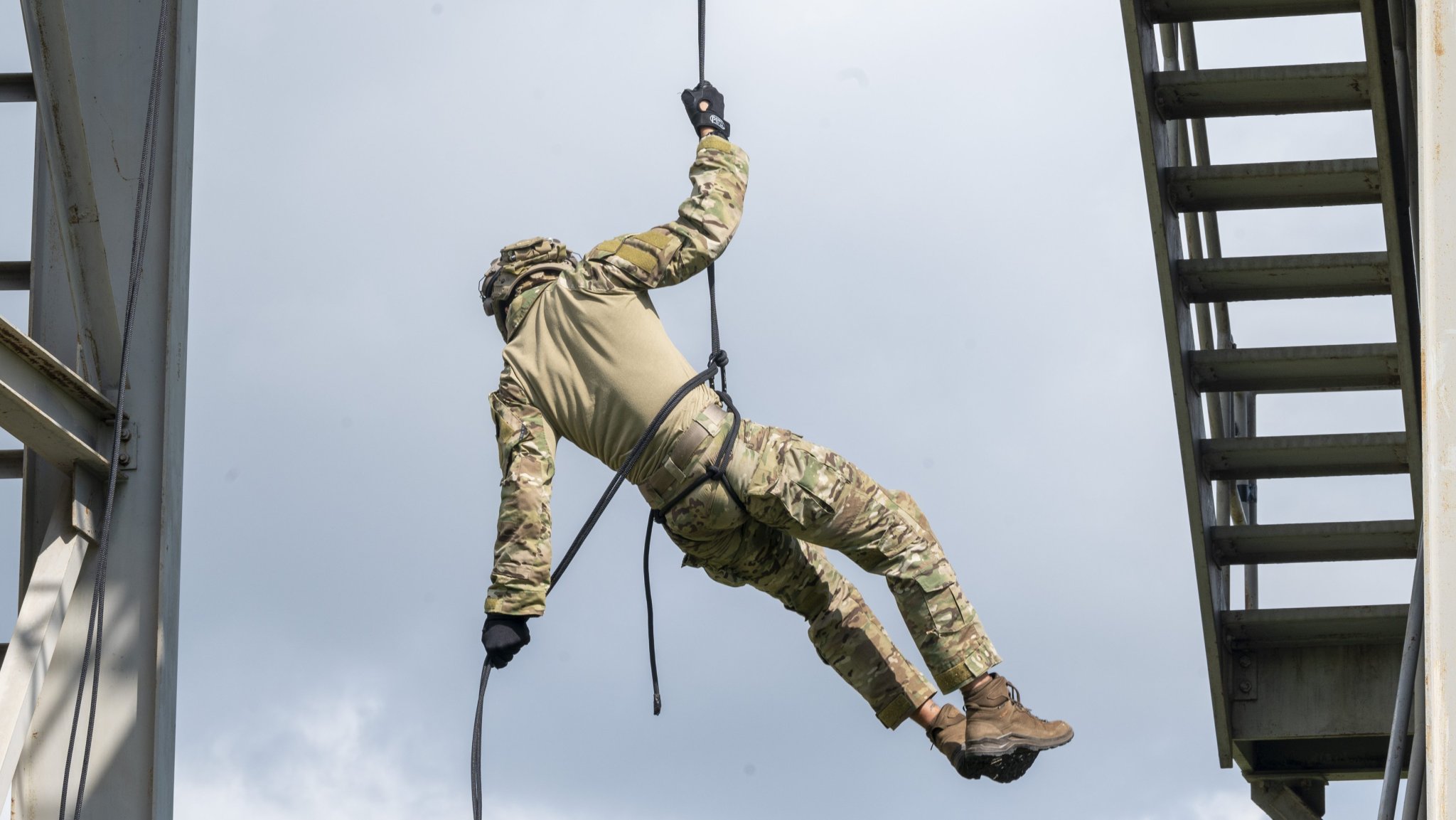
Just over a year later, a series of unlikely turns landed him not just in Vietnam, but assigned to the 5th Special Forces Group at Can Tho and, months after that, a forward operating base at Thanh Tri along the Cambodian border. For half a year, he worked in support elements, sending coded transmissions and monitoring radios. Then, for his final six months in early 1969, he was put on a duty roster for Operational Detachment A-414, an “A-team” of Green Berets.
“If you were there, you did the job,” McIntosh said. “There was no special treatment.”
Top Stories This Week
An Air Force special operations prop plane crashed after pilot turned off fuel
Marines had multiple firefights while defending US embassy in Haiti, commander says
Marine lost at sea identified as 21-year-old infantryman from Minnesota
By Nicholas Slayton, Jeff Schogol
Over the years, McIntosh says, he’s met many veterans with stories like his own, conventional soldiers assigned to Special Forces service in Vietnam, including some who were teenagers at the time. But he’s met none, he said, who were as young as he had been, leading him to title his autobiography “The Youngest Green Beret.” Army officials at Fort Bragg confirmed McIntosh’s Vietnam service in Special Forces and his recent tab award to Task & Purpose, but said their records could not establish if a soldier might have been the youngest to hold a particular duty position throughout the war.
With A-414, McIntosh fought with Green Berets on multiple combat missions. After a February firefight in which he said his team killed ten enemy fighters, he was awarded a Combat Infantryman Badge.
At Thanh Tri, McIntosh met Kittredge, then a Special Forces captain. Like McIntosh, Kittredge had quit high school for the Army and gone to jump school looking for adventure. He worked his way up to Officer Candidate School in 1961, and by 1969 was the team leader of A-415 when McIntosh was at A-414.
It was only in a conversation decades later, Kittredge told Task & Purpose, that he discovered that the young soldier he’d known in 1969 was not a fully qualified, battle-tested Special Forces soldier.
“I said, ‘Has it been a while since you’ve been to Fort Bragg?’ He said, ‘I’ve never been to Fort Bragg,’” Kittredge told Task & Purpose. “Until then, I didn’t know he wasn’t a Green Beret.”
Much about Special Forces was formalized in the 1980s, including the establishment of the official shoulder tab — often called a long tab — in 1983. Rules were also formalized that limited the wear of green berets to those qualified through formal training. Previously, support soldiers attached to a Special Forces unit had worn the berets with an additional ribbon under the flash, universally known as a “candy stripe.”
But the retroactive rules granted the long tab to soldiers like McIntosh if they had been assigned to a Special Forces unit in the field for a year, and had earned a Combat Infantryman Badge (or medical equivalent).
According to Roxanne Merritt, the Director of the JFK Special Warfare Museum at Fort Bragg, many soldiers applied for the designation in the 1980s and 90s as the formal rules took effect. Far fewer have done so in recent years, she said.
“I would say it is dwindled down to two or three per year,” said Merritt. “Unfortunately, often it is when a person is in hospice, is dying, and they all of a sudden realize that this is something they want.”
Though McIntosh said he wore a green beret in Vietnam, he stopped when he returned home to an assignment as an Army Ranger. He left the Army in 1971, a decade before the retroactive rules arrived.
“I really never gave it much thought for a long time,” said McIntosh. “But as I got older, I wanted to get things straight so my children would have something to know what I did.”