A former concert violinist singlehandedly cleared three houses in a mountain fortress
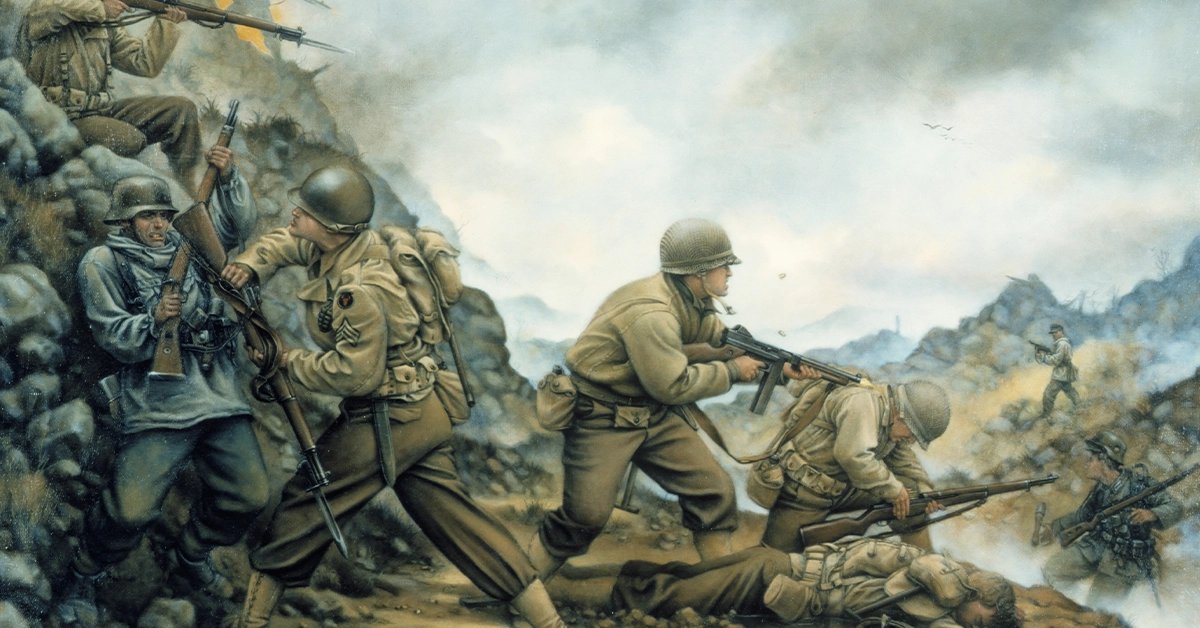
Thomas Wigle was a concert violinist and teacher when the Japanese Imperial Navy attacked Pearl Harbor in December 1941. He was 32 years old. He was a skilled marksman, shooting on rifle ranges, but he disliked hunting and hated war. That wouldn’t change , but he decided to fight anyway after spending three days in Washington, D.C., looking at monuments and buildings and reviewing our nation’s historic documents.
He joined the Army in Detroit in May 1942. He later wrote a friend, “I’ve decided that this government is worth fighting for.”
Wigle was born in 1909 in Indianapolis, but because his mother was a Michigan native, the family moved to Detroit, when he was a baby, and that’s where he grew up. He discovered a passion for music at a young age and became an accomplished violinist, starring in his school band. After high school, he studied music at Michigan State University. His talent earned him a scholarship to the Mozarteum Conservatory in Salzburg, Austria, where he studied for about eight months.
Upon returning to the U.S., Wigle worked as a music teacher in places like Oroville, California, Chicago, and Detroit. He performed as a concert violinist with the Kansas City Philharmonic for about five years and contributed to composing symphonies, including one titled “Western Saga.”
After the attack on Pearl Harbor and his subsequent visit to Washington, he attended Infantry Officer Candidate School at Fort Benning, Georgia, and was commissioned 2nd Lt. Thomas Wigle. He was assigned to Company K, 135th Infantry Regiment, 34th Infantry Division, the “Red Bull” Division, where he was a platoon leader. Wigle would spend his entire Army career with the Red Bulls and later die leading them.
The 34th Infantry Division
By the time Wigle arrived to his company, the Red Bulls were already seasoned veterans. They just needed good infantry officers to lead them. The unit began its World War II combat record with Operation Torch, first landing in North Africa in November 1942. Through May of 1943, they were part of the Tunisia Campaign that ended the Axis presence in North Africa entirely.
Having taken heavy casualties, the 34th sat out the invasion of Sicily, but landed at Salerno for the invasion of the Italian mainland in September 1943. It fought its way north, hitting the Bernhardt Line, the Gustav Line, and Monte Cassino. When the 34th joined the Anzio Beachhead in March 1944, Lt. Wigle was leading his company’s defense, fighting with artillery, mortars, machine guns, and snipers.
Supplies were critically low; the men often ate cold C-rations, used strict fire discipline, and sometimes resorted to bayonets. In May 1944, the Allies broke out from Anzio, and launched Operation Diadem, a turn north to flank the Germans’ Winter Line and press on Rome. Wigle’s platoon advanced through mined farmlands, vineyards, and villages, fighting battles at Cisterna, Velletri, the Alban Hills, and liberated Rome on June 4, 1944, pushing the retreating Germans further north.
Assault on the Gothic Line
On Sept. 14, 1944, they’d reached Monte Frassino, a critical forward outpost of the Gothic Line. There, the 3rd Platoon of Company K faced a heavily fortified German position protected by three parallel high terraced stone walls. The assault was part of a diversionary attack to prevent the enemy from reinforcing the Il Giogo Pass. After a withering enemy crossfire halted two attempted to scale the walls, Wigle became acting company executive, and volunteered to lead the next attack.
Leading his men up the bare, rocky slopes under intense fire, he reached the first wall, had himself boosted to the top in full view of the enemy’s guns. He returned fire, allowing his men to climb the walls and join him. They made the same maneuver to scale the second wall. When it came time to climb the third wall, Company K was confronted by three houses full of enemy soldiers.
Wigle ordered his mento provide cover fire while he ran through a hail of machine pistol toward the first house, clearing it and forcing the enemy out. As the Germans fled out the back door for the next house, Wigle and his carbine followed, forcing the Germans to take refuge in the cellar of the third house.
By the time his platoon caught up to him, they found him mortally wounded on the cellar stairs after trying to force a surrender, with 36 German troops taking shelter below. The enemy soldiers surrendered within minutes and the houses were secured. Wigle succumbed to his wounds two days later. He was 35 years old.
For his daring and boldness under enemy fire, Wigle would receive the Medal of Honor and ultimately be interred at Arlington National Cemetery. The kind of bold action that made the assault on the Gothic Line so successful also allowed Gen. Mark Clark’s assault on Il Giogo to succeed. Not only were the Germans held at Monte Frassino unable to reinforce Il Giogo, it forced the German I Parachute Corps to vacate the vital Futa Pass and retreat, allowing the Allies to push down the Sambro Valley toward Bologna.
Don’t Miss the Best of We Are The Mighty
• Soldier killed protecting a Polish officer in Afghanistan will receive Medal of Honor • AUSA graphic novel spotlights ex-NFL player who earned the Medal of Honor • This Medal of Honor recipient turned on his helicopter lights during a risky rescue in Vietnam
Medal of Honor
World War II
A former concert violinist singlehandedly cleared three houses in a mountain fortress
Medal of Honor
How a Holocaust survivor saved 40 POWs in Korea
Medal of Honor
Two legendary Vietnam War Marines and a GWOT Green Beret received the Medal of Honor
Medal of Honor
This Medal of Honor recipient turned on his helicopter lights during a risky rescue in Vietnam
Medal of Honor
A Vietnam War pilot who purposely went down with his plane may receive the Medal of Honor
Related Legacy stories
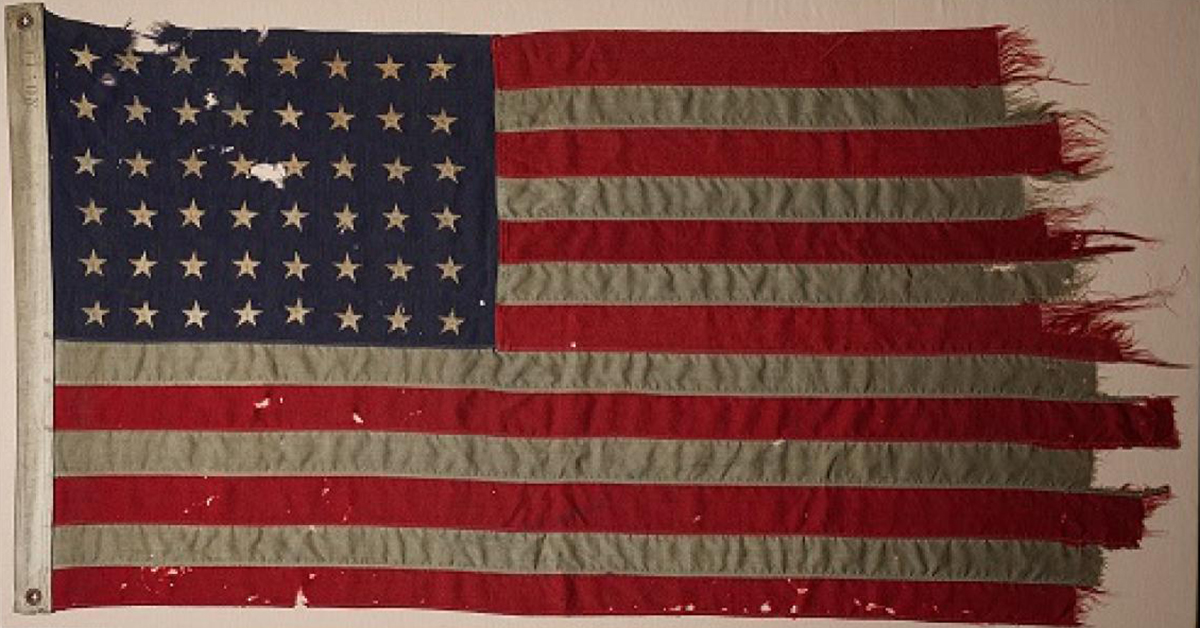
This American flag survived D-Day, then was returned to the US 75 years later
When Howard Vander Beek died in 2014 at the age of 97, he left behind a distinct reminder of his World War II service. Vander Beek, a lieute

Medal of Honor recipient and legendary Vietnam War helicopter pilot ‘Old Snake’ has died
Retired Army Col. Bruce Perry Crandall, the legendary helicopter pilot who was awarded the U.S. military’s highest decoration for valor for

Air Force crew honors WWII-era Flying Tigers with A-10 paint job
It started as a routine transfer. Following an asset transfer from Korea, maintainers at Moody Air Force Base, Georgia, accepted and process