These were the last surviving veterans of every major American war through World War I
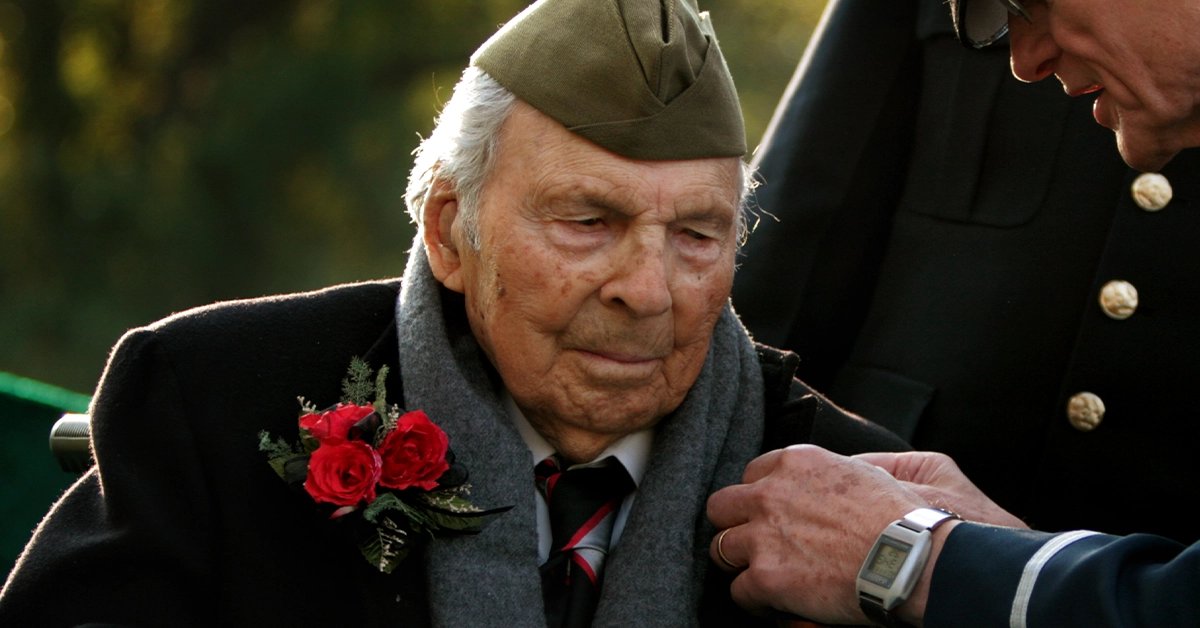
In 2023, the VA’s Veteran Population Projection (VetPop) Model counted 95,000. It estimated just 31,000 in 2026. And here we are. At last count (in 2025) the United States had only 45,418 World War II veterans still alive, a loss of just under half in three years. It’s a stark reminder that one day there will be no one left of the 16.4 million who served during World War II.
World War II and Korea veterans have a little bit of time left; The VA estimates the last one will pass in the 2040s, with a similar determination for Korean War vets. That’s a good long life, to be sure, but it closes the book on a significant chapter of our collective past. It can’t be easy to be the last of a dying generation, but someone has to be. Here are the last living veterans of America’s other conflicts.
Revolutionary War: John Gray
Born near Mount Vernon, Virginia, on Jan. 6, 1764, John Gray enlisted in the Continental Army at age 16 in 1780. He served in the final phase of the war and was present at the Siege of Yorktown, witnessing the surrender of British General Cornwallis in October 1781.
After the war, Gray married and moved west to the Northwest Territory, eventually settling in Noble County, Ohio, where he spent most of his life. His short term of service initially disqualified him from a pension, but Congress awarded him one by special act in 1866. He lived to see the entire American Civil War as a civilian before dying on March 29, 1868, at age 104 in Hiramsburg, Ohio. He is recognized as the last verified surviving veteran of the Revolutionary War.
War of 1812: Hiram Cronk
The last surviving veteran of “Mr. Madison’s War,” Cronk was born in 1800 in Upstate New York. As a young man, he served with the New York Volunteers in the defense of Sackets Harbor, the key American shipyard on Lake Ontario that came under direct British attack. Cronk lived an extraordinary 105 years and collected a monthly pension of $97 from both New York State and the federal government right up until his death in 1905—roughly $3,693.97 in 2026 dollars.
When he passed, thousands turned out for his funeral, with his body lying in state at New York City Hall before a massive procession through Brooklyn.
Mexican-American War: Owen Thomas Edgar
Born in Philadelphia in 1831, Owen Thomas Edgar served as a U.S. Navy sailor during the Mexican-American War aboard the frigates Potomac, Allegheny, Pennsylvania, and Experience. After three years of service he earned just a single promotion before returning to civilian life.
Edgar lived to age 98 and died in 1929, the last confirmed surviving veteran of the war. His long life bridged the age of wooden sailing ships and the early years of the Great Depression.
Civil War (Union Army): Albert Henry Woolson
Albert Henry Woolson was born in Antwerp, New York, in 1850. His father had been wounded at Shiloh, and Woolson himself enlisted as a drummer boy in the 1st Minnesota Heavy Artillery. His unit never saw combat, but he spent the rest of his life as a leader in the Grand Army of the Republic, the first nationally organized and most powerful veterans group in the United States, advocating for Civil War veterans until his death in Duluth, Minnesota, in 1956 at age 106.
The last Union combat veteran was James Albert Hard, who enlisted in the 37th New York Volunteer Infantry Regiment—the Irish Rifles—and fought as an infantryman at the battles of First Bull Run, Antietam, and Chancellorsville. He also had the rare distinction of meeting President Abraham Lincoln at a White House reception during the war.
Hard died in Rochester, New York, in March 1953 at the claimed age of 111, with thousands lining the streets for his funeral.
Civil War (Confederate Army): Pleasant Crump
Born in Alabama in 1847, Pleasant Crump and a friend enlisted as privates in the 10th Alabama Infantry in late 1864. He fought at Hatcher’s Run and the siege of Petersburg, then watched General Robert E. Lee surrender at Appomattox before walking home to Alabama.
Crump lived to 104 and died in 1951, the last confirmed survivor of the Confederate Army. His quiet postwar life in Alabama stretched from the final days of the Civil War deep into the 20th century.
Indian Wars: Frederick Fraske
An immigrant from the Kingdom of Prussia, Frederick Fraske arrived in the United States with his family in 1877 and settled in Chicago. At 21 he enlisted in the U.S. Army and was assigned to the 17th Infantry Regiment, posted to Fort D.A. Russell in Wyoming Territory during the final decades of the Indian Wars. Like many soldiers of that era, he found himself on the frontier not for dramatic campaigns but for the steady, often mundane work of garrison duty.
Fraske spent his entire three-year enlistment helping ready the fort for a potential attack by Native American tribes, a fight that never came during his time there. After his discharge he returned to civilian life in Chicago and lived quietly for decades, dying in 1973 at the age of 101 as one of the last surviving soldiers from the post-Civil War frontier Army.
But the Army’s troops weren’t the only ones fighting Natives out West. Some Natives from other tribes also served alongside the United States’ soldiers on the frontier. Perhaps most famously were the trackers who aided the Army tactically. The last surviving Native tracker was a man named John Daw.
Daw was born Hasteen-tsoh in 1870. He would grow up to become an enlisted U.S. Army tracker, looking for Apaches in New Mexico until 1894. He would return to the Navajo Nation in Arizona after leaving the service, dying in 1965 as the last surviving Navajo Tracker.
Spanish-American War: Jones Morgan
Jones Morgan was probably the only veteran of the Spanish-American War who could have also watched “Jurassic Park.” He was a Buffalo Soldier who lived to 113, one of the longest-lived veterans on this list. He enlisted in 1896 with the 9th Cavalry and later cared for the horses of the Rough Riders while serving as a camp cook during the fighting in Cuba.
Despite his enlistment papers being destroyed in a 1912 fire, no one seriously doubted his service. Morgan finally received formal recognition in 1992, the year before he died as the last surviving veteran of the Spanish-American War.
Boxer Rebellion & Philippine-American War: Nathan Cook
Cook is probably the saltiest American sailor who ever lived. Enlisting in 1901 (age 15) after quitting his job at a Kansas City meat packing plant, he served in the Philippines, during the uprising after the Treaty of Paris that ended the Spanish-American War ceded the Philippines to the U.S.
Cook also saw action during the Boxer Rebellion in China and the fighting along the U.S.-Mexico border precipitated by Pancho Villa. He was promoted to warrant officer after 12 years of service. He continued to serve during World War I, commanding a sub chaser and sinking two U-boats. He was the Executive Officer of a transport ship during World War II and retired in 1942, after some 40 years of service across two wars and early American conflicts. He died in 1992 at age 104.
World War I: Frank Buckles
Yes, all the doughboys are gone now. Frank Buckles of West Virginia was the last surviving American veteran of World War I when he died in 2011 at age 110. Turned down by the Marines for being too small and the Navy for flat feet, he enlisted in the Army at 16 in 1917 as an ambulance driver. After the Armistice he escorted German prisoners of war back to Germany before his discharge in 1919.
In civilian life, Buckles worked in shipping and was captured by the Japanese in the Philippines in 1942, spending the rest of World War II in civilian internment camps. He spent his final years campaigning for a national World War I memorial in Washington, D.C.—a dream that was eventually realized after his death.
Don’t Miss the Best of We Are The Mighty
• How to get a name rubbing from the Vietnam Veterans Memorial Wall • An Air Force vet created an app to geolocate gravesites and digitize cemetery records • The last Union combat veteran of the Civil War lived to see the Cold War
5 easy ways to support veteran-owned local businesses
These were the last surviving veterans of every major American war through World War I
World War II
An Army vet honored a fallen comrade with a historic Appalachian Trail hike
These are 10 of the longest-serving weapons in the US combat arsenal
Mighty MilSpouse
Overqualified, underemployed, and still showing up: the military spouse employment challenge
By Sara Jane Ginn
Related Service stories

Yes, I Served in Iraq. But What if People Mistake Me for a Hero?
Illustration by Kim Vo The Department of Motor Vehicles was a good place to lose your identity, not find it, especially 30 minutes before cl
Officers only: New report lays out what a ‘US Cyber Force’ could look like
A new report argues that an independent Cyber Force should be staffed by only commissioned officers and warrant officers to better develop t
Navy researchers find wreck of World War II submarine that vanished 82 years ago
Nearly 82 years to the day after the USS Herring went missing during World War II, the Navy said it had found the wreck of a submarine that