VA Research Wrap Up: New findings on suicide prevention, frailty and a brain-computer interface

VA’s Office of Research and Development recently published three News Briefs highlighting new findings on lung cancer survival rates, using AI for health apps, and a brain-computer interface.
New VA program halves suicide risk
In a randomized clinical trial of 207 high-risk suicidal Veterans, led by researchers from the James J. Peters VA Medical Center in the Bronx, those participating in VA’s Project Life Force (PLF) had a 51% lower risk of suicide attempts over one year. Furthermore, those who received PLF in addition to their usual care took significantly longer to reach a first actual suicide attempt than those receiving usual care alone.
PLF shifted the trajectory of suicidal behavior away from actual attempts and toward aborted or interrupted behavior, meaning Veterans were stopping themselves. Veterans in the PLF group also showed significant improvements in suicide-related coping at three and six months, including better use of outside supports, greater knowledge of emergency resources and increased willingness to reach out to providers. By six months, internal coping had improved as well, including self-efficacy and the ability to manage crisis from the inside. PLF is a 10-session structured group intervention for Veterans that combines suicide safety planning with training in distress tolerance, emotion regulation and interpersonal skills. Learn more about Project Life Force online.
Statins may lower risk of frailty
VA Boston researchers and their colleagues learned that statin use may lower the risk of frailty in older Veterans.
The researchers analyzed data from nearly a million Veterans age 67 or older who were not frail and did not take statins for cholesterol control or cardiovascular disease at the beginning of the study. Over five years of follow-up, Veterans who began taking statins during the study period had a 24% lower risk of experiencing frailty. Frailty is a known risk factor for cardiovascular disease, and that relationship may go both ways. The results suggest prescribing statins could be a way to prevent frailty in older Veterans.
Brain-computer interface viable for long-term, independent use
In a study involving the VA Center for Neurorestoration and Neurotechnology, a man paralyzed with amyotrophic lateral sclerosis (ALS) demonstrated the long-term viability of a brain-computer interface to facilitate communication and independence.
Implanted electrodes in the volunteer’s brain allowed his brain activity to be translated into speech and computer actions. Over nearly two years, the participant used the device for more than 3,800 hours at home, with no researcher present, to maintain rich interpersonal communication with his family and friends, independently control his personal computer, and sustain full-time employment despite being paralyzed. He was able to communicate at an average rate of 56 words per minute with 92% sentence accuracy. Control of a mouse cursor also allowed him to send text messages and emails and to browse the internet. The results proved brain-computer interfaces have the potential for independent use at home, marking a critical step toward restoring function to paralyzed Veterans.
For more Office of Research and Development updates, visit ORD online or go to https://www.research.va.gov/news_briefs/.
Related Health stories
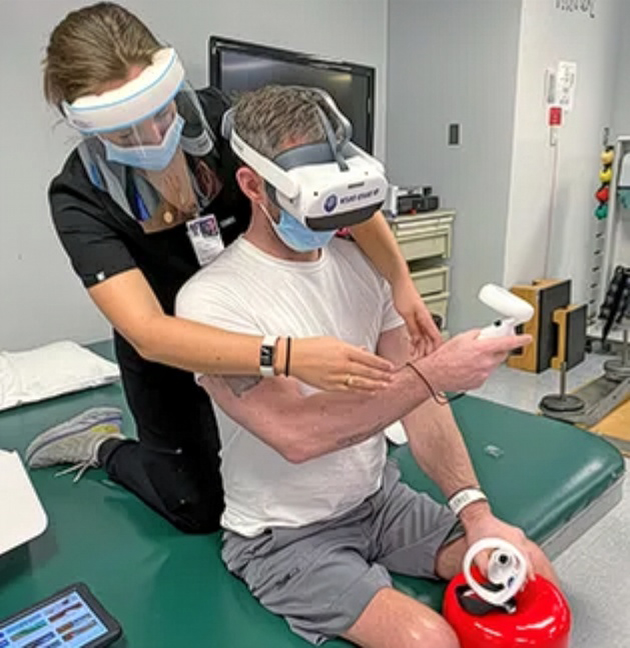
Virtual reality pain treatment expands for veterans
The Department of Veterans Affairs is expanding access to a U.S. Food and Drug Administration-authorized virtual reality (VR) therapy design

Live Whole Health #320: You deserve a break
Do you spend hours jumping between screens, messages and tasks during the day? Over time, this can make your mind tired and your body stiff.

First in VA to receive cutting-edge epilepsy treatment
A groundbreaking laser procedure offers a safer option for epilepsy treatment Back in 1980, when Robert Lindemann decided to enlist in the A