The Pilgrims only stopped at Plymouth Rock because they ran out of beer
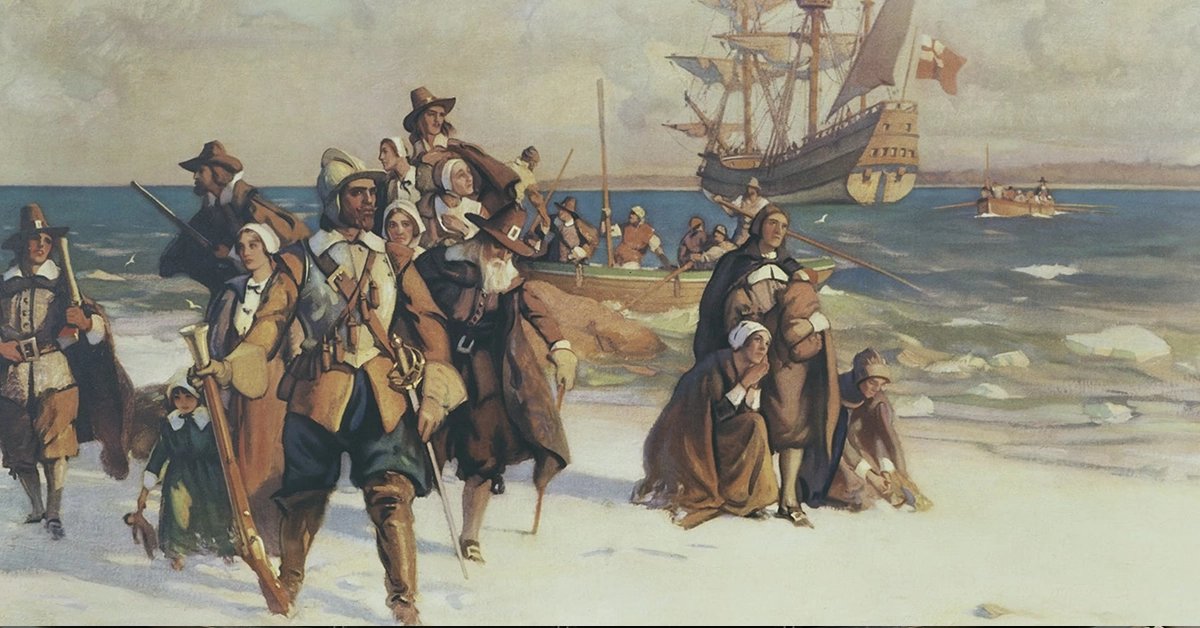
On Sept. 16, 1620 the Mayflower left Plymouth, England bound for the new world, bound for the northern Virginia colony. They never made it—not to Virginia, anyway. Trouble with the ships, stormy seas, and some unexpected course corrections delayed their arrival to America and when they finally saw their new continent, the most disturbing trouble of all happened: they were low on beer.
The ship’s commander, Capt. Christopher Jones, made an executive decision: the Pilgrims would be departing a little sooner than they expected so there would be more beer for the crew.
Far beyond the popular image of buckle shoe and buckle hat-wearing colonists, roughly 40% of the Pilgrims were radical Puritans who wanted to create a reformed, more Godly society in the New World. The other 60% were people with real skills (blacksmiths, coopers, etc.) recruited by financial backers, who thought the Church of England was corrupt beyond repair and wanted nothing more to do with it.
What they had in common was a shared belief in the Bible as the sole word of God, a hatred of the Catholic Church, and a taste for beer—one they shared with the sailors aboard the Mayflower.
While that may be funny to modern readers, there’s actually a really good reason for preferring beer over water in the 1620s. Anyone who’s left a half-drunk water bottle closed for a few days can tell you that it starts to get stale and funky after a while. Though modern plastics and metal-lined containers can prevent this for a while, the Pilgrims and Puritans aboard the Mayflower didn’t have that technology.
The ship’s water was stored in wooden barrels below decks, and after the two months it took to sail from Plymouth to Plymouth Rock, “funky” isn’t the right word to describe it. It became foul, slimy, and may even have grown algae or other life forms—they would have had to strain the water to remove the slime just to so they wouldn’t have to chew it.
It’s also worth noting that the beer in question wasn’t a kind of Bud Light and the Pilgrims weren’t drunks. The ship’s brew (as it was known) had a very low alcohol content (around 3% ABV), and was usually made of leftovers from brewing real beer. It was also not as fun to drink as one might imagine: it was usually flat, bitter, and filled with sediment. The Pilgrims’ beer supply anywhere from a quart to a gallon of the stuff every day.
But beer had two main advantages over drinking water.
The first was the beer was safer to drink and could be more easily stored (the coopers aboard ship were hired specifically to maintain the beer barrels). The second was nutrition: a diet of salted pork and hard tack lacks the diversity (and vitamins) necessary for the human body to function. Beer provided calories, B vitamins, and carbs—all without having to filter out any slime.
Luckily for the Pilgrims, when they were forced ashore on Dec. 21, 1620, they managed to find sources of running water and somehow survive the Massachusetts winter. Interestingly, the following March, a Native man named Samoset walked into their settlement, greeting the Pilgrims (in English).
The first thing he asked them was if they had any beer.
Don’t Miss the Best of We Are The Mighty
• That time a British soldier held back 6,000 enemy troops with beer bottles • Today in military history: Mayflower docks at Plymouth Rock • 104-year-old Marine continues tradition for Corps’ 250th birthday
The Pilgrims only stopped at Plymouth Rock because they ran out of beer
JFK’s words of wisdom to the military leaders of tomorrow
World War II
An Army vet honored a fallen comrade with a historic Appalachian Trail hike
These are 10 of the longest-serving weapons in the US combat arsenal
World War II
Why one of the largest Soviet war memorials is in Berlin
Related Legacy stories
This American flag survived D-Day, then was returned to the US 75 years later
When Howard Vander Beek died in 2014 at the age of 97, he left behind a distinct reminder of his World War II service. Vander Beek, a lieute
Medal of Honor recipient and legendary Vietnam War helicopter pilot ‘Old Snake’ has died
Retired Army Col. Bruce Perry Crandall, the legendary helicopter pilot who was awarded the U.S. military’s highest decoration for valor for
Air Force crew honors WWII-era Flying Tigers with A-10 paint job
It started as a routine transfer. Following an asset transfer from Korea, maintainers at Moody Air Force Base, Georgia, accepted and process