VA’s 3D‑printed bowling stick restoring independence for Veteran athletes

Veteran continues quest for independence by renewing her love for bowling
Francine Goode, a retired Air Force Veteran and amputee, has never stopped bowling. A new VA-engineered tool is making sure she never has to.
When a VA recreational therapist at the Perry Point VA Medical Center in Maryland identified a gap in available adaptive bowling equipment for Veterans, engineers in VA’s Office of Advanced Manufacturing (OAM) stepped in. Traditional options often required human assistance, lacked durability and provided limited independence. Using a 3D printer, the team designed and refined a bowling stick tailored to the Veteran’s specific needs.
Designed for the bowler, not the limitation
“I’m an amputee who is on a continuous journey of living my life and improving fitness with any adaptations needed,” Goode said. “The bowling stick provides better control of the ball and is easier for me to use.”
Getting direct feedback from Veterans during testing has helped the device evolve with improved control, adjustability and usability. The result is a simple yet powerful tool that allows Veterans to bowl independently, using standard equipment.
“This gives Veteran athletes a level of independence they might not have had with the off-the-shelf equipment,” said Jeff Frankart, a biomedical equipment support specialist with VA’s Richmond Office of Advanced Manufacturing. “It’s usable by Veterans with a wide variety of abilities and needs. For those familiar with bowling, which many of our Veterans are, they don’t need someone to place a separate bowling ramp for them for every shot. It allows them to use a house ball or their own ball if they prefer.”
The importance of practical innovations
Continued demand for the device shows the importance of practical innovations that support physical activity, social connection and overall well-being.
“I like the bowling stick because it’s portable and any ball can be used with it,” said Goode. “It provides better control of the ball and it’s easier for me to use than an adaptive ball with a retractable handle. I’m so fortunate this was created!”
Whole new outlook
For many Veterans, a tool this simple can mean the difference between sitting out and staying in the game.
“Like a lot of things we do, attracting Veterans to try new activities or keeping Veterans engaged in activities they enjoy is the overall goal,” said Frankart. “We always strive to create devices to help them maintain or even regain their independence.”
A few other OAM inventions include: A one-handed bra closure device, a makeup brush holder,and the FDA-cleared 3D-printed bolus. Learn more about VA’s Office of Advanced Manufacturing.
Related Health stories
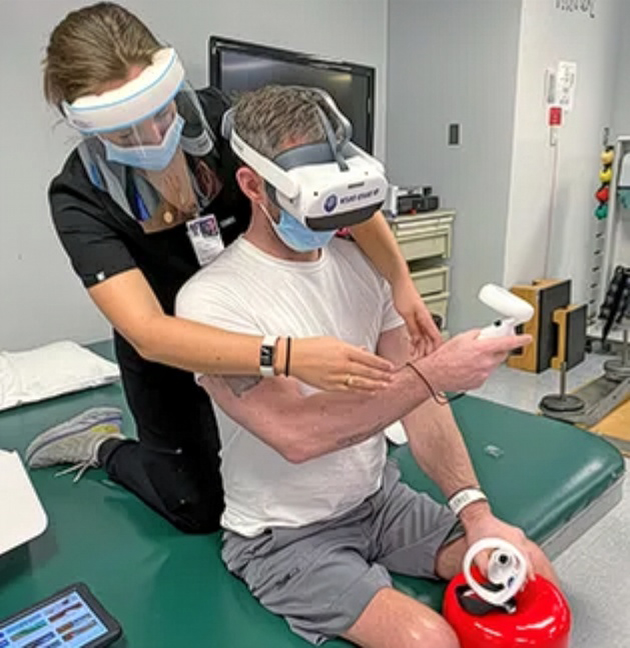
Virtual reality pain treatment expands for veterans
The Department of Veterans Affairs is expanding access to a U.S. Food and Drug Administration-authorized virtual reality (VR) therapy design

Live Whole Health #320: You deserve a break
Do you spend hours jumping between screens, messages and tasks during the day? Over time, this can make your mind tired and your body stiff.

First in VA to receive cutting-edge epilepsy treatment
A groundbreaking laser procedure offers a safer option for epilepsy treatment Back in 1980, when Robert Lindemann decided to enlist in the A