Veteran homelessness continues downward trend: 56% since 2010

Taking a closer look at the 2025 Point-in-Time Count results
In May 2026, the Department of Housing and Urban Development (HUD) announced the long-awaited results of the 2025 Point-in-Time (PIT) Count, the annual effort to estimate the number of Americans, including Veterans, without a home.
The data showed that on a single night in January 2025, 32,495 Veterans experienced homelessness in the U.S. This is a new record low in Veteran homelessness since measurement began in 2009 and a 56.1% reduction since 2010. This is also a 1.2% decrease since 2023.
A deeper look
Looking deeper at the data, we see that of the Veterans counted:
18,877 experienced sheltered homelessness—a decrease of 154 Veterans, or 0.8% from 2024.
13,851 experienced unsheltered homelessness—a decrease of 333 Veterans, or 2.4% from 2024.
Veterans who experience sheltered homelessness often live in places such as emergency shelters, transitional housing programs or other supportive settings.
In contrast, Veterans who experience unsheltered homelessness live in places not meant for human habitation, such as cars, parks, sidewalks, abandoned buildings and literally on the street. The overall decline in Veteran homelessness was driven entirely by the reduction in unsheltered Veterans.
The experience of homelessness alone is already harmful to Veterans’ whole health, mind, body and soul. However, unsheltered homelessness among Veterans is even worse, with research demonstrating that unsheltered individuals often report more significant negative health conditions than those who are sheltered.
Learn more about VA resources that help move unsheltered Veterans off the streets.
Behind the numbers
Although it initially appears that Veteran homelessness reached a steady state in 2025, the reality is more complex.
Major shifts by state
States all across America saw major shifts in their local homeless Veteran populations.
Twenty-five states saw increases in Veteran homelessness, with Oregon, Pennsylvania and New York seeing the largest numerical increases and Mississippi, Utah and Wyoming seeing the largest percentage increases.
Twenty-three states saw decreases in Veteran homelessness, with California, Florida, Indiana and Illinois seeing the largest numerical decreases and North Dakota, Alabama and Arkansas seeing the largest percentage decreases.
Two states saw no change.
Signs of an increased need
Leading up to the 2025 PIT Count, in Fiscal Year 2024, VA permanently housed nearly 48,000 homeless Veterans, which was nearly 1,900 more Veterans permanently housed than in Fiscal Year 2023.
With the 2025 PIT Count only decreasing by 1.2% from the prior year, this suggests a significant increase in the number of Veterans needing homelessness assistance that VA and its partners were able to just keep ahead of.
The impact of the costs of living
Lastly, according to the U.S. Department of Housing and Urban Development, average fair market rent rates for 1-bedroom units increased 4.6% from 2024 to 2025, highlighting the impact of housing affordability on Veteran homelessness.
We know that as rental costs and other inflationary forces increase, more Veterans find themselves at risk of homelessness, and progress to reduce Veteran homelessness slows down.
Progress since 2025
It’s important to note that these results reflect the state of Veteran homelessness in January 2025, more than a year and a half ago.
They do not reflect the bold steps VA has taken to reduce Veteran homelessness in Fiscal Year 2025, which include:
Permanently housing nearly 52,000 homeless Veterans, the largest number of Veterans housed in a single year in the last seven years.
Moving more than 25,000 unsheltered Veterans into interim or permanent housing through outreach surge events.
The work ahead
No Veteran should be homeless in the country they fought to defend. That’s why ending Veteran homelessness has remained a top priority of VA and of President Trump.
For nearly 20 years, the PIT Count has been a trusted source of information on how we are making progress toward ending Veteran homelessness. VA will continue to use this data to track progress. But the 2025 PIT Count results reveal that for us to truly end Veteran homelessness in America, VA needs more frequent, more accurate data.
That’s why in 2026, every VA Medical Center has built and is maintaining a high-quality by-name list, which is a clear, up-to-date picture of each Veteran experiencing homelessness, including their contact information, housing status and known service needs. With accurate data, strong partnerships and steady support, we can take meaningful, lasting steps toward ending Veteran homelessness for good.
The fight to end homelessness among Veterans is not over, and we won’t rest until every Veteran has a safe, stable, accessible and affordable place to call home.
Learn about VA Programs
If you are a Veteran who is homeless or at risk for homelessness, call the National Call Center for Homeless Veterans at 877-4AID-VET (877-424-3838).
Learn more about how by-name lists will help VA accelerate progress to end Veteran homelessness.
Visit the VA Homeless Programs website to learn about housing initiatives and other programs for Veterans exiting homelessness.
Learn how to get involved with housing homeless Veterans.
Related Health stories
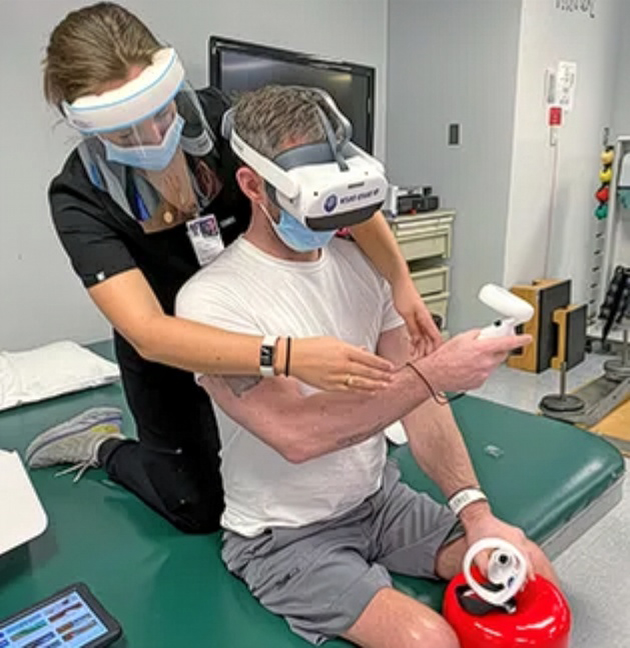
Virtual reality pain treatment expands for veterans
The Department of Veterans Affairs is expanding access to a U.S. Food and Drug Administration-authorized virtual reality (VR) therapy design

Live Whole Health #320: You deserve a break
Do you spend hours jumping between screens, messages and tasks during the day? Over time, this can make your mind tired and your body stiff.

First in VA to receive cutting-edge epilepsy treatment
A groundbreaking laser procedure offers a safer option for epilepsy treatment Back in 1980, when Robert Lindemann decided to enlist in the A