Lessons learned during past wars now support today’s warfighters
In the five years since the U.S. withdrawal from Afghanistan, military households have adjusted to life at a different pace, without the perpetual combat deployments of Operation Enduring Freedom and Operation Iraqi Freedom. Since the U.S.-Israeli campaign against Iran began on Feb. 28 of this year, along with deployment extensions for some (the USS Gerald R. Ford ended up breaking records with the longest modern day deployment since the Vietnam War) and rumors of orders for others, service members and their families are navigating uncertainty reminiscent of the days following the attacks of Sept. 11, 2001.
As the community awaits what’s next for Operation Epic Fury (the name given to the U.S. portion of the campaign against Iran), veterans service organizations (VSOs) are hoping to use lessons learned during the Global War on Terror to better support the military in this time of conflict.
“We have walked the ground, we have lived the life, and we know the impact that has taken on our families,” said Mario Marquez, executive director for the American Legion’s Government Affairs office. “From our angle, veterans see that military families are just as much a part of war as anyone in uniform.”
“As a society we had lost the muscle memory of how to support our deployed service members and their families in large numbers in many decades [since Vietnam],” said Alan Reyes, CEO of Operation Homefront, an organization that has been supporting military families since its founding in 2002. “The lesson that we learned as an organization during OIF and OEF was that military readiness really does rely on family resilience and family readiness for that separation and for their return home.”
Marquez of the American Legion worries that just enough time has passed that military “muscle memory” may have faded already.
“Over the years, as we were less and less in combat, the military felt [family readiness] was too expensive, and they stopped investing in it,” he said. “You lose the knowledge base from a community of resources. And when war happens again, the military is once again scrambling to reinvest money into something we already had in place.”
Vicky Perkins, VP of Programs for Blue Star Families, thinks VSOs have the ability to step up and fill the gaps.
“We’ve been able to adapt based on the needs of the military community,” she said. “In these high tension times where it feels like a lot of challenges, a lot of uncertainties, we go to our programs and think, how can we adapt to support that specific need?”
Programs such as Blue Star Coffee Connects bring younger military spouses together with senior military spouses to help prepare them for the road ahead.
“It’s that light at the end of the tunnel,” Perkins said.
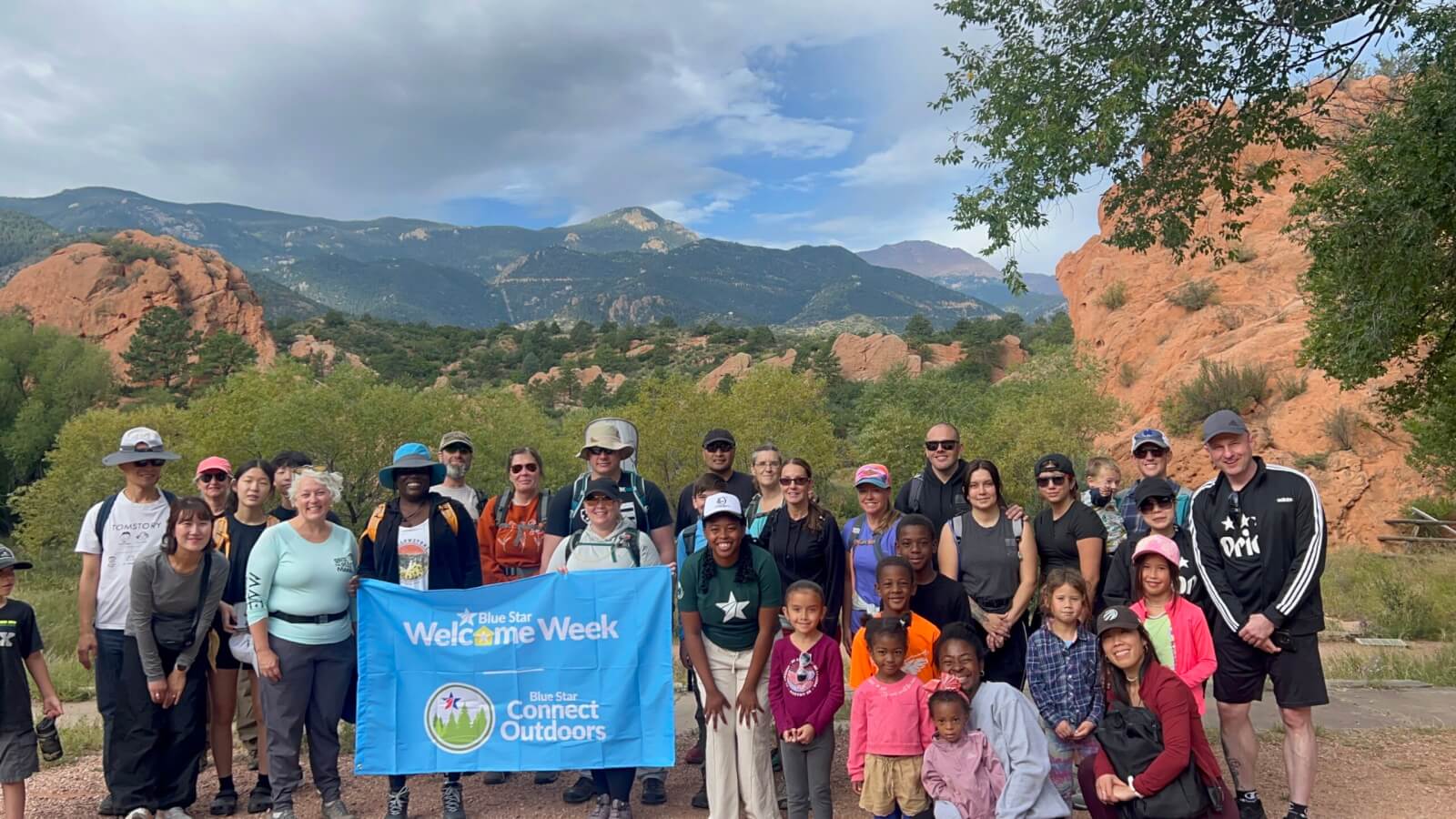
Blue Star Families also has outdoor programs that support the children of service members.
“We’re not at home on games or on social media, we’re bringing them into the outdoors,” she explained. “And then the conversations open up.”
Perkins has noticed the disruptive effect of social media on military families compared to her own time as a military spouse during OEF and OIF. So Blue Star Families created their own digital community, Blue Star Neighborhood.
“The fact that everything is broadcast for our military families, no matter what it is, I think there could be some definite fear,” she said. “We want to make sure you’re getting trusted information, trusted resources, trusted support.”
Reyes of Operation Homefront often reflects on how different technological connections were when he was serving in Iraq compared to how they are now.
“When I was deployed in the desert, back then you couldn’t just pick up your phone and Facetime home,” he said. “It was, let me send this email when I get a chance, and hopefully we’ll get an answer. It would take your mind off the job, and that’s absolutely a dynamic that you don’t want to occur. Knowing that my family’s going through some challenges that I could not directly impact from half a world away distracted me — and that’s putting it mildly.”
Operation Homefront runs a Critical Financial Assistance Program to provide funding for struggling military families. In 2025, they saw a 75% increase in applications, much of it driven by the government shutdown. But 2026 has brought even more demands for needs and more applications.
“It’s underscoring just the overall stress that these families are facing,” Reyes said.
Operation Homefront has deep ties to communities built around military installations, but their involvement doesn’t end there.
“Service members are coming home, and some of them, unfortunately, are coming home to places like Walter Reed…” said Reyes. “Those commands are calling asking, ‘how can you help us support these families as their family members are convalescing and getting healed?’”
While Operation Homefront supports the families, Wounded Warrior Project is specifically by the bedsides of the recovering service members themselves.
“I always tell people that my teams are excellent eavesdroppers, constantly listening,” said Wil Williamson Jr., VP of Wounded Warrior Project’s Connections Program. “Through that listening, we’re really able to kind of identify what their needs might be.”
Williamson thinks there is a direct through-line from Wounded Warrior Project’s founding in 2003 to the present day.
“The organization hasn’t really pivoted from our core message that we’re going to be with warriors for a lifetime,” he said. “But what I think we’ve learned is that through a warrior’s journey, things could change. [So we’re] making sure that we’re there for all of the various milestones.”
From bedside care to community events, Wounded Warrior Project teammates provide continuous support when service members return from deployment.
For Marquez of the American Legion, it is disappointing that the military itself does not seem to have learned from past wars as effectively as VSOs have.
“It’s very frustrating for us in the veteran community to see the same mistakes being made,” he said. “Even with all the genuine, sincere effort by the military and Congress, military families still are second or third in line for where the focus is. As long as we continue to go to war, we’re going to have the same repeat issues. Why didn’t we learn our lesson the last time we were at war for 20 years?”
Related Service stories

Yes, I Served in Iraq. But What if People Mistake Me for a Hero?
Illustration by Kim Vo The Department of Motor Vehicles was a good place to lose your identity, not find it, especially 30 minutes before cl
Officers only: New report lays out what a ‘US Cyber Force’ could look like
A new report argues that an independent Cyber Force should be staffed by only commissioned officers and warrant officers to better develop t
Navy researchers find wreck of World War II submarine that vanished 82 years ago
Nearly 82 years to the day after the USS Herring went missing during World War II, the Navy said it had found the wreck of a submarine that