AI is meant to speed up ‘kill chain,’ not control it, commanders say
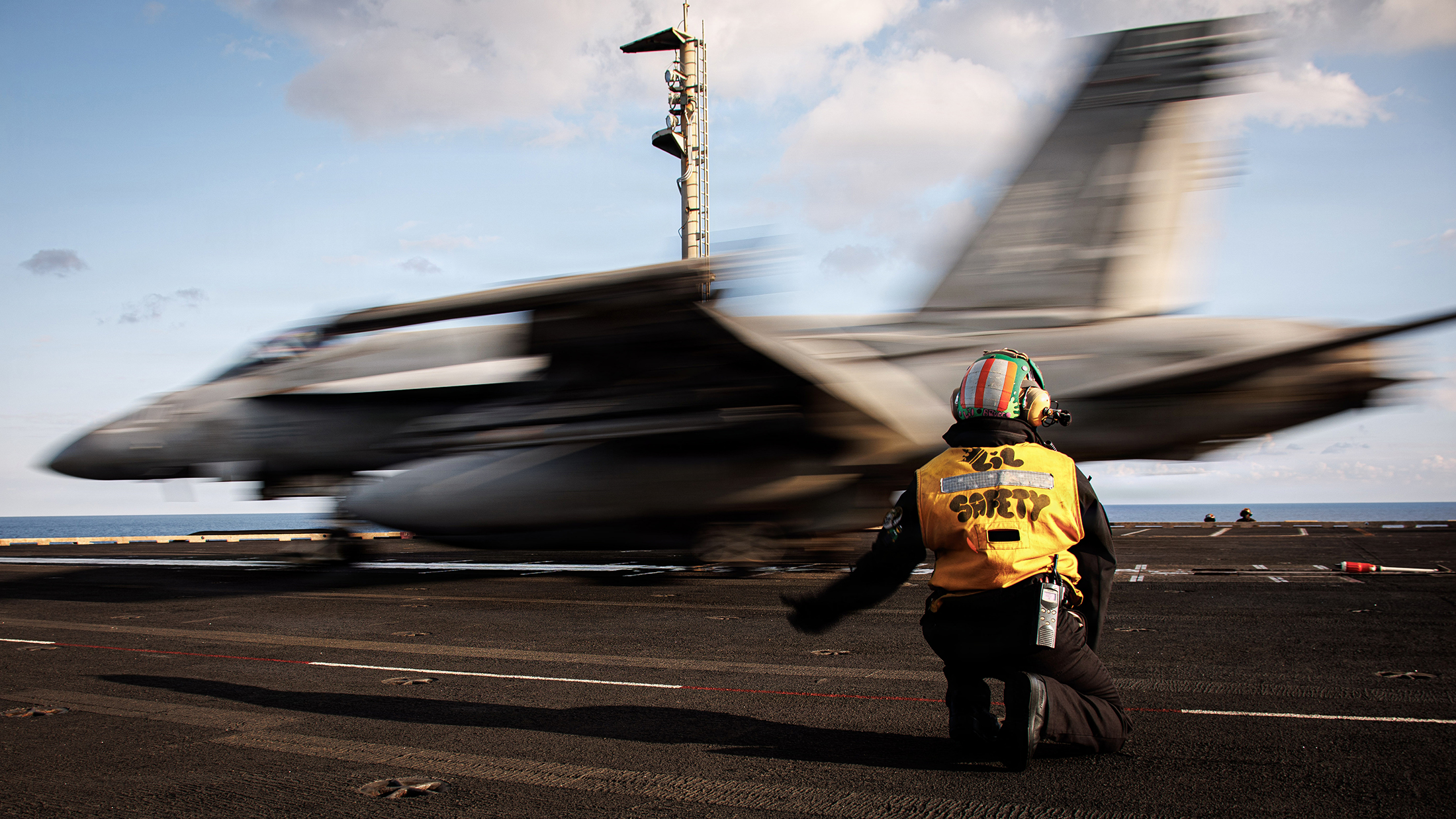
U.S. military leaders have repeatedly tried to assure troops and the American public that artificial intelligence, or AI, is not going to replace human beings as the final decision-makers on when to carry out a military strike. But the extent to which AI will be involved in the “kill chain” remains fluid, even as the technology continues to be used in combat.
During recent combat operations against Iran, the U.S. military used AI to “deploy over 2,000 munitions to 2,000 distinct targets within 96 hours,” according to a sworn declaration from Cameron Stanley, the Pentagon’s chief digital and AI officer.
The Independent first reported on Stanley’s statement, which Task & Purpose confirmed is authentic.
Former commanders who spoke to Task & Purpose described it as being less about AI in the kill chain, which refers to the process of identifying and striking targets, and more about speeding up the analysis of when and where to strike.
“I think my experience, kind of more on terrorism, was we were collecting a huge amount of information,” said retired Army Gen. Joseph Votel, who led U.S. Central Command from 2016 to 2019. “We oftentimes were leaving a lot of information on the floor, so to speak, because we just didn’t have the processing capability — we didn’t have the number of analysts.”
Votel said he is in favor of using AI as part of the target selection process because the technology can pore over huge amounts of data much faster than humans.
As AI’s role in combat operations grows, the most important policy and ethical issue is whether humans will continue to decide whether to strike targets or if AI systems will be empowered to make life-and-death decisions themselves, said retired Air Force Lt. Gen. David Deptula, dean of the Air Force Association’s Mitchell Institute for Aerospace Studies think tank.
“The critical distinction is between AI supporting the kill chain and AI controlling the kill chain,” said Deptula, who was the principal attack planner for the coalition air campaign in the 1991 Gulf War. “The U.S. military has long used automation in weapons and targeting processes, but the key policy and ethical issue is whether commanders and operators retain appropriate human judgment over the use of force. That is the standard that matters.”
The U.S. military has long used defensive weapons with some level of autonomy, such as land mines, said retired Air Force Lt. Col. Dean Korsak.
“Once emplaced, it cannot distinguish friend from foe and is difficult to control or recall,” said Korsak, who pressed his chain of command to investigate a 2019 deadly U.S. airstrike in Syria. “While modern systems are far more sophisticated, the landmine illustrates enduring challenges with autonomous capabilities. Data quality, robust validation processes, and appropriate human oversight are all essential.”
Top Stories This Week
Army forms new command to create a ‘covering force’ in the Pacific
Veterans disability bill could cut tinnitus compensation to fund other benefits
By Patty Nieberg, Jeff Schogol
Last soldier out of Afghanistan now the latest general to step down
By James Clark, Jeff Schogol
While the U.S. military is not using AI to replace humans, other militaries, such as China, Russia, North Korea, and Iran, are aiming to do just that, said retired Lt. Gen. Ross Coffman, former deputy commanding general of U.S. Army Futures Command.
“An example would be a weapon system with a sensor enabled with artificial intelligence that can detect movement and the weapon would automatically fire,” Coffman told Task & Purpose. “That’s what our adversaries are developing.”
Related Service stories

Yes, I Served in Iraq. But What if People Mistake Me for a Hero?
Illustration by Kim Vo The Department of Motor Vehicles was a good place to lose your identity, not find it, especially 30 minutes before cl
Officers only: New report lays out what a ‘US Cyber Force’ could look like
A new report argues that an independent Cyber Force should be staffed by only commissioned officers and warrant officers to better develop t
Navy researchers find wreck of World War II submarine that vanished 82 years ago
Nearly 82 years to the day after the USS Herring went missing during World War II, the Navy said it had found the wreck of a submarine that