Celebrate America’s 250th with a real Revolutionary War cocktail
The Pilgrims stopped at Plymouth Rock because they ran out of beer. The U.S. Marine Corps was founded in a bar. One of the reasons Prohibition failed in in the United States is probably because this country was founded on and was fueled by booze from the get-go—and there just isn’t a lot Americans won’t do to keep the party going a little longer.
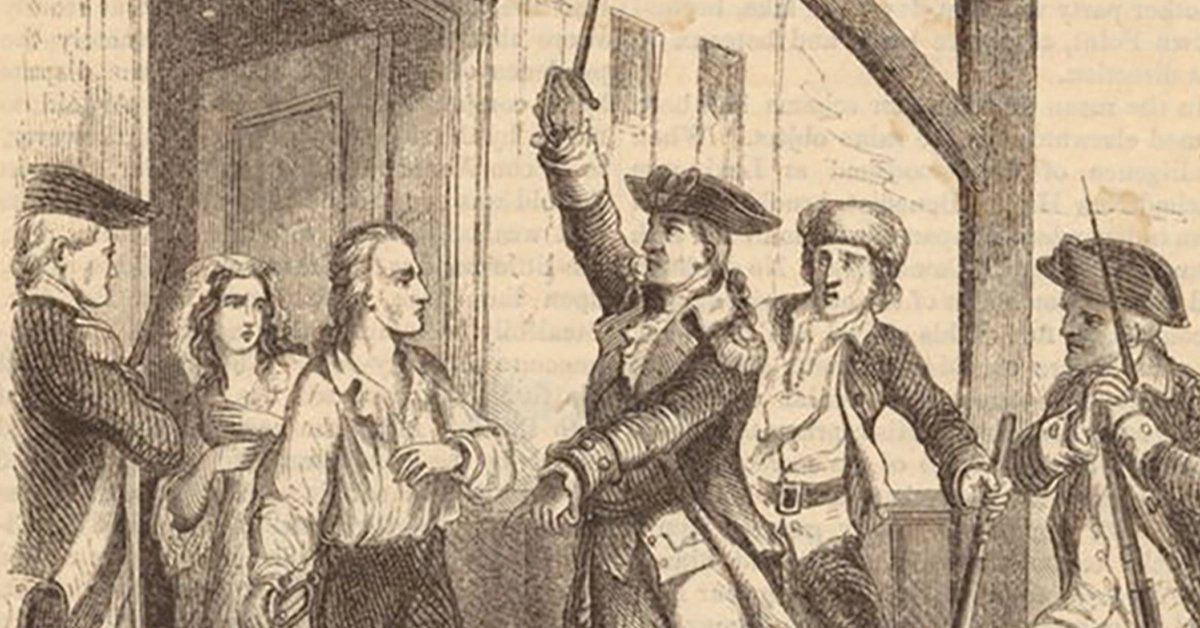
The best example of this might be the legendary Revolutionary War leader Ethan Allen and his Green Mountain Boys, whose first order of business after famously taking Fort Ticonderoga from the British was to raid its liquor stores and “drink the place dry.”
The truth is, however, they might have already imbibed some Revolutionary War cocktails before setting foot in Ticonderoga.
Vermont’s Green Mountain Boys were the first to deliver a crushing defeat to the British during the American Revolution. With Gen. Benedict Arnold, they managed to capture the guns at Fort Ticonderoga without firing a shot. They also took two other forts in the area, but Ticonderoga was the key to Lake Champlain, which denied the British entry from that point and became the staging area for patriot incursions into Canada.
More importantly, the cannons seized at the fort were moved to Boston, where the British occupied much of the city since April 1775. Despite inflicting heavy casualties on the redcoats at places like the Battle of Bunker Hill, the Continental Army needed the help.
In November 1775, Ethan Allen and his Vermonters moved the fort’s supplies (minus the booze) and guns overland to Boston, where Gen. George Washington and his artillery commander Henry Knox used them to force the British to withdraw from Boston after holding it for almost a full year.
What prompts a gaggle of armed good-ol’ boys from Vermont to take on a heavily armed and fortified position of professional soldiers in the world’s largest, best-equipped, and seasoned army of veterans? Alcohol, of course. It’s an American tradition.
The night before Allen and the boys seized the fort, they all met at Remington’s Tavern in Castleton, Vermont. There, they sat down with Benedict Arnold who was sent by the Continental Congress to capture the fort and its guns. The Green Mountain Boys were there because they were going to take the fort anyway, sanctioned or not—so Arnold and his regulars might as well join in.
The liquid courage being poured at the tavern was what was a Revolutionary War cocktail common for the area during that time period: hard cider. Colonists planted apples in the new world primarily for the purpose of drinking them. The crop thrived here and kept people healthy, as it was often safer than the drinking water.
In fact, cider was pretty much used as currency. But back then, drinking men needed more of a kick, so they added shots of rum to their cider, two shots of it to every pint of cider. They called the drink a “Stone Fence” because after more than one, it created a feeling of running down a hill into one.
After the ragtag group downed enough bravery, the two commanders led the crossing of Lake Champlain in the early morning hours, with 83 of the Green Mountain Boys. But dawn was coming fast, and Allen and Arnold worried that if they waited for the whole force, they might lose the element of surprise.
So with just 83 Vermonters, they silently stormed Fort Ticonderoga, catching the garrison completely by surprise, capturing the guns for use elsewhere in the Revolution. If they hadn’t captured those guns, the rebellion might have died in its cradle by diminishing hopes and expectations for the Continental Army’s chances.
So down a few of these spiked ciders for Ethan Allen and the Green Mountain Boys, who might have just saved the future United States, fueled by Caribbean Rum, and American-grown apple juice left to ferment into cider.
Don’t Miss the Best of We Are The Mighty
• The history of Rip It, the beverage that fueled the War on Terror • The last 6 Revolutionary War veterans survived long enough to be photographed • What happened to the German mercenaries who fought against the American Revolution
America250
Celebrate America’s 250th with a real Revolutionary War cocktail
9 reasons why the 1911 should be America’s national weapon
Graphic novel spotlights the covert dealings that helped win the American Revolution
World War II
How the US protected ‘utterly irreplaceable’ documents during World War II
The Pilgrims only stopped at Plymouth Rock because they ran out of beer
Related Legacy stories
This American flag survived D-Day, then was returned to the US 75 years later
When Howard Vander Beek died in 2014 at the age of 97, he left behind a distinct reminder of his World War II service. Vander Beek, a lieute
Medal of Honor recipient and legendary Vietnam War helicopter pilot ‘Old Snake’ has died
Retired Army Col. Bruce Perry Crandall, the legendary helicopter pilot who was awarded the U.S. military’s highest decoration for valor for
Air Force crew honors WWII-era Flying Tigers with A-10 paint job
It started as a routine transfer. Following an asset transfer from Korea, maintainers at Moody Air Force Base, Georgia, accepted and process