Medal of Honor recipients reflect on service, discuss hope for future
In the spirit of America’s 250th anniversary, one Medal of Honor recipient reflected on the word “hope,” as he considered America for future generations.
Retired Army Master Sgt. Leroy Petry, who served 15 years, put its meaning into an acronym.
“That’s basically ‘Helping Other People Everywhere,’” Petry said.
Recent recipient recognized for acts nearly 60 years ago
The Medal of Honor is the United States’ highest award for military valor in action. There have been 3,555 Medals of Honor awarded to 3,536 recipients since its inception in 1861, including 19 who received it twice. Today, there are 65 living recipients, according to the Congressional Medal of Honor Society. In March, President Donald Trump authorized retired Marine Corps Maj. James Capers Jr. to receive the award for heroism displayed during the Vietnam War.
According to his citation, Capers carried out multiple acts of valor in 1967 as he led a Force Recon Marine unit near Phu Loc, Vietnam. Despite being wounded as his team was ambushed, Capers did not leave the battlefield until every member of his team made it out.
Administrative and procedural obstacles delayed his recognition, according to a press release. The formal ceremony for 88-year-old Capers occurred on June 18 of this year.
Reenlisting after receiving Medal of Honor
Petry, a living Medal of Honor recipient, medically retired as a master sergeant in 2014. Throughout his military career, he completed eight combat deployments to Iraq and Afghanistan.
On May 26, 2008, Petry experienced a day that would change him forever.
As an Army staff sergeant, Petry was leading his weapons squad from D Company, 2nd Battalion, 75th Ranger Regiment into a compound in Afghanistan’s Paktia Province, according to his Medal of Honor citation. He and his men were searching for a Taliban leader.
The squad encountered a nest of roughly 40 insurgents with a dozen of them armed and ready to fight. Automatic fire ripped through Petry’s legs. He didn’t stop, though. The citation further describes how he rushed the other Rangers to cover, and tossed a grenade in an attempt to suppress the Taliban with gunfire.
An enemy grenade blasted two of his fellow Rangers, and then a second skittered only a few feet away from the squad. Petry retrieved the explosive and tried to toss it a safe distance away from his comrades.
The grenade exploded, blasting through his right hand and littering his body with shrapnel.
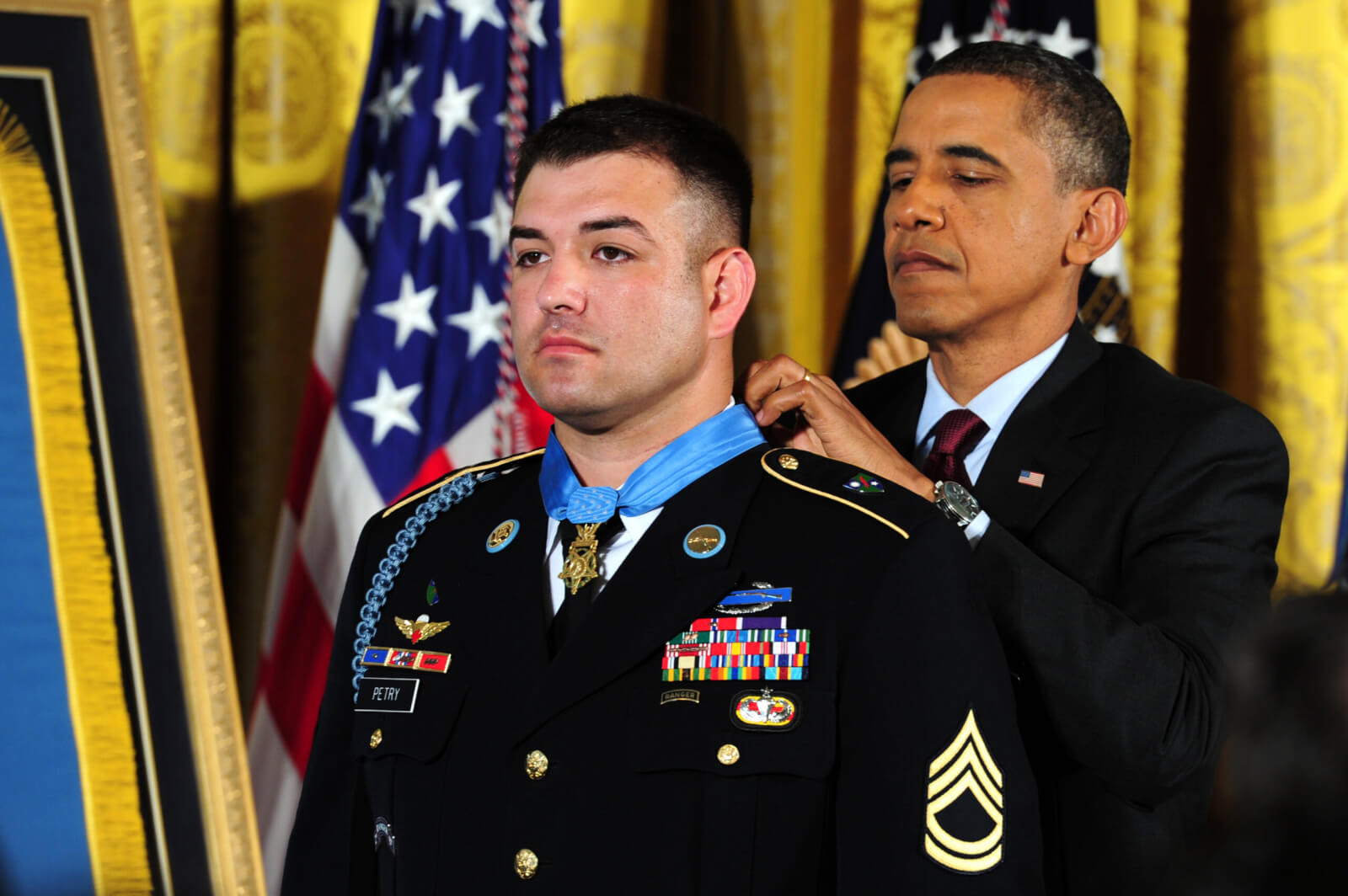
Petry was later fitted with a prosthetic robotic hand, and on July 12, 2011, President Barack Obama awarded him the Medal of Honor during a ceremony at the White House.
Petry said that after the deployment — before the citation — he re-enlisted to continue his service in the Army. While he would no longer jump out of planes, kick down doors, or shoot at the enemy, he would instead take care of the wounded, ill and injured.
“I realized I loved doing that, that it was something like I had been through, and I had experienced, and somebody was there for me and my family, and did that,” he explained. “I wanted to pass that on to the next generation.”
With the life change also came finding his new normal while still in service and after he transitioned out.
“It’s what you allow it to be, and it’s hard not to be a part of something good,” he said. “The environment always changes, but the concept never does. It’s always about patriotism. It’s always about veterans. It’s always about all the values of the Medal of Honor that we talk about: citizenship, courage, commitment. It’s all about those things that we want others to realize are inside of them, that they can face adversity in this life and be resilient.”
Finding hope
A generation Petry especially admires are the Vietnam veterans who are now becoming America’s oldest generation of war veterans. He said that when they returned and the country just turned on them, that a lot of them suffered.
Retired Sgt. 1st Class Sammy Lee Davis served and earned the Medal of Honor during the Vietnam War and recalled experiencing the suffering Petry referred to.
“When I landed in San Francisco, coming home from Vietnam, there were protesters there,” Davis said.
At 79 years old, Davis has found hope in America because of those same protesters.
“Years later I’ve had people come up to me, and say, ‘Sam, I was one of those protesters at the airport, and I want to apologize to you all,’” Davis said.
Davis was a private first class in the Army on Nov. 18, 1967, the morning that his actions at Firebase Cudgel, south of Ong Tai Creek near Cai Lay, earned him the Medal of Honor, according to his award citation.
An explosion wounded Davis and flung him into a foxhole with a broken back. The rest of his team were wounded, and all were ordered to stay put.
Davis decided to rush to a burning howitzer and began firing. He was knocked down by his gun’s kickback but was reloading when he was wounded by another VC mortar blast detonating nearby.
Davis kept reloading, aiming and firing at the enemy until he was out of ammo. Unarmed, he heard three of his fellow soldiers in the creek calling for help.
Although he shared stories of fishing with his dad, Davis admitted he’d never learned to swim; to aid his wounded comrades, he threw an air mattress to reach them.
With the help he received from Pfc. William H. Murray, they were able to ferry the trio of wounded men across the creek and to an aid station.
After the rescue, Davis joined another gun team and kept firing at the VC for nearly two hours.
The actions that night earned Davis the Medal of Honor in a White House ceremony where President Lyndon B. Johnson presented the award. The award citation inspired source materials for the 1994 film “Forrest Gump” — footage of the ceremony appeared in the movie with actor Tom Hanks’ head superimposed over the face of Davis.
Legacy of duty
Beyond their actions in combat, Medal of Honor recipients carry on a legacy of duty.
“We’ve got to keep doing what’s right today, so we can affect what’s right tomorrow, and we keep doing it,” Davis said.
He draws from advice he remembers from Gen. William C. Westmoreland when he faces adversity.
“He’d say, ‘There’s going to be people that are going to want to instigate you and get you to rise up and slap them,’ and he said, ‘just don’t do it, just remain cool and be yourself,’” Davis said. “His message still is with me in my heart.”
Petry upholds his patriotism and stays connected to the veteran community by consistently visiting various military rendezvous, like his local VFW and American Legion posts. He said it’s where he knows he can encounter vets who no matter what will, “… give you the shirt off their back or a bed to sleep in.”
“You build a bond with people across our country that shared maybe not the time exactly with you but shared the patriotism that you shared, and the sacrifice of wearing the uniform,” Petry said.
He also doesn’t take any day he’s given for granted.
“I’ve done more in my life than I ever expected, experienced more in my life than I ever imagined already, and so anything else that comes into my life is extra,” he said. “I look at the enjoyment for me as being with others and sharing with others my time.”
Visit the Congressional Medal of Honor Society to learn more about the nation’s Medal of Honor recipients.
Related Legacy stories
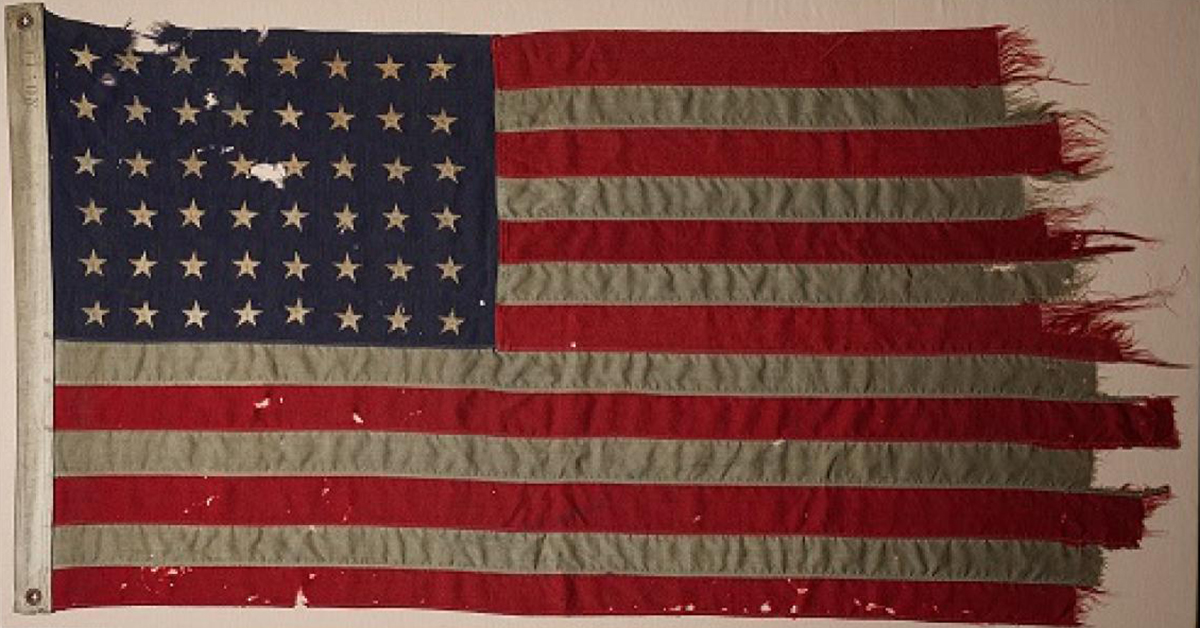
This American flag survived D-Day, then was returned to the US 75 years later
When Howard Vander Beek died in 2014 at the age of 97, he left behind a distinct reminder of his World War II service. Vander Beek, a lieute
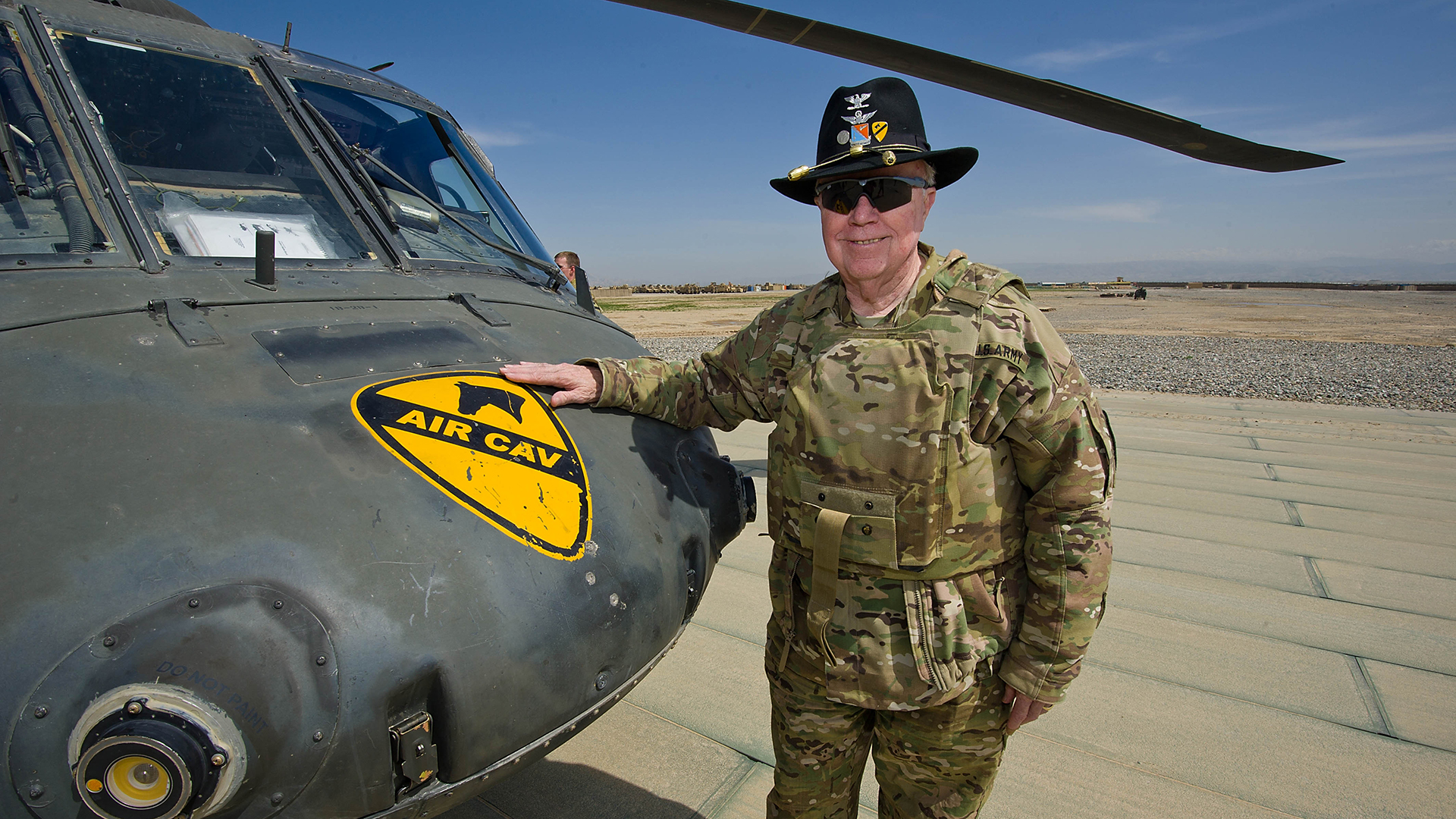
Medal of Honor recipient and legendary Vietnam War helicopter pilot ‘Old Snake’ has died
Retired Army Col. Bruce Perry Crandall, the legendary helicopter pilot who was awarded the U.S. military’s highest decoration for valor for
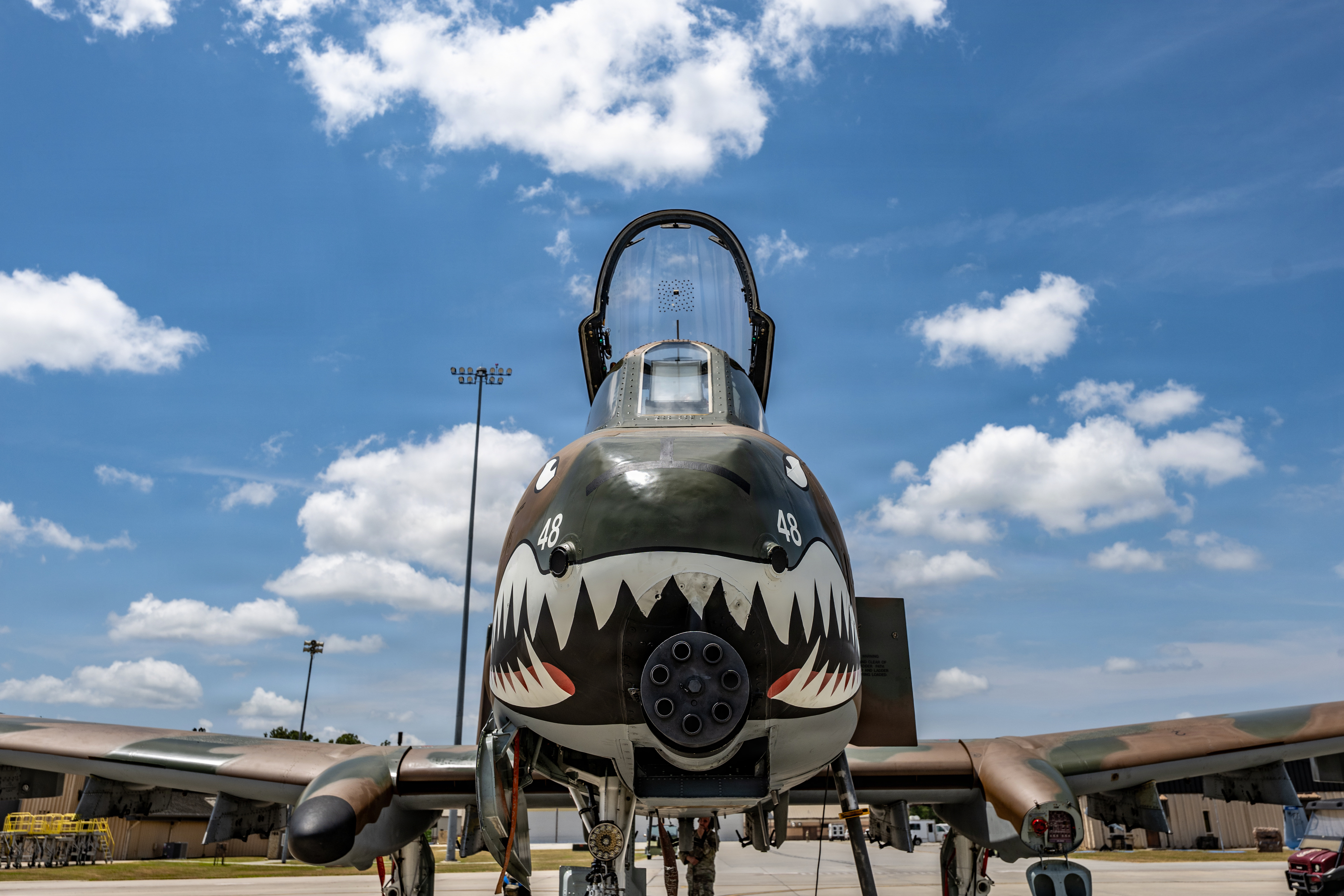
Air Force crew honors WWII-era Flying Tigers with A-10 paint job
It started as a routine transfer. Following an asset transfer from Korea, maintainers at Moody Air Force Base, Georgia, accepted and process